
Buy a multi-split outdoor unit this year only if next year's room has already been surveyed and sits inside the pipe length, the height limit and the manufacturer's combination list. A spare port is not a promise that any future indoor unit will fit. Most homes are better with one matched single now, and a second single later if a second lawful outdoor spot exists. Do not treat old and new equipment as a mix-and-match. An F-gas certified company has to open the circuit whenever that second indoor unit is added.
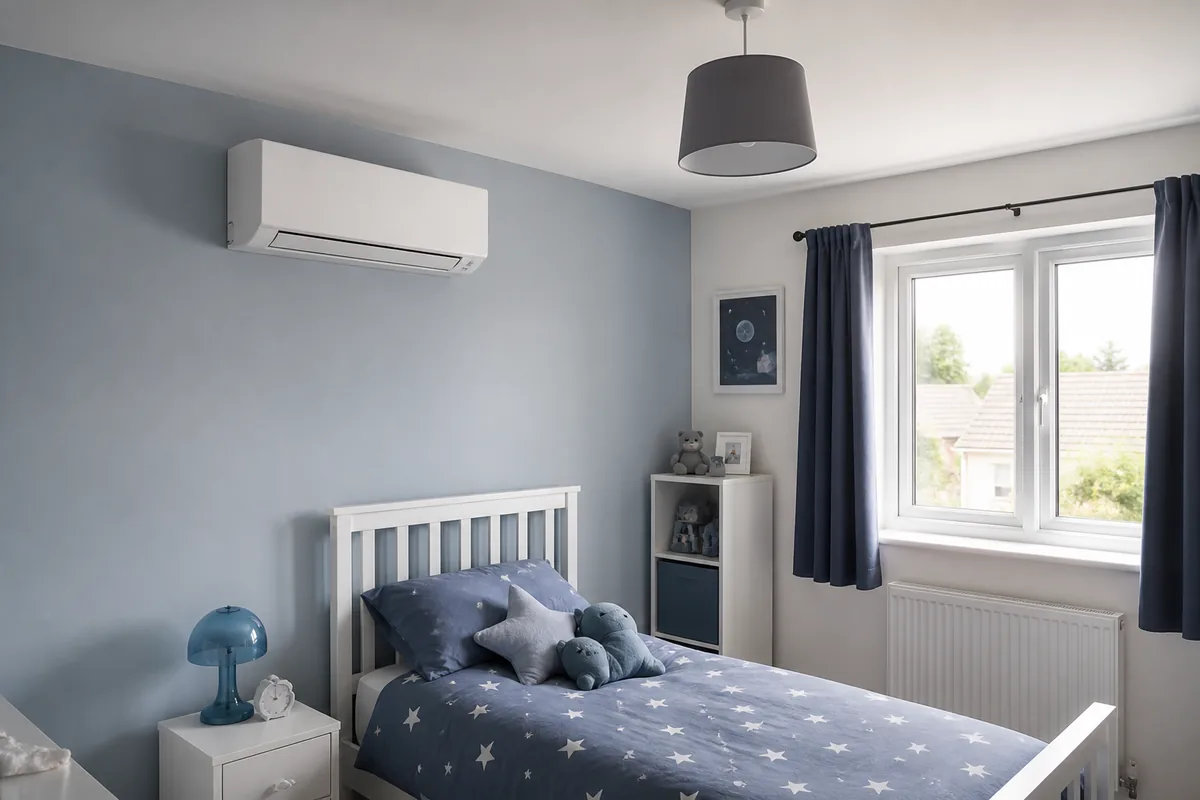
The outdoor unit that has to carry next year's room
The outdoor unit has to be the model that can carry both indoor units, including on a day when both run. It is larger and often noisier than a single sized for this year's room. The pipe tails, the valves and the warranty conditions for a later connection are specific to that manufacturer. Some systems are designed to accept a second indoor unit. Many sold as a single pair are not. Next year's indoor model has to be on the combination list for that exact outdoor code, on the same refrigerant. A different brand, or a newer range the maker will not pair, means you own an outdoor unit you cannot extend. Write the intended second model down now, or do not pay for the port.
Name this year's room and next year's room separately. A spare port belongs on the quote only if the future pipe length, height, combination and outdoor spot already work. Photos of both indoor walls and the outdoor elevation are what make that check possible. The quote should state the outdoor model code, both indoor codes, and whether the second indoor unit is being fitted now or left as a capped port. If the firm cannot survey the second room yet, ask for a single pair and a note of what a later single would need.
A capped port, or a second single later
If the future room is on the other side of the house, the pipe run from today's condenser may already fail. A second outdoor unit beside that room is then the straight design, surveyed when you are ready. You avoid running copper through three bedrooms for a port you might use. A second single also keeps a fault in one room from taking the other room off. The cost, as a 2026 illustration, is usually higher than adding a head to a multi-split that was honestly specified, and lower than ripping out a multi outdoor unit that cannot accept the room you actually want. Those are illustrations. The survey is the quote.
An unused port still has to be installed in a way the manufacturer allows: capped, pressure tested and recorded. It is not a valve you open yourself next summer. When the second indoor unit goes on, an F-gas certified company connects it, evacuates the new leg and commissions the revised system. In England the outdoor unit you fit now still has to meet Planning Portal conditions, or have consent. A bigger condenser bought for later can be the thing that fails a noise limit you would have passed with this year's smaller single. Size for the rooms you have surveyed, not for a hope.
Frequently asked questions
Can I add any indoor unit to the outdoor unit next year?
No. It has to be a combination the manufacturer lists for that outdoor model, on the same refrigerant, inside the pipe and height limits. A new indoor unit on an old outdoor unit is usually not a mix-and-match.
Should the pipes for next year be run now?
Only if the route is agreed and the manufacturer allows a capped leg. A pipe to a room you have not chosen is a leak and a decoration risk you do not need.
Will a bigger outdoor unit cost much more to run?
It cycles for the rooms that are actually on. The penalty is noise, space and a higher installed price, not a second electricity bill for a room you have not built.
Core buying guides
Start with these high-intent guides, then dig into the rest of the library.
Related guides
Sources and further reading
How this guide was prepared
This guide was written by the Local AC Installers Editorial Team. We compare official guidance, legislation and established consumer information, separate general information from project-specific advice, and show publication dates and sources. We do not accept installer accreditation claims at face value.