
A split can make a hot room safer to be in, and it can also chill an animal that cannot move. Never put a crate, carrier, hutch or bed in the direct discharge. Do not shut a pet in a room you are pulling down hard. Leave a door so dogs and cats can leave the jet. Birds, rabbits and other caged animals need the unit aimed away from them. Ask your vet if you are unsure about a particular animal. The outdoor coil and fan are dangerous to pets. F-gas installers should see the layout, not only the wall.
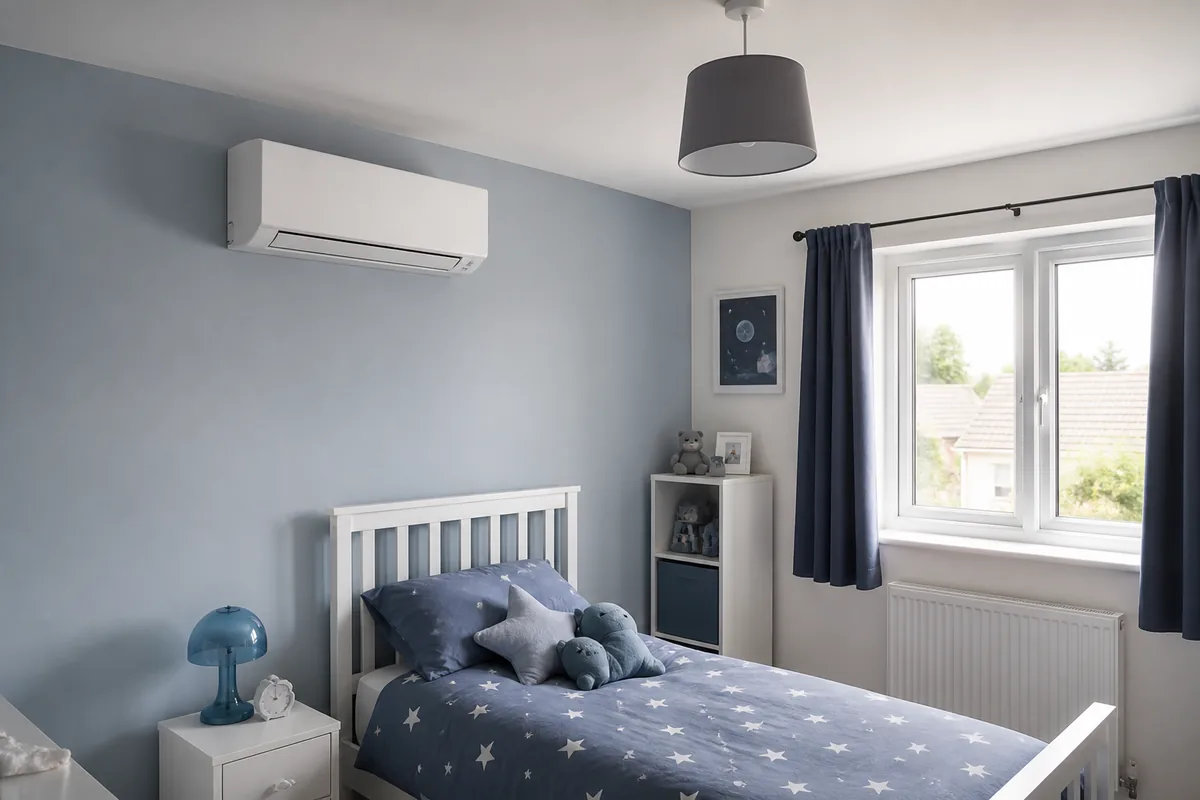
A crate in the jet, and a dog that can leave
Cool air from a wall unit is a jet until it mixes. A dog can get up and lie in the hallway. A puppy in a crate, a rabbit in a hutch or a bird in a cage cannot. Put those houses outside the airflow, or put the indoor unit where the jet misses them. Floor consoles are easier to block and easier to sit against, so they need the same thought. Do not aim the vanes at a basket because that corner looks spare. Spare is where people put carriers. Tell the surveyor where animals sleep.
A cool room can help dogs and cats in a heatwave if they can move out of the draught and are not shut in with a unit on full blast. The crate must not sit in the jet. Ask a vet about your own animal if you are worried. Do not point the unit at a birdcage. Cool the room gently and keep the cage out of the airflow. Check with a vet if you need advice for that bird. No crate, hutch, tank or cage in the discharge. Leave a door ajar so mobile pets can leave. Do not lock an animal in with a unit on boost. Birds are sensitive to draughts.
If you cool a bedroom, a cat will often choose the coolest spot, which may be too cool overnight. A stable setpoint and a low fan beat a blast for an hour. The animal should be able to reach a warmer corner or another room. This is practical siting, not veterinary advice. If a pet is old, brachycephalic, very young or already unwell in the heat, ask a vet how to use the room. Do not expect the installer to set a medical temperature.
Fins, a fan that starts, and a gap that is not a kennel
Fins are sharp, the fan can start without warning, and condensate puddles grow algae. The outdoor unit can hurt a pet if an animal reaches the fan or the fins. Place the condenser where a dog cannot use it as a kennel and a cat cannot sit on the hot top. Manufacturer clearances exist for airflow and service. Plants and hutches must not fill that gap. The installer should see how the garden is used.
A unit on a party wall or under a neighbour's window is still a planning and noise question. Pets do not change Class G. The Planning Portal summary, in England, includes not using the unit solely for cooling, and flats often still need permission. Energy Saving Trust describes air-to-air heat pumps. None of that moves a hutch into the coil gap. Photos should include crates, cages and the garden run if the outdoor unit is nearby. Ask the installer to mark airflow on the photo. Commissioning should include a vane position that misses the animals. GOV.UK F-gas certification is still what the circuit needs. Mention caged animals so the survey can move the indoor on the drawing before anyone drills.
Core buying guides
Start with these high-intent guides, then dig into the rest of the library.
Related guides
Sources and further reading
How this guide was prepared
This guide was written by the Local AC Installers Editorial Team. We compare official guidance, legislation and established consumer information, separate general information from project-specific advice, and show publication dates and sources. We do not accept installer accreditation claims at face value.