
Cooling several rooms in a four bedroom UK house is not four times a one-room price, and it is not a quarter of it either. A 2026 illustration for a surveyed multi-split, with one outdoor unit and indoors in the rooms you actually use, often lands in the mid to high thousands, and climbs further with pumps, long pipe runs, a board upgrade or difficult access. Several separate outdoors can cost more in labour and in neighbour noise. The survey has to test pipe lengths and simultaneous load. An F-gas certified company should do the refrigerant work. Installer design beats buying four badges.
One outdoor unit or a condenser on every wall
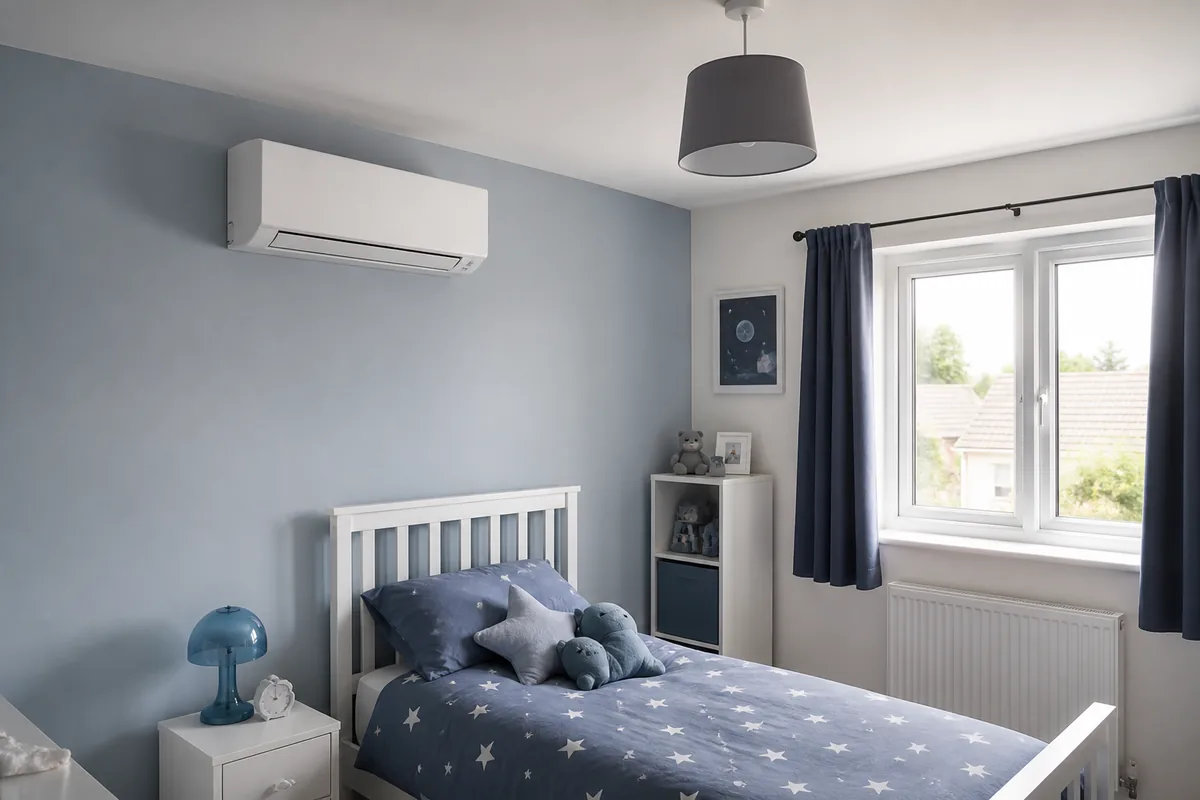
A multi-split puts several indoor units on one outdoor unit. You get one planning and noise conversation, one set of isolation feet, and pipework home to a single plant position. The outdoor unit is sized with diversity: not every bedroom calls for full cooling at the same second, but a heatwave evening can be close. The survey must show the outdoor can carry the rooms that will run together. Cool the rooms you occupy, not every cupboard. Four single splits mean four outdoors, four power supplies and four chances to annoy a neighbour. They can still be right when the house is too deep for the pipe limits back to one side, or when you are only certain about two rooms and want to add later without a stranded multi outdoor. Write that choice down. It is the main cost fork.
A mid to high thousands illustration, then the hours
Treat mid to high thousands as a planning band for a straightforward three or four indoor multi-split on a typical house, including VAT, where the outdoor site is workable and most drains fall. High hundreds per extra difficult room is a fair mental model when a pump, a long route or making good joins the job. Scaffold, a full consumer unit change, or a flat roof frame can add a low-thousands lump of their own. London access, conservation areas and listed fabric sit outside the simple band. A quote that is dramatically cheaper may have dropped a bedroom, shortened a pipe on paper, or left electrics to you. Align the room list before you align the logos.
These systems are usually air-to-air heat pumps, so they can heat rooms that have weak radiators. That does not automatically retire the boiler. Ask which rooms are cooling-led and which need a winter figure. Energy Saving Trust sets out the heat pump framing. Empty-room cooling is the running-cost leak in a four bedroom house. Timers or sensible setbacks matter more than a small efficiency gap between brands. Outdoor siting still has to satisfy planning and neighbour tests on the Planning Portal heat pump pages. A company certified under the GOV.UK F-gas rules should do the refrigerant work.
Frequently asked questions
Is a multi-split cheaper than four separate units?
Often on labour, electrics and how the house looks, yes. Not always, if one outdoor cannot reach the far rooms inside pipe limits. The survey should price the real geometry.
Do I need all four bedrooms on day one?
No. Cooling the main bedroom and the living room first is common. Say so, because the outdoor unit you buy now may limit what you can add.
Will one outdoor unit be very noisy?
It is one noise source instead of four, which is usually easier to place well. It still needs a legal position, a solid mount and enough airflow.
What pushes a four bedroom job out of the simple band?
Pumps, long pipe runs, a board upgrade, scaffold, a flat roof frame, London access, a conservation area or listed fabric. A dramatically cheaper quote may have dropped a bedroom or left the electrics to you.
Does a multi-split replace the boiler?
Not automatically. These are usually air-to-air heat pumps and can heat rooms with weak radiators. Ask which rooms are cooling-led and which need a winter figure.
Why do empty bedrooms matter on the bill?
Empty-room cooling is the running-cost leak. Timers or sensible setbacks matter more than a small efficiency gap between brands.
Core buying guides
Start with these high-intent guides, then dig into the rest of the library.
Related guides
Sources and further reading
How this guide was prepared
This guide was written by the Local AC Installers Editorial Team. We compare official guidance, legislation and established consumer information, separate general information from project-specific advice, and show publication dates and sources. We do not accept installer accreditation claims at face value.