
Top-floor flats are the hottest homes in a block: heat rises, the roof soaks sun, and there is no storey above to shade you. A split can cool the rooms you occupy if you have written consent for an outdoor unit and a structure that can carry it. Flats do not get the same householder freedoms as a house. The lease, the freeholder and planning sit in front of the brochure. Do not hang a condenser over a street or on a balcony rail while you wait to ask.
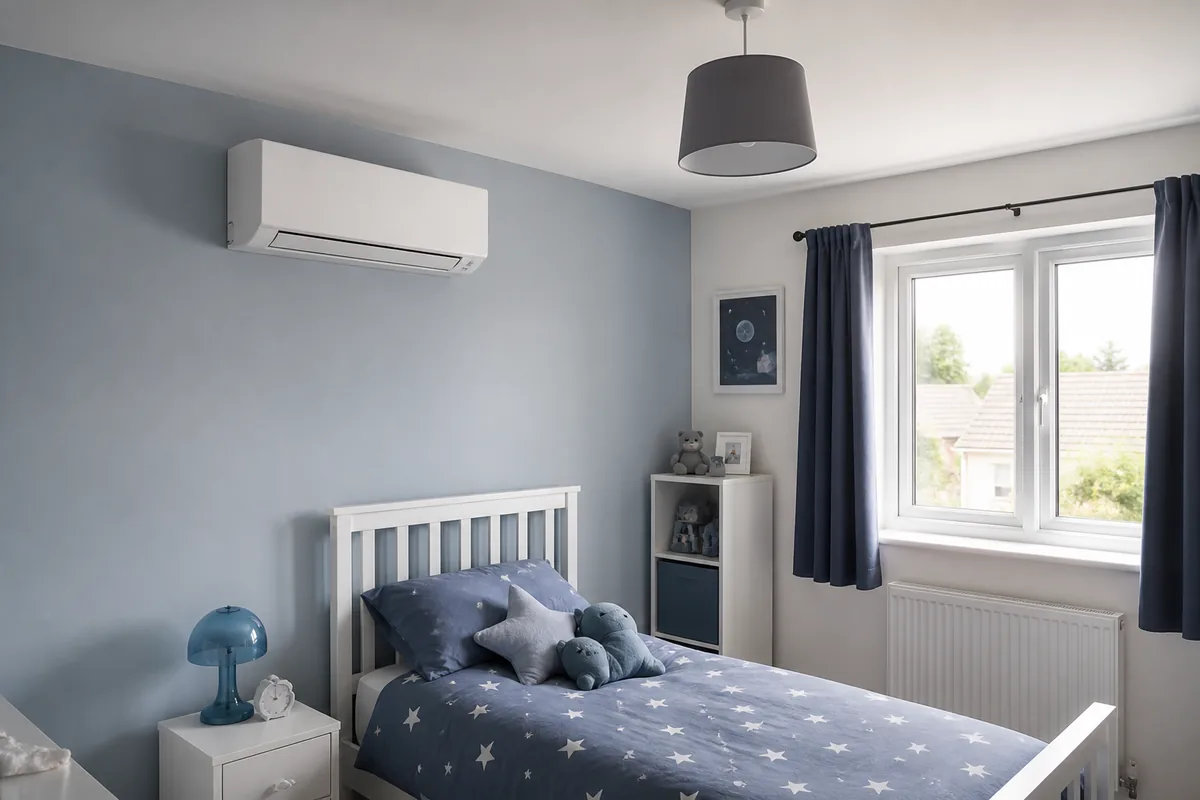
Roof gain and heat from the flat below
Roof gain, south or west glass, and heat from flats below add up. A studio under a flat roof can need more kW than its floor area suggests. Survey the rooms you can close. A hallway indoor will not hold a shut bedroom at the sunny end. The top floor is hotter than the flat below because heat rises through the building and the roof adds solar gain. The same floor area downstairs is a different load.
Night purging with windows helps when the outside air is actually cooler and the street is safe to leave open. On a still heatwave the outside air stays warm. That is when mechanical cooling earns its place, after consent.
Written consent before a bracket
You cannot fit air conditioning in a top-floor flat without consent. Skipping that risks being told to remove it.
- Get freeholder or managing-agent consent in writing.
- Check planning. A flat is not a householder permitted-development case by default.
- Roof plant needs structure, waterproofing and safe access.
- Balcony positions are often banned by the lease even when they look easy.
A roof frame, a plant area, or a wall the lease names
A roof frame, a designated plant area, or a wall that the lease allows. Each needs airflow, a way for an engineer to service the unit without climbing a domestic stepladder over a stairwell, and a noise check to the flat below and the neighbour beside you. Wind on a bare roof is stronger than in a garden. The condenser can go on the balcony only if the lease, the structure and planning all allow it, with safe fixing and a noise check. Many blocks refuse balcony plant.
Leaks into the ceiling downstairs
Condensate leaks in a top-floor flat become the downstairs neighbour's ceiling. Use a proper drain or pump, insulated pipes, and a route the managing agent has seen. Pipework through communal risers needs permission. Chasing a listed cornice does too. F-gas certification applies to the install. Keep the paperwork. The block may ask for it before they let contractors return.
One living space, or two rooms on one outdoor unit
One wall unit in the main living space, or a multi-split if two rooms suffer and one outdoor location exists. Keep capacity modest if the flat is small, so the unit can tick over at night. Aim airflow along the room, not at the bed. Reverse-cycle heating can take a chilly top-floor room in spring. It does not replace the block's heating system unless you have designed for that and the lease allows the electrical load.
When a top-floor flat should not get a condenser yet
Stop if consent is not in writing, if the only idea is a balcony mount over a pavement, or if the fallback is a 115 V import or a window unit in a sash. A balcony mount over a pavement is a falling-object and a noise problem. Many blocks forbid it. If consent is refused, those are not the fallback. A UK 230 V portable is only a stopgap, and only if the lease allows it. Do not hang a condenser over a street or on a balcony rail while you wait to ask.
Core buying guides
Start with these high-intent guides, then dig into the rest of the library.
Related guides
Sources and further reading
How this guide was prepared
This guide was written by the Local AC Installers Editorial Team. We compare official guidance, legislation and established consumer information, separate general information from project-specific advice, and show publication dates and sources. We do not accept installer accreditation claims at face value.