
An archive store is about stability for paper, photographs or film, not about making a shop feel cool for customers. A comfort split built to chase a daytime setpoint will cycle, swing temperature and swing humidity. That is a poor fit for a closed store. If the collection needs a defined band, say so and expect a conversation about whether close control, not a shop unit, is the honest machine. If that plant's effective rated output is more than 12 kW, the operator has the TM44 inspection duty on GOV.UK's air conditioning inspections page. Any refrigerant install still needs an F-gas certified company.
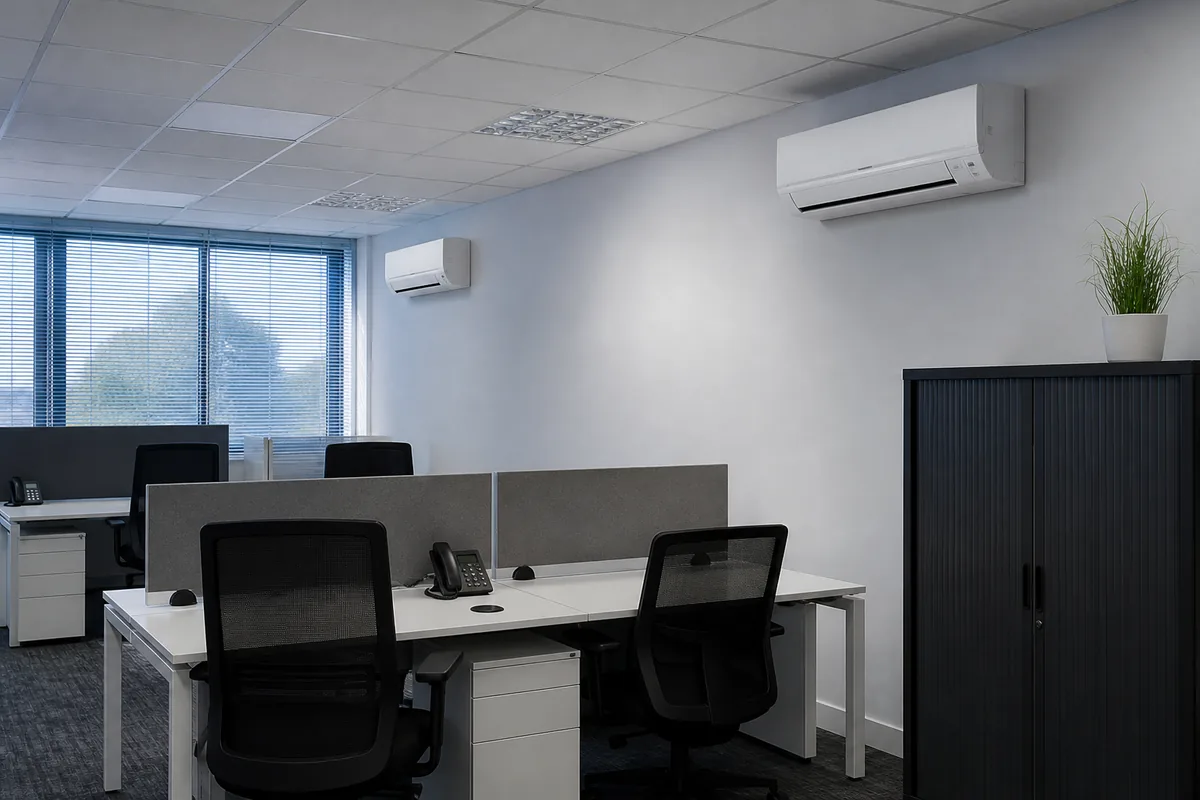
A shut store, not a shop afternoon
Shops want a pleasant afternoon. Stores want slow conditions, a shut door and little fresh load from people. A wall unit with a wide deadband and a night off switch will let the room wander. If wandering is unacceptable, do not buy that behaviour and hope. Ask what band you must hold, and for how long. This page is not a conservation specification. A small parish cupboard and a county records room are not the same risk. The survey should be told what is stored and whether a conservator has already set limits. Inventing a setpoint here would be guesswork. People load is occasional, not retail.
A cooling coil condenses water when it runs and stops condensing when it cycles off. Relative humidity in the room moves with that. For ordinary comfort that is fine. For hygroscopic material it may be the thing you cannot accept. Dehumidification as a separate function, or a unit designed to hold a band, is a different selection from a high-street cassette.
Leaks onto boxes and a plant that runs for hours
Do not add uncontrolled fresh air because the room feels still. Ventilation, if a person sometimes works inside, is an HSE and building question for that occupancy. A store with no workstation is not a shop floor. Damp fabric and a wet basement will beat a small split. Fix water ingress first.
A condensate leak onto boxes is a serious failure. The drain or pump needs an alarm that someone sees when the building is quiet. Pipes should not run across the most vulnerable rack if another route exists. Filter access has to be possible without a long hunt for a keyholder.
Plant that runs many hours needs a condenser position with airflow, service space and a noise check for neighbours. Landlord, fire strategy and any insurer condition on the store belong in the same conversation. Power failure and what the room does next is an operator question, not a promise the split can make. If refrigerant equipment is proposed, an F-gas certified company installs it. Say if the plant must hold conditions when nobody is there.
Frequently asked questions
Can we use a normal shop air conditioner in an archive?
Only if the collection can tolerate the swing. Shop units cycle and move humidity. If you need a stable band, ask for equipment selected for that, not a retail setpoint.
What temperature should the archive store be?
This page will not invent one. Use the limit your conservator or collection policy already sets, and tell the survey that band. A shop comfort number is not an archive specification.
Will the split dehumidify an archive to a fixed humidity?
A comfort coil removes some moisture while it cools and then stops. That is not the same as holding a humidity band. Say if humidity stability is required.
Core buying guides
Start with these high-intent guides, then dig into the rest of the library.
Related guides
Sources and further reading
How this guide was prepared
This guide was written by the Local AC Installers Editorial Team. We compare official guidance, legislation and established consumer information, separate general information from project-specific advice, and show publication dates and sources. We do not accept installer accreditation claims at face value.