
If you can pay for one indoor unit, put it where the heat does the damage. For most households that is the main bedroom, because broken sleep is the complaint that lasts all week. Choose the living room instead if you are in it all day, the bedroom stays tolerable, and the living room is the one with a lawful outdoor route. Survey the winner. Do not buy a multi-split you cannot fund in the hope it covers both. An F-gas certified company fits the single pair.
Nights against a long day in the lounge
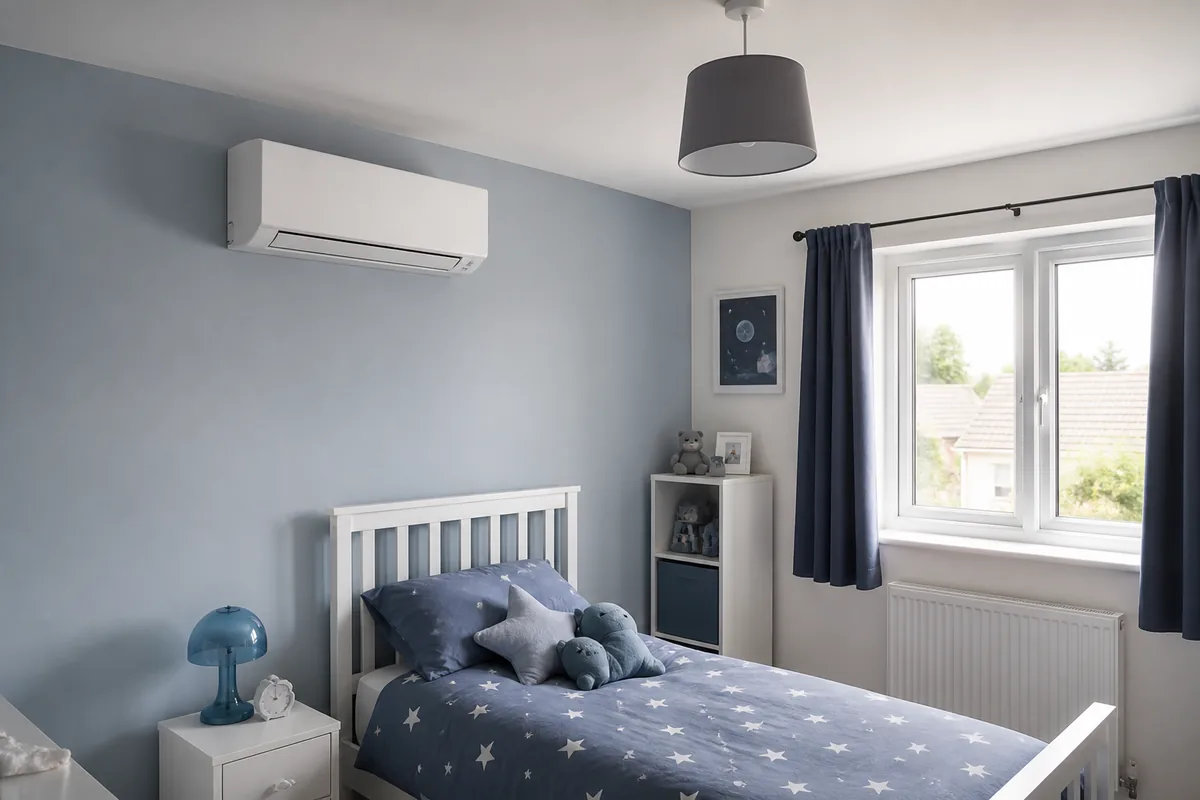
Ask when you give up. If you can live with a warm lounge until evening and you cannot stay asleep, the bedroom wins. If the lounge or the kitchen-diner is your workplace from morning until dinner, and the bedroom cools once the sun is off it, the living room wins. A room you only walk through does not win. The bedroom is the right room when sleep is the complaint. If the bedroom is comfortable and the living room is where you overheat all day, spend the money there.
Scaffold on the bedroom and a short run downstairs
Then check the install, because an unaffordable route is not a choice. A bedroom that needs scaffold, a long pipe and a pump can cost more than a living room on the back wall with a gravity drain. As a 2026 illustration, one ordinary single-room split often sits in the low thousands of pounds including VAT, and the awkward room is the one that leaves that range. There is no fixed tariff. Name both rooms, the hours you use each, and which one you think should win. A photo of both walls and both possible outdoor spots lets the firm tell you if the losing room is the one that can actually be installed.
Picking the one room the budget can finish
Prefer the room with a short, lawful pipe run when the suffering is equal.
- Bedroom first if nights are the problem.
- Living room first if that is where the day is spent.
- Prefer the room with a short, lawful pipe run when the suffering is equal.
- One pair now is a finished plan. A half-funded multi-split is not.
The hall is not a second setpoint
A living room unit with the door open takes a little heat out of the hall. It does not hold a bedroom setpoint upstairs. A bedroom unit does not cool a Sunday lunch. Accept that the second room stays as it is until you can survey it. A bigger kilowatt in the room you chose only overcools that room. A little heat will drift upstairs at night if you leave the doors open, and the bedrooms will not hold a setpoint. If nights are the problem, put the unit in the bedroom. Size the door-shut volume. A kitchen-diner that is open to the living room is one zone, and it may be the right single spend if that is the space you occupy. A separate snug behind a door is a second job. Say which doors you close so the quote is for the right volume.
Air off the bed or off the sofa
In the bedroom, aim the air off the bed and keep the outdoor unit off that window if a quieter elevation exists. A low fan matters more than a smart app. In the living room, keep the throw off the sofa you actually sit on, and do not hang the unit where the television or a tall bookcase blocks the return. Heating mode is worth having in either room. Energy Saving Trust describes these reversible units as air-to-air heat pumps. A north-facing lounge that never gets the morning sun may value that heat as much as July cooling. In England, the outdoor unit still has to meet Planning Portal conditions whichever room you serve.
When a multi-split you cannot fund is the wrong plan
Buying the outdoor unit big enough for both, and adding the second room later, only works if the second room already passes the pipe, height and combination test. Otherwise you pay for a larger outdoor unit you may never extend. A new indoor unit on that outdoor unit is not a mix-and-match. Ask for one single-split quote with model codes, pipe length and drain, plus a one-line note if the other room is a bad route. Do not ask for a two-room multi-split unless you are ready to fund both indoors now and the pipes work. One pair now is a finished plan. A half-funded multi-split is not.
Core buying guides
Start with these high-intent guides, then dig into the rest of the library.
Related guides
Sources and further reading
How this guide was prepared
This guide was written by the Local AC Installers Editorial Team. We compare official guidance, legislation and established consumer information, separate general information from project-specific advice, and show publication dates and sources. We do not accept installer accreditation claims at face value.