
A church hall is a tall volume used hard for a few hours and left empty for days. A split or cassette can help a packed booking if it is chosen for height and for the size of event you actually host. It will struggle if it only stirs hot air at ceiling level, and it may be a poor spend if the diary is thin. Many halls are listed or sit on listed sites, so consent comes before kit. Survey the ceiling, the bookings and the electrical supply first. Refrigerant work needs an F-gas certified company. A volunteer-friendly service plan matters more than a showcase badge.
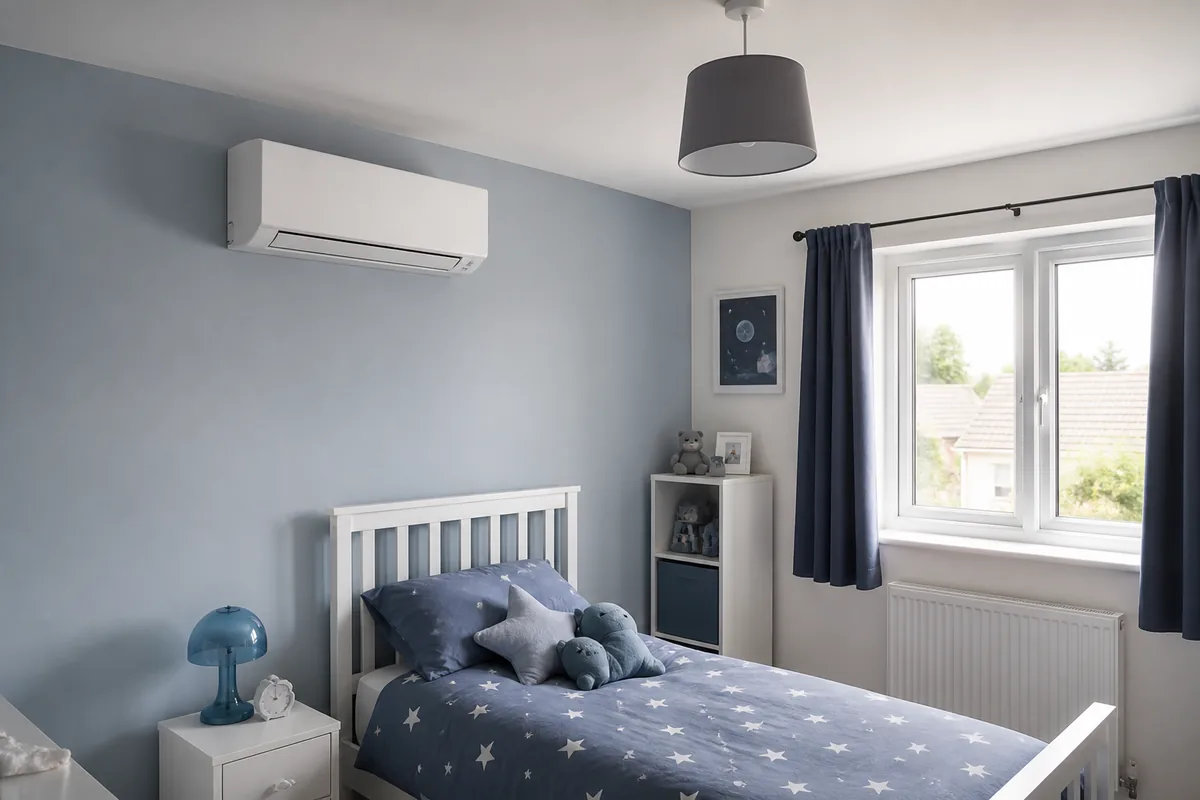
A packed booking in a tall hall
Warm air sits at the top of a hall that is full for a Saturday hire and empty on Tuesday. A small high-wall unit can cool the roof void while the people at table height stay hot. The survey should look at throw and mounting height before anyone treats floor area as the whole storey.
Ceiling height and the diary that hurts
Size for the booking that hurts: a summer wedding breakfast, a packed public meeting, a playgroup only if that is the daily reality. An empty Tuesday is not the design hour. Intermittent use also means the system must start cleanly after a week off, with controls a caretaker can understand. A cassette, a ducted supply or more than one indoor is sometimes the honest format. Destratification fans are a different product and sometimes part of the same conversation.
- Measure ceiling height, not just floor area.
- Bring the real booking pattern, not a hope.
- Check kitchen servery heat if food is served in the hall.
- Ask who replaces batteries and cleans filters between hires.
Listed fabric and a condenser in the churchyard
Fixing brackets, trunking and cores to listed fabric, or to a hall in the setting of a listed church, can need consent before any order. Permitted development that sometimes helps a house heat pump is the wrong assumption here. The Planning Portal heat pump pages explain ordinary householder tests. They are not permission for this building. Talk to the local authority and, where the building is listed, the conservation officer, with drawings rather than a surprise condenser. Pipe runs should be reversible and quiet. A white plastic trunking spine across a Victorian hall will be the thing the quotation forgot and the faculty or consent process refuses. Indoor units in a side room feeding the hall, or a carefully placed cassette, are survey options. Outdoor plant should sit where it does not dominate a churchyard or hum through a neighbouring window during an evening hire.
Winter heat in a leaky volume
Halls are often colder than they are hot. A reverse-cycle heat pump can contribute to heating if it is sized for a leaky tall room, which is a big if. Existing boilers and radiant heaters may still carry winter. Ask the survey to say which season the unit is really for, so you do not buy cooling and discover the hall still needs the old heaters in January. If staff are employed, HSE workplace temperature guidance applies to their work, with no single maximum or minimum that replaces the assessment. Hires and volunteers still need a sensible plan. Over 12 kW of effective rated cooling output, GOV.UK inspection duties can apply. A single modest hall unit may sit under that. A campus of rooms may not. F-gas rules cover the installer either way.
Stop if consent is open or the diary is too thin
Do not order plant while listed building consent or a faculty is still an open question. A householder heat pump leaflet is not permission. If you only hire the hall twice a week, the capital can be hard to justify even when those two events are uncomfortable. A surveyor should be willing to say if the diary is too thin, and a volunteer-friendly service plan matters more than a showcase badge.
Frequently asked questions
Will one wall unit cool a church hall?
In a small, low, well-insulated hall, sometimes. In a tall hall full of people, usually not. Height and the peak booking decide it.
Do we need listed building consent?
If the hall or the church fabric is listed, assume you need advice before you fix anything. Sort consent before you buy plant. A householder heat pump leaflet is not permission.
Core buying guides
Start with these high-intent guides, then dig into the rest of the library.
Related guides
Sources and further reading
How this guide was prepared
This guide was written by the Local AC Installers Editorial Team. We compare official guidance, legislation and established consumer information, separate general information from project-specific advice, and show publication dates and sources. We do not accept installer accreditation claims at face value.