
Commercial running cost is hours times electrical load times a business unit rate that varies more than a domestic tariff. A small shop whose cooling draws a couple of kilowatts electrical for a ten-hour day is tens of kilowatt-hours a day in a 2026 illustration, which is real money across a warm month and still depends entirely on the contract you signed. Kitchens, open doors and full offices push that up. Maintenance is a running-cost tool. If the system is over 12 kW of effective rated cooling output, inspection duties can apply and should be used to find waste. An F-gas certified company should handle refrigerant. The firm that cleans coils beats a premium logo on a choked roof.
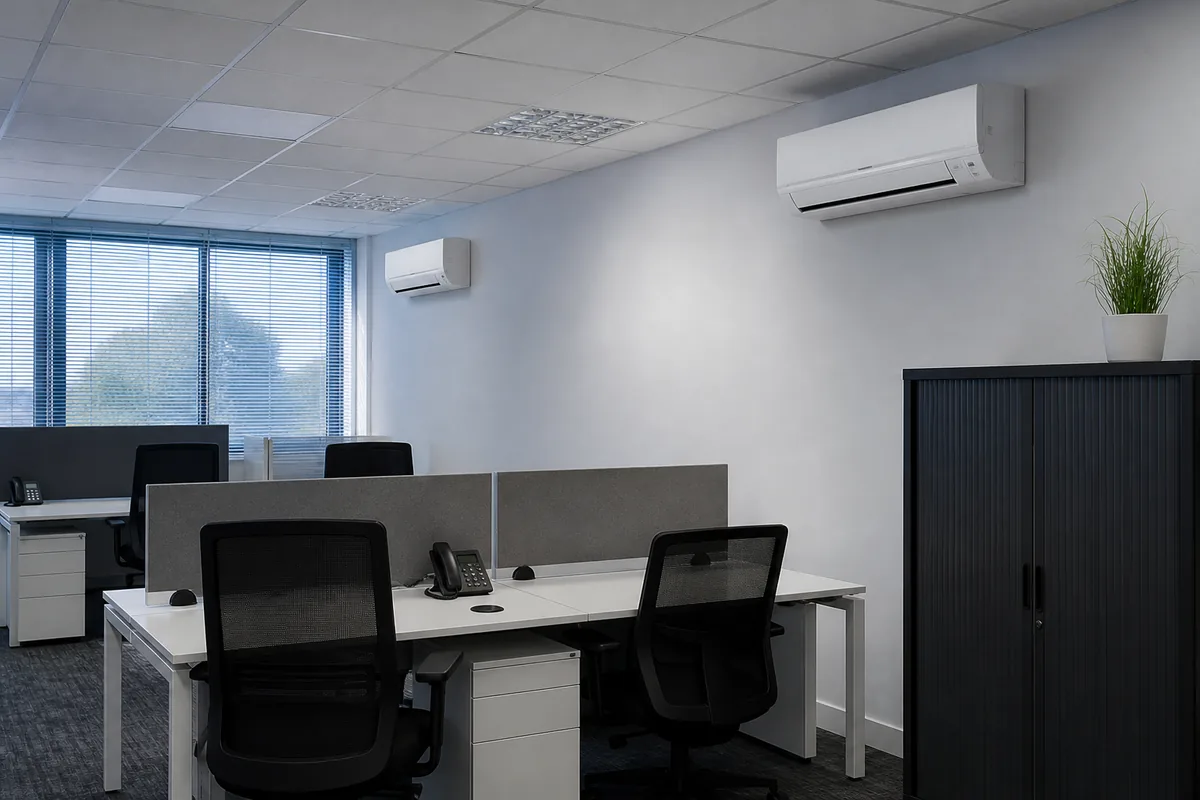
A trading day times a business unit rate
Domestic bedroom sums do not scale. A shop from 9 to 6, a clinic that overruns, or a restaurant into the evening can run compressors for most of the day. As an illustration, 2 kW average electrical draw for 10 hours is 20 kWh that day. At a business rate you must read from your own contract, that might be a few pounds or noticeably more. Peak capacity charges and standing charges on business supplies can dwarf the air conditioning line. Ask your supplier what you pay per kWh before you blame the condenser. Use your business unit rate, not a household guess. Long hours matter as much as the nameplate. It depends on hours, weather and your contract. A small system drawing a couple of electrical kilowatts all day is tens of kWh a day as an illustration. Do not use a domestic night-time guess.
Doors open to a high street, a servery, and a south window are load. Open doors can double how hard the plant works. A closer, a blind and a setpoint staff cannot casually drop by five degrees often save more than a new controller. Several indoors on one roof still count toward inspection thresholds. Blocked filters and furred outdoor coils make the same comfort cost more electricity and then fail on the hottest Friday. A service contract priced in the high hundreds a year for a small site, as an illustration, can be rational if it includes coil cleaning and a check before summer. One-off callouts in a heatwave cost more and come late.
Inspections, leaks and zones you actually occupy
GOV.UK air conditioning inspections apply over 12 kW effective rated output. The inspection is not a service, but it is a prompt to stop running rubbish plant. The inspection itself does not cut the bill. It can show plant that is oversized, failed or filthy. Acting on it, and servicing coils, is what changes the electricity. Under that threshold you still need maintenance. F-gas rules still govern anyone who tops up refrigerant. Leaks are both an environmental duty and a running-cost leak. HSE workplace temperature guidance does not set a single maximum. It does expect reasonable conditions for people at work. Cooling is one control. It should not be turned into a cold store for products that need a proper refrigerated cabinet, and it should not be set so low that staff prop the door open and undo the spend. Zones matter. Cooling an empty shop floor overnight, or a closed office full of monitors left on, is a timetable problem. Controls the manager understands will outperform a complicated brand feature nobody sets. Many systems heat and cool as air-to-air heat pumps. Some older or specialist plant is cooling-only. The data plate and the survey should say which you have. Energy Saving Trust's air-to-air explanation is still relevant where the system heats as well as cools.
Frequently asked questions
How much does shop air conditioning add to the bill?
It depends on hours, weather and your contract. A small system drawing a couple of electrical kilowatts all day is tens of kWh a day as an illustration. Multiply by your unit rate. Do not use a domestic night-time guess.
Does a TM44 inspection cut the bill?
The inspection itself does not. It can show plant that is oversized, failed or filthy. Acting on it, and servicing coils, is what changes the electricity.
Is commercial cooling a heat pump?
Many systems heat and cool as air-to-air heat pumps. Some older or specialist plant is cooling-only. The data plate and the survey should say which you have.
Core buying guides
Start with these high-intent guides, then dig into the rest of the library.
Related guides
Sources and further reading
How this guide was prepared
This guide was written by the Local AC Installers Editorial Team. We compare official guidance, legislation and established consumer information, separate general information from project-specific advice, and show publication dates and sources. We do not accept installer accreditation claims at face value.