
Sky Air is Daikin's light-commercial family: an outdoor unit serving one indoor or a small group, including twin and triple layouts, for shops, classrooms and restaurants. VRV is Daikin's VRF, built for many zones, long pipework and heat recovery. VRV is overkill for a single shop with a back office. Specify Sky Air, or a residential split, until the zone count, the pipe runs or the need to move heat between rooms justify a VRF network.
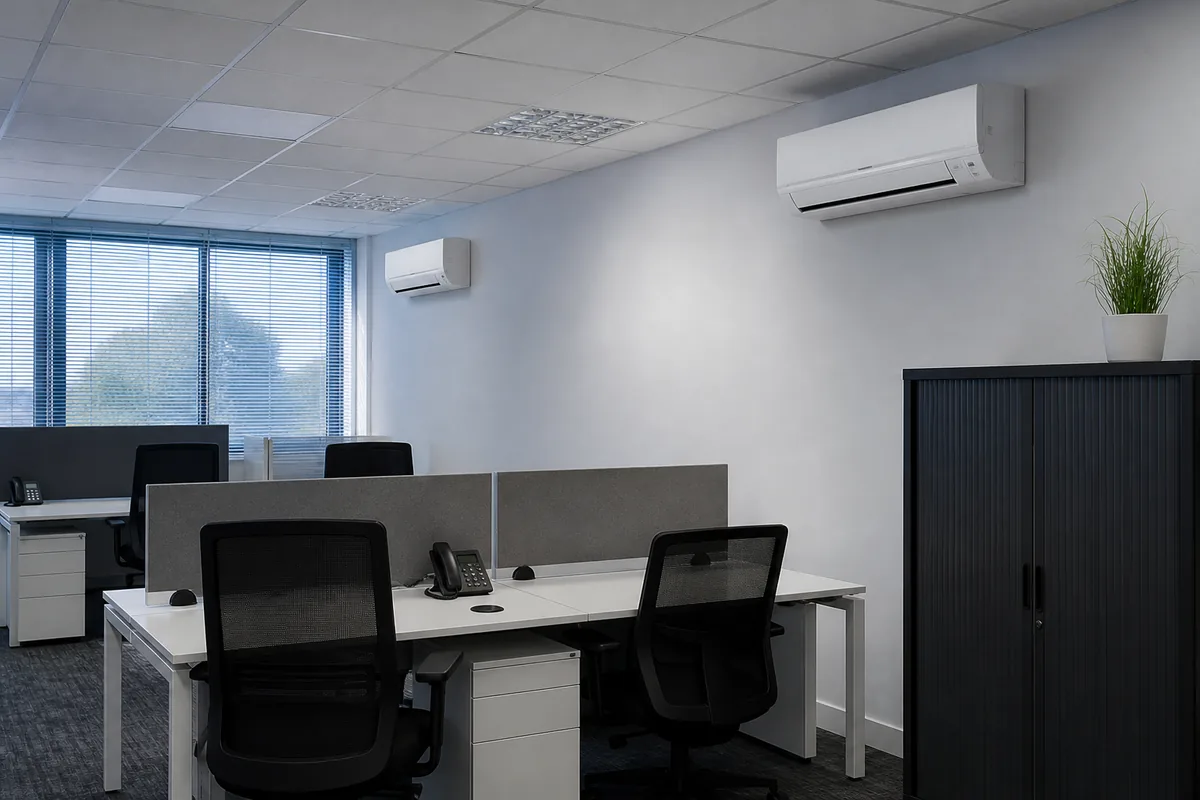
A cassette on Sky Air, or branch boxes on VRV
Sky Air indoors include cassettes, ducted units and ceiling suspended models matched to a Sky Air outdoor unit. Commissioning and controls stay at light-commercial scale. VRV uses branch selector boxes, long refrigerant headers and a central controller. Both need Daikin-trained commissioning. Sky Air means one to a few indoors on light-commercial plant. VRV means many indoors, long runs and optional heat recovery. Match indoor type to the ceiling you actually have.
A convenience shop, a cafe, a church hall or a GP waiting room often lives happily on Sky Air. A multi-floor office with twenty rooms does not.
Stop at Sky Air until the building outgrows it
If you can point at one sales floor, one kitchen and one office, price Sky Air first. Twin indoors can share an outdoor unit when the datasheet allows. You avoid VRF branch boxes, a heavier controls package and a specialist maintenance regime.
Step to VRV when a Sky Air pipe limit is exceeded, when many tenants need independent billing or scheduling, or when heat recovery between a warm zone and a cool zone will run for years. Those are design reasons. A preference for the letters VRV is not.
Both families put a substantial outdoor unit somewhere. Roofs need structure, waterproofing and a safe way to service the plant. Walls need brackets designed for the weight and for vibration. Planning is a building matter, not householder permitted development, once you are on a commercial premises. Inspection and F-gas duties grow with system size. Effective rated output above 12 kW brings GOV.UK air conditioning inspections into the plan. F-gas certification is required for the work, and larger charges bring scheduled leak checks. Ask who holds those contracts after handover.
The same rooms priced both ways
Ask for a zone list, the indoor type in each zone, and a one-paragraph reason VRV is required if that is the offer. Then ask for the Sky Air alternative with the same rooms. The price gap should be explained as plant, controls and commissioning, not as a vague upgrade. Warranty registration, filter access and a named service company belong on both proposals. Efficient equipment that nobody can reach in year four becomes a warm shop with a locked roof.
Frequently asked questions
Is VRV more efficient than Sky Air?
Not as a blanket rule. VRV heat recovery can save energy in a mixed building. A simple shop is usually better on a correctly sized Sky Air system than on a VRF installed for its own sake.
Can one shop use VRV?
It can, and it is usually more plant than the shop needs. Sky Air or a commercial split matches a single unit and a back room more closely.
Are Sky Air and residential Daikin splits the same?
No. Sky Air is the light-commercial range. Residential wall units such as Sensira and Perfera are a different family with different outdoors and limits. A residential Sensira quote should not be renamed Sky Air to sound commercial.
Can twin indoors share one Sky Air outdoor unit?
Yes when the datasheet allows. That is still light-commercial plant: you avoid VRF branch boxes, a heavier controls package and a specialist maintenance regime.
Core buying guides
Start with these high-intent guides, then dig into the rest of the library.
Related guides
Sources and further reading
How this guide was prepared
This guide was written by the Local AC Installers Editorial Team. We compare official guidance, legislation and established consumer information, separate general information from project-specific advice, and show publication dates and sources. We do not accept installer accreditation claims at face value.