
A Daikin VRV system is Daikin's variable refrigerant flow platform: one or more outdoor units serving many indoor units with modulating refrigerant. It is the right conversation for multi-zone commercial floors, mixed indoor types and some large houses. It is the wrong conversation for a single bedroom split. Search terms such as Daikin VRV system, VRF system Daikin and Daikin VRV air conditioning all point at this plant class. Budget, structure, acoustics, F-gas records and maintenance access have to be designed, not assumed from a domestic quote template.
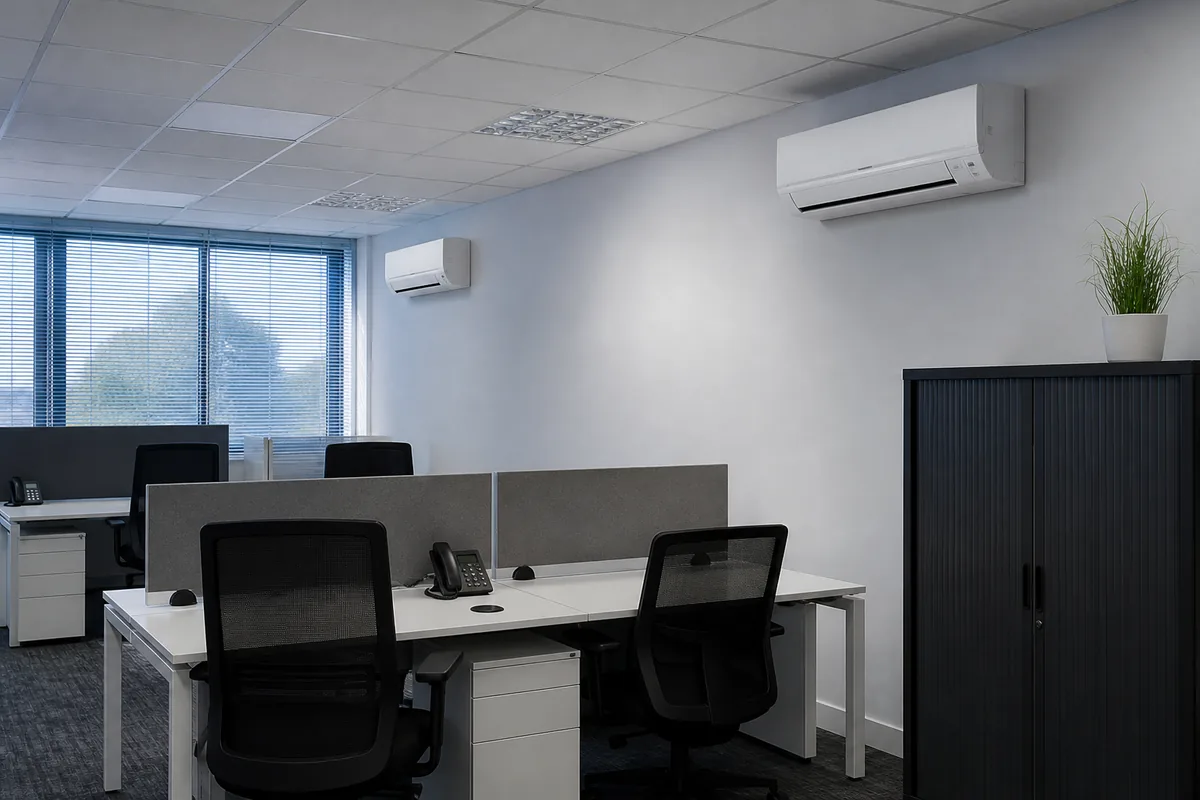
What sits inside a Daikin VRV proposal
Expect a selection of indoor units (cassettes, ducted, wall, below-ceiling) on a shared outdoor. Heat-pump or heat-recovery outdoor type should be stated. Controls, branch selectors on heat-recovery systems, and a commissioning plan belong in the same document.
Residential VRV-S style systems exist for larger homes, but they are still VRF plant. Do not buy them because the brochure looks like a luxury split. Buy them because the zone count and pipe strategy justify it.
- Name outdoor series and indoor models.
- State heat pump versus heat recovery.
- Show diversity and design temperatures.
- Include acoustic and structural checks for the outdoor.
Typical UK applications
Shops with several bays, small offices, restaurants, gyms and some warehouses use VRV to cut the number of outdoor units on a crowded roof or rear elevation. Mixed indoor types on one outdoor is a common reason to leave multi-split behind.
Homes only join this list when the alternative is a cluster of condensers that planning, neighbours or facade rules will not accept. A three-bedroom terrace is not automatically a VRV project.
Risks that domestic installers miss
Charge size, leak detection, logbooks and inspection duties scale up. So do crane costs, steel, weekend shutdowns and landlord technical submissions. A company that only fits bedroom walls may not be the right VRV contractor even if they can order Daikin parts.
Ask who will maintain the system, hold refrigerant records and respond when one indoor unit faults without shutting the building down. Continuity is a design requirement, not an after-sales extra.
Next documents to demand
Indoor schedule, outdoor duty, pipe schematic, electrical loads, controls schematic, acoustic data, maintenance access drawings and a VAT-inclusive price with exclusions. Then compare with other VRF makers if the site is not already standardised on Daikin.
Use the VRF versus VRV explainer and the VRV installation cost guide with this page. For smaller commercial rooms, cassette and gym guides may be the better starting point.
Frequently asked questions
Is Daikin VRV the same as Daikin split air conditioning?
No. Splits pair one or a few indoor units with a small outdoor. VRV is a multi-indoor variable refrigerant platform with different design, maintenance and cost.
Can VRV replace boilers in a UK office?
Heat-pump or heat-recovery VRV can provide space heating as well as cooling, but hot water, ventilation, fabric and peak winter duty still need a proper building services design. It is not a drop-in boiler swap.
Do I need a Daikin specialist for VRV?
You need a contractor experienced on VRF/VRV, with F-gas competence and a maintenance offering. Manufacturer training and support help. Ask for recent comparable projects, not only a Daikin logo on a van.
Core buying guides
Start with these high-intent guides, then dig into the rest of the library.
Related guides
Sources and further reading
How this guide was prepared
This guide was written by the Local AC Installers Editorial Team. We compare official guidance, legislation and established consumer information, separate general information from project-specific advice, and show publication dates and sources. We do not accept installer accreditation claims at face value.