
A domestic split that is sized properly, commissioned by an F-gas company and serviced will often give around 10 to 15 years of use in the UK. Some last longer. Outdoors on the coast, units that short-cycle, and condensers buried behind sheds fail sooner. The indoor fascia often outlasts the outdoor electrics and coil. Treat that range as a planning illustration, not a promise for the unit on your wall. Budget for replacement before the next July panic, and recover the refrigerant properly when the time comes.
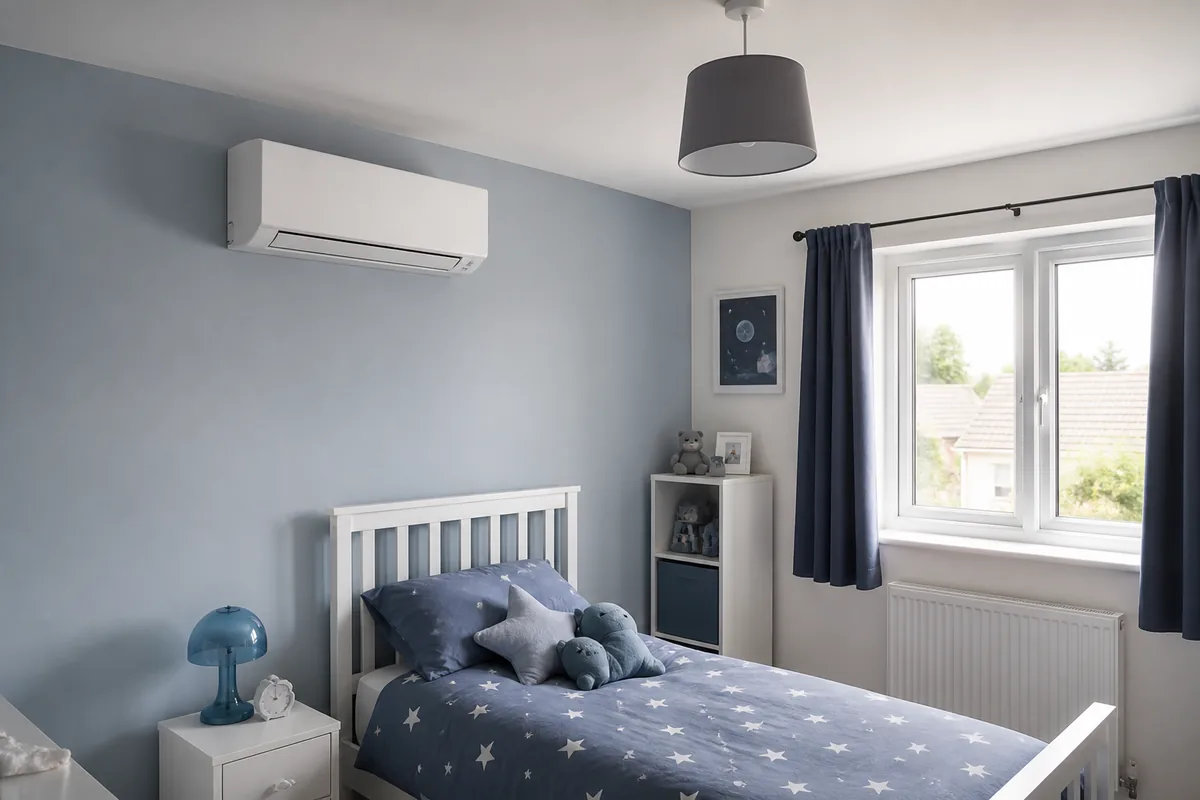
A range for a looked-after domestic split
Compressors, inverter boards, fan motors and outdoor coils are the parts that age. Mild UK summers mean many units run far fewer hours than the same machine in a hotter country, which is why a well sited system can look young at twelve years. A unit that cools a glazed room from lunch until midnight every hot spell works much harder.
No manufacturer schedule on a website can tell you the remaining life of a used system. Service history, noise, and whether it still holds temperature are the clues. A survey of a tired unit is more honest than a slogan about Japanese reliability. Daikin and Mitsubishi Electric schedules tell you warranty terms, not a birthday for the unit on your wall. Outdoor parts usually age first. Hours, siting and dirt matter more than the badge.
Salt, a matted filter, and a leak that gets topped up
Filters left until they mat, coils full of pollen, a condenser with no airflow, and vibration from a loose bracket. Undersizing makes the machine run flat out. Gross oversizing makes it cycle. Both are harder lives than a matched duty. Coastal salt and industrial dust eat fins.
Filters, coils and airflow are maintenance, not a slogan. Energy Saving Trust describes air-to-air heat pumps as equipment that heats and cools. Coastal salt and a boxed-in condenser still shorten the life the survey is looking at.
The indoor looks fine and the outdoor inverter does not
The wall unit can look fine while the outdoor inverter has had its life. Indoors and outdoors do not age on the same clock.
As a 2026 illustration, a straightforward new single split still sits in the high hundreds to a few thousand pounds including VAT. A repair that approaches that number, on a fifteen-year-old system with no parts promise, is often the moment to replace. Get both prices. End of life is an F-gas recovery, not a skip. GOV.UK certification is what that recovery requires. If the system is into its second decade, ask for a service and a view on remaining life in spring, so you can choose an outdoor position properly and avoid buying whatever is left in a heatwave.
Frequently asked questions
Does a split last longer if I barely use it?
Fewer hours can help, but seals, capacitors and outdoor weather still age. Run it occasionally on the mode you need, keep the filters clean, and service it. Idle and forgotten is not the same as preserved.
Is 10 years the manufacturer's warranty?
No. This is a rough service life for a looked-after domestic system. Warranty years are whatever the schedule you registered says, and they are usually shorter than the mechanical life.
Can I throw the outdoor unit away myself?
No. The refrigerant has to be recovered by an F-gas certified company. Venting it is not a house-clearance task.
Can I replace only the outdoor unit and keep the old indoor?
Sometimes, inside the same brand, and sometimes not. Mixing brands is not a repair. Ask for a written option: repair, matched replacement, or a full new pair.
Is topping up refrigerant the right repair for a slow leak?
No. Repeated topping up without finding the leak wastes money. An F-gas engineer should find the leak, repair it and recharge properly. That visit also tells you whether the system is worth keeping.
Core buying guides
Start with these high-intent guides, then dig into the rest of the library.
Related guides
Sources and further reading
How this guide was prepared
This guide was written by the Local AC Installers Editorial Team. We compare official guidance, legislation and established consumer information, separate general information from project-specific advice, and show publication dates and sources. We do not accept installer accreditation claims at face value.