
A 1 ton air conditioner removes heat at about 3.5 kW, the same band as 12,000 BTU/h. It is a rate, not the weight of the box and not a promise that your room is the right size. A small British bedroom is often a 2.0 to 2.5 kW job. A glazed living room can need more than 3.5 kW. Use the ton figure only to translate a foreign listing, then survey the room. Larger ton labels, including 2 ton, are a different capacity and a different page.
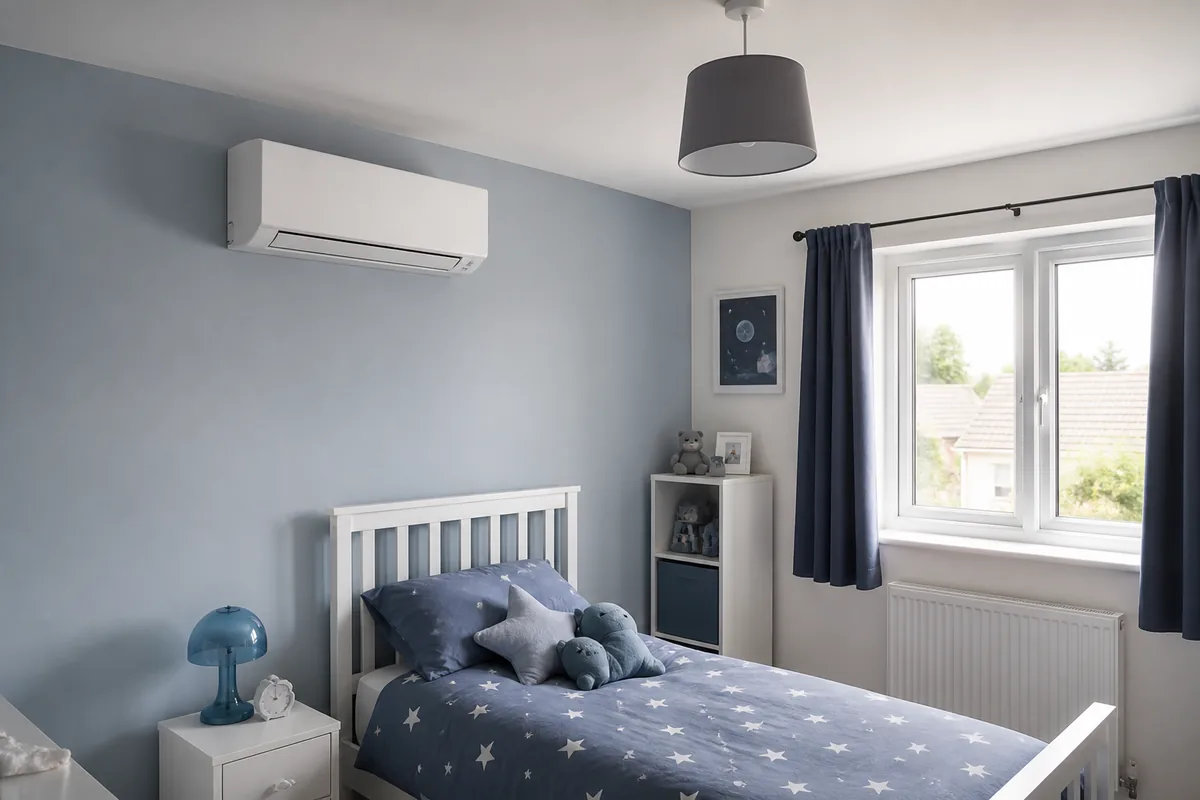
A refrigeration ton near 3.5 kW
A refrigeration ton is an old measure of cooling rate, tied to melting ice, and it settled near 12,000 BTU/h. Divide by about 3,412 and you land near 3.5 kW. UK catalogues sell that class as a 3.5 kW wall split. The outdoor unit does not weigh a tonne, and a 1 ton sticker does not mean the room has been designed.
Nameplate capacity is measured at a test condition. A south-facing bay, a kitchen that opens into the same space, or a loft bedroom with roof windows can need more duty than 3.5 kW. A shaded box room can need less. Buying the ton and hoping is how units short-cycle or run flat out and still feel warm.
Living rooms near this duty, and adverts that only say ton
Many enclosed living rooms and larger bedrooms land near this duty after a proper heat-gain look. It is a common single-split size, with a modest outdoor unit and a normal domestic electrical supply. It is a poor default for a deep open-plan kitchen diner with bi-fold doors.
If a small spare room is offered a 1 ton unit because that was the only size on a website, ask for 2.0 or 2.5 kW instead. An oversized indoor in a tiny room controls badly and feels clammy.
Ask the seller for the model code and the cooling kW at a stated condition. Heating output at a cold outdoor temperature can differ from the cooling nameplate. UK quotes should state kW for the actual indoor and outdoor pair. If the seller can only say 1 ton, they have not specified a machine you can compare with a Daikin or Mitsubishi quote.
Room length, width and height, which way the glass faces, and whether a kitchen shares the air all matter more than the sticker. Photos beat a ton number. Say if you also want heating. The installer should come back with kW and model codes. F-gas rules still apply to the install.
This page is only the 1 ton band
If you were comparing a much larger label, keep that as a separate capacity check. This page is only the 1 ton, 3.5 kW band. It describes cooling rate, not a room area.
Frequently asked questions
How many kW is a 1 ton air conditioner?
About 3.5 kW of cooling, roughly 12,000 BTU/h. Confirm the figure on the UK model's datasheet rather than treating the ton as exact for every brand.
Does 1 ton mean the unit will cool that room?
No. It only names a cooling rate. Glass, orientation, insulation and how you use the room decide whether 3.5 kW is enough, too much, or short.
Is 1 ton a small bedroom size in the UK?
Often it is larger than a small bedroom needs. Many bedrooms are specified around 2.0 to 2.5 kW. A survey should pick the step.
Is a marketplace 1 ton unit a UK split?
Not from the ton label. Overseas pages mix 1 ton with window units, 115 V portables and DIY line-set kits. Translate the capacity, then reject the product if the voltage, the refrigerant route or the warranty is not a UK 230 V split.
Core buying guides
Start with these high-intent guides, then dig into the rest of the library.
Related guides
Sources and further reading
How this guide was prepared
This guide was written by the Local AC Installers Editorial Team. We compare official guidance, legislation and established consumer information, separate general information from project-specific advice, and show publication dates and sources. We do not accept installer accreditation claims at face value.