
A typical portable air conditioner draws around 1 kW of electricity for roughly 2.5 kW of cooling, so on a tariff near the 2026 price cap it costs in the region of 25 to 30 pence per hour of full compressor running. Eight hot hours a day through a two-week heatwave lands around 30 to 35 pounds, and a long hot summer of regular use can reach low hundreds. The catch is that single hose portables waste part of what you pay for by sucking cooled room air out through the exhaust. A fixed split delivers the same cooling for roughly a third of the electricity, which is why heavy users outgrow portables financially.
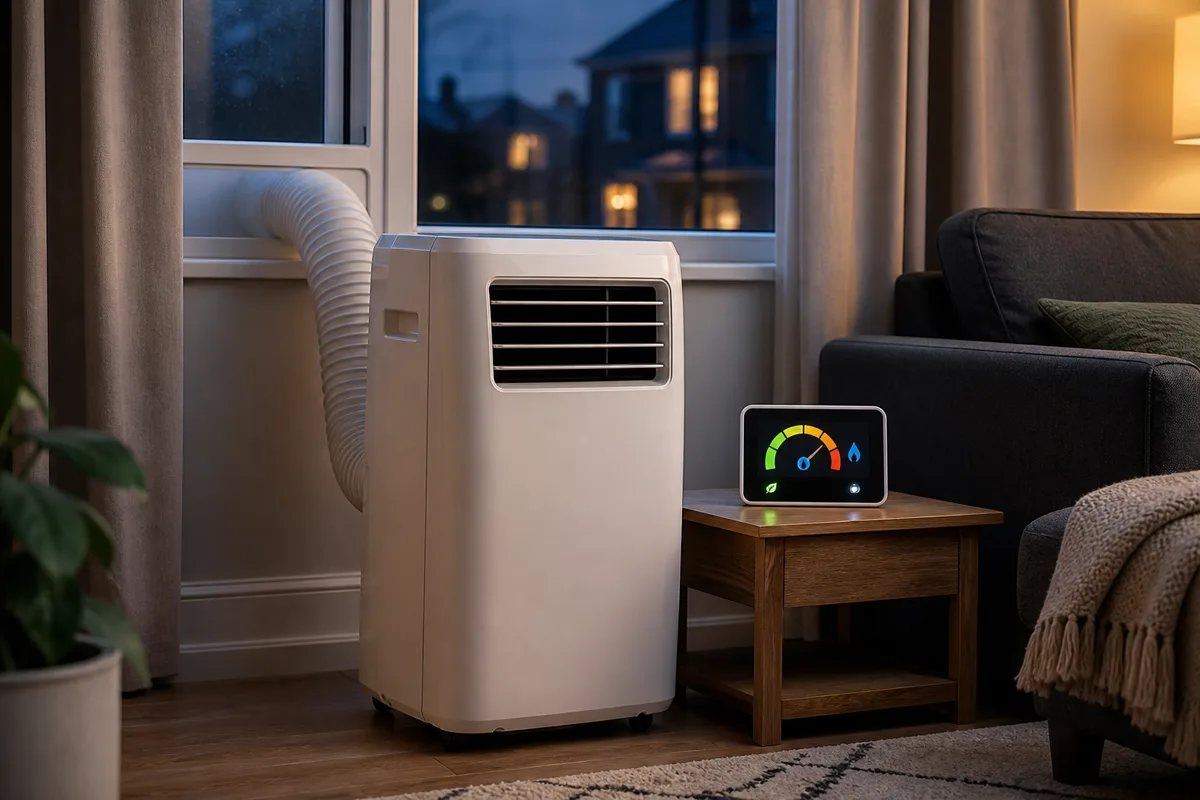
The per-hour arithmetic
Check the input power on the rating plate, not the cooling figure in the headline. A unit badged 9000 BTU cools around 2.6 kW and typically draws about 1 kW input. Multiply input kilowatts by your unit rate: at around 27 pence per kWh, that is about 27 pence per full-power hour.
Compressors cycle, so real averages run below the plate figure once the room approaches temperature. A well-sealed small bedroom might average two thirds of plate power; a leaky living room with the hose flapping in a sash window will run flat out all evening.
- Input watts times tariff equals worst-case cost per hour.
- Single hose designs pull cooled air out and warm air in behind it.
- Poor hose sealing is the most common silent money leak.
- Cooling one small room costs pennies; chasing an open plan space does not.
- The running cost calculator on this site does the sums per tariff.
Heatwave and summer totals
As a 2026 illustration on a capped standard tariff: eight hours daily for a fortnight at realistic duty sits around 30 to 35 pounds. Nightly bedroom use across June to August commonly lands in the 60 to 120 pound range depending on the room and the weather.
Those totals are tolerable for occasional use, which is the portable's honest role. Households running one most days should read the split versus portable comparison, because the arithmetic changes quickly.
Cutting the cost of the portable you own
Seal the hose properly with a window kit, shade the room by day, pre-cool the bedroom an hour before sleep rather than fighting a hot room at midnight, and set 24 degrees rather than 19. Dual hose models, where available, remove the self-defeating extraction of a single hose design.
Keep filters clean: a clogged filter makes the compressor work longer for the same result, which is pure wasted money.
The crossover to fixed cooling
A split delivers roughly three or more kilowatts of cooling per kilowatt of electricity, so the same cooled bedroom costs roughly a third as much per hour. Several summers of regular portable use plus the purchase price approaches a fixed installation's cost without the comfort or silence.
The general running cost guide covers split economics, and the quote form gets a fixed price for the room you keep cooling the hard way.
Frequently asked questions
How much does a portable air conditioner cost to run per hour in the UK?
Around 25 to 30 pence per hour at full power for a typical 1 kW input unit on 2026 capped tariffs, less as the compressor cycles down in a sealed room. Input wattage times your unit rate gives the exact worst case.
Are portable air conditioners expensive to run?
Per unit of delivered cooling they are the most expensive common option, roughly three times a fixed split's electricity per cooled kilowatt, worsened by single hose extraction losses. For occasional heatwave use the totals stay modest; for daily summer use they add up.
Is it cheaper to run a portable or a split air conditioner?
A split, by roughly a factor of three per hour of equivalent cooling, because of far higher efficiency and no hose losses. The portable only wins when installation is impossible or the usage is a few days a year.
Core buying guides
Start with these high-intent guides, then dig into the rest of the library.
Related guides
Sources and further reading
How this guide was prepared
This guide was written by the Local AC Installers Editorial Team. We compare official guidance, legislation and established consumer information, separate general information from project-specific advice, and show publication dates and sources. We do not accept installer accreditation claims at face value.