
SMEs should buy server room cooling from a surveyed process-cooling brief: measured IT load, required uptime, airflow, monitoring, outdoor-unit siting and maintenance access. Compare written scopes rather than headline prices, and treat comfort-only office systems as a different product category from continuous IT protection.
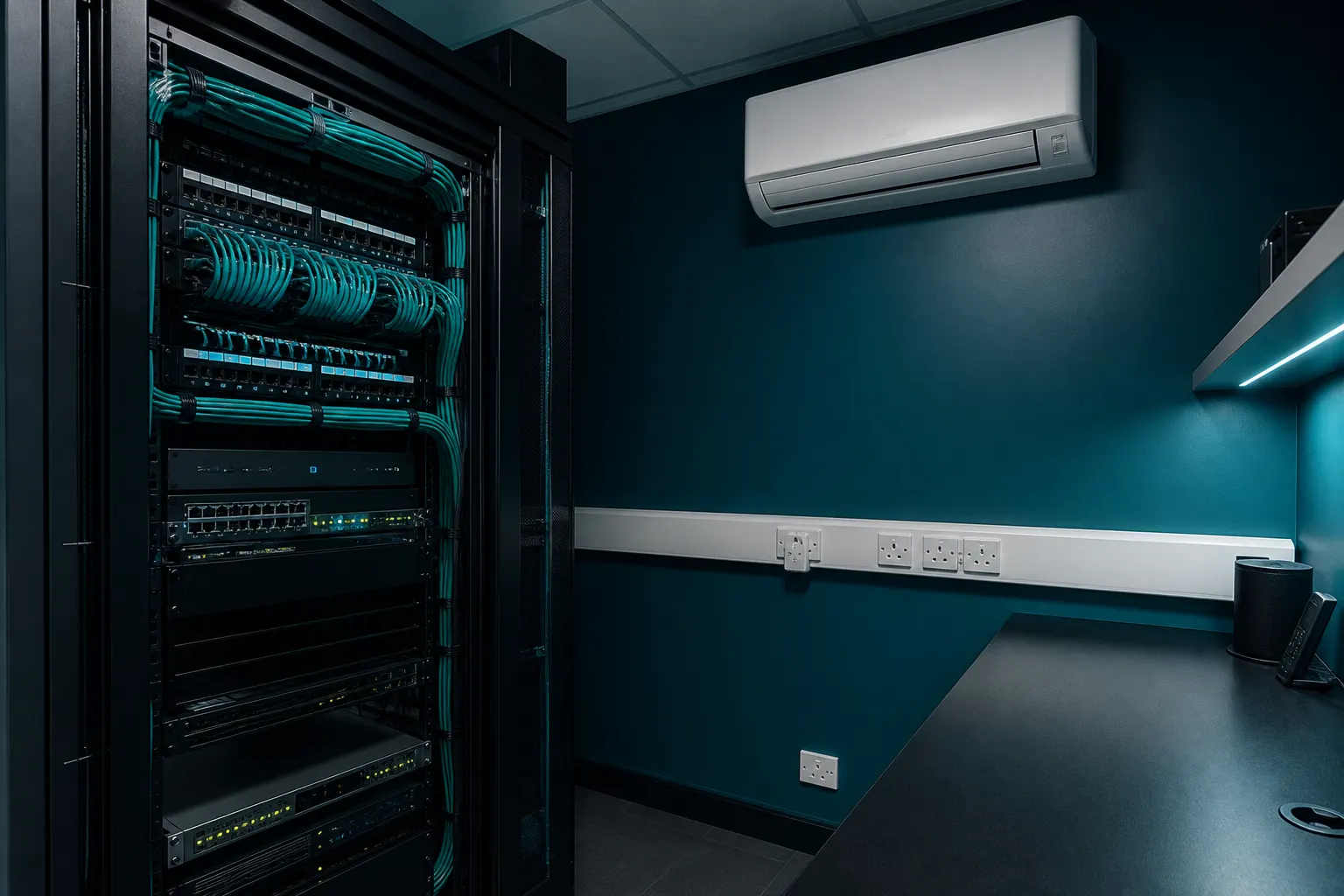
Write the brief before requesting quotes
List the room dimensions, rack count, measured electrical load, growth plans, hours of operation, acceptable downtime, alarm contacts and any landlord constraints. Without that brief, quotes are hard to compare and easy to under-specify.
State whether the room must remain cool during office shutdowns. That single requirement often separates a dedicated split from reliance on shared comfort plant.
- Provide measured load where possible, not only floor area.
- Describe outdoor-unit constraints and access.
- Ask for condensate method and alarm provisions in writing.
- Clarify who handles F-gas records after handover.
Compare scopes, not just totals
A lower price may omit electrical upgrades, pumps, access equipment, monitoring sensors, temporary cooling during install or making good. Ask each bidder to itemise equipment model, capacity basis, pipe route assumptions, controls, commissioning and warranty.
Indicative domestic or light commercial comfort installation ranges published for homes and offices are not reliable tariffs for IT rooms. Site constraints and resilience options can change cost substantially, so use survey-based quotations only.
Decide the resilience level consciously
Many SMEs can accept a short, planned outage if backups or cloud failover exist. Others need dual cooling, independent power or rapid call-out because a failed room stops trading.
Buy the resilience you can operate. An untested second unit, shared drain pump or unmonitored alarm adds cost without much protection.
Budget for operation as well as installation
Include electricity use, filter maintenance, F-gas compliant servicing and eventual replacement. Efficient equipment still consumes energy whenever it removes continuous IT heat.
Energy Saving Trust advice on air-to-air systems helps frame efficiency questions, while GOV.UK F-gas and inspection guidance frames compliance. Ask installers how set points, monitoring and airflow management will avoid unnecessary overcooling.
Handover checklist for non-specialist owners
Before paying the final invoice, confirm cooling performance at the racks, drain operation, control settings, alarm tests, refrigerant documentation where applicable and a labelled outdoor isolator.
Keep a one-page operating note for staff: normal set points, who to call, what an alarm means and what not to adjust. SME rooms often fail because knowledge leaves with one person.
Frequently asked questions
How should an SME estimate budget without a survey?
Use only provisional planning figures and obtain site-specific written quotes. Comfort-cooling consumer ranges are not dependable tariffs for continuous server room designs.
Is the cheapest split good enough?
Only if capacity, continuous duty, airflow, drainage, electrics and maintenance access are demonstrably suitable. Lowest price is a weak proxy for IT protection.
Should SMEs always install two units?
Not always. Dual plant is valuable when downtime is costly, but it must be designed and tested as true resilience rather than duplicated comfort equipment sharing common failure points.
What documents should we keep after installation?
Equipment schedule, commissioning results, controls settings, maintenance plan, refrigerant records where applicable, alarm contacts and landlord consents.
Can we rely on the office system overnight?
Only if that system is designed and controlled for independent continuous process cooling. Many SME offices switch comfort plant down outside occupied hours.
Core buying guides
Start with these high-intent guides, then dig into the rest of the library.
Related guides
Sources and further reading
How this guide was prepared
This guide was written by the Local AC Installers Editorial Team. We compare official guidance, legislation and established consumer information, separate general information from project-specific advice, and show publication dates and sources. We do not accept installer accreditation claims at face value.