
A professionally installed split system is usually quieter, more efficient and better suited to regular cooling than a portable exhaust-hose air conditioner. A portable unit can still make sense for occasional use, rented homes or rooms where an outdoor unit cannot be approved. Before buying either, reduce solar gain and internal heat with shading, ventilation and other passive measures. A split system contains refrigerant pipework and must not be treated as a DIY installation.
What the two product types actually are
A portable air conditioner is a self-contained indoor appliance that rejects heat through a flexible hose placed through a window or purpose-made opening. It is different from an evaporative air cooler, which does not use refrigeration and cannot deliver the same cooling in humid conditions.
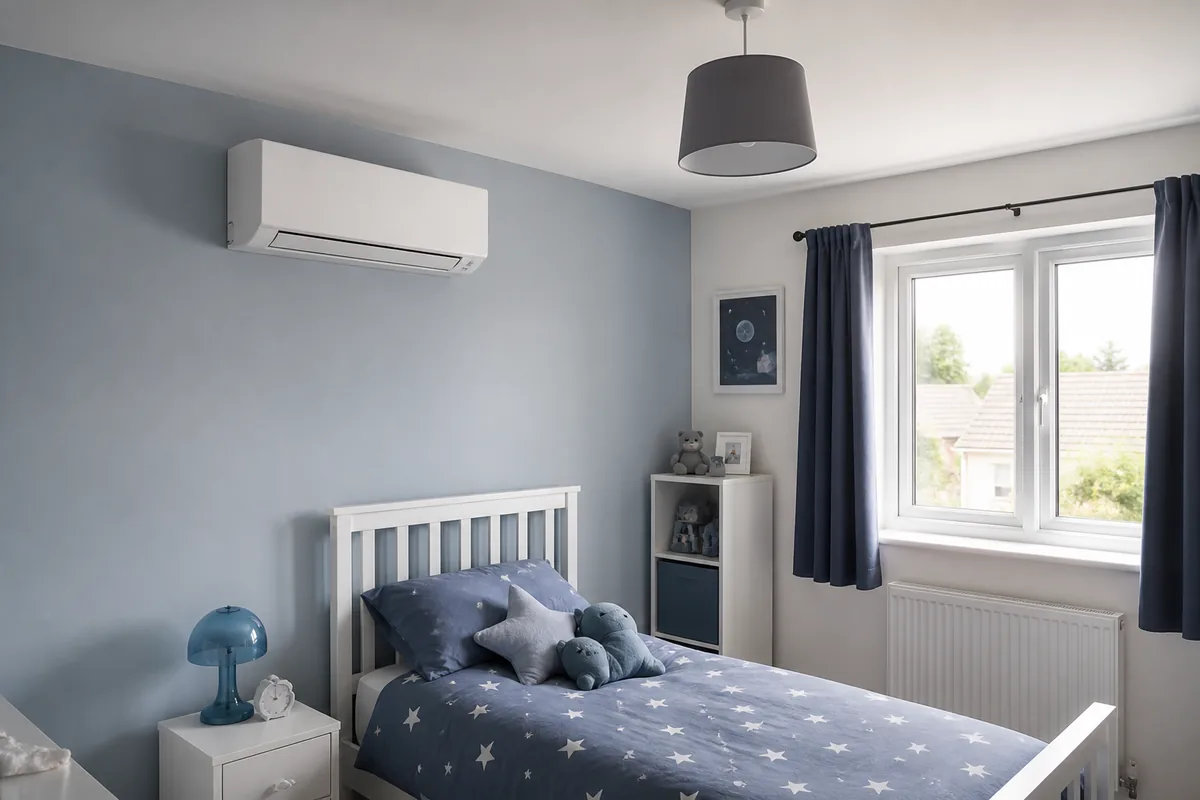
A split system has an indoor unit and an outdoor unit connected by refrigerant pipework, electrical connections and a condensate drain. The compressor normally sits outdoors. Installation, pressure testing and refrigerant work require an appropriately qualified professional.
Comfort, noise and running conditions
Portable units keep the compressor in the room, so their sound is especially noticeable in bedrooms and during calls. A single-hose product also pushes room air outside, encouraging warm outside air to leak back through gaps. Correctly sized split systems generally maintain a steadier temperature with less indoor noise.
Published efficiency figures are useful only when compared on the same test basis. Ask for the relevant energy label and product data, then consider likely hours of use rather than assuming that a lower purchase price means lower overall cost.
Start with passive cooling
The London Plan cooling hierarchy puts reducing heat generation and managing heat within buildings ahead of mechanical cooling. In a London or Essex home, practical first steps include external shading where permitted, closing blinds before direct sun arrives, using secure night ventilation when outdoor air is cooler, reducing unnecessary appliance loads and improving roof insulation.
Passive measures may solve mild overheating or reduce the capacity and running time of any air conditioner. They are also valuable during a power cut and in rooms that are not actively cooled.
- Shade sun-facing glazing before heat enters the room.
- Ventilate when outside air is cooler, subject to security, noise and air-quality conditions.
- Seal the portable unit window panel as well as the product instructions allow.
- Avoid routing an exhaust hose into a loft, corridor or another room.
Permissions and a sensible decision
A portable unit needs no permanent outdoor condenser, but a window insert may be awkward or restricted by a tenancy agreement. A split system can require landlord or freeholder consent, and planning rules depend on the property, location, equipment and installation details. Flats, listed buildings and conservation areas need particular care.
Choose portable cooling when reversibility matters more than noise and efficiency. Consider a split system when the room overheats repeatedly and passive measures are insufficient. Obtain a room-by-room heat-load assessment, a proposed outdoor-unit position and clear noise information before agreeing to work.
Frequently asked questions
Is a portable air conditioner the same as a split system without installation?
No. A portable product contains the refrigeration circuit in the room and rejects heat through an exhaust hose. A split system places major components in separate indoor and outdoor units connected by fixed services.
Can I install a split air conditioner myself?
Do not attempt refrigerant, electrical or condensate work as a DIY shortcut. Use an installer with the legally required refrigerant competence and suitable electrical capability, and follow the manufacturer requirements.
Will a portable unit cool several rooms?
Usually not effectively. Its performance is best judged for the room containing it, with doors and windows managed as instructed. Cooling air does not distribute evenly through a typical home.
Which is better for a London bedroom?
A well-designed split system is normally the quieter option, but permissions and outdoor-unit noise still matter. Try shading and night ventilation first, then compare sound data at the operating settings you will actually use.
Core buying guides
Start with these high-intent guides, then dig into the rest of the library.
Related guides
Sources and further reading
How this guide was prepared
This guide was written by the Local AC Installers Editorial Team. We compare official guidance, legislation and established consumer information, separate general information from project-specific advice, and show publication dates and sources. We do not accept installer accreditation claims at face value.