
Book the survey before you compare finished prices. The visit is there to decide the kilowatts, the wall, the pipe run, the drain and whether one outdoor position is actually lawful. A quote written from a phone call skips those choices and then changes on the day. You should leave with model codes, not a brochure. Refrigerant work after that visit belongs to an F-gas certified company.
The rooms you shut, measured
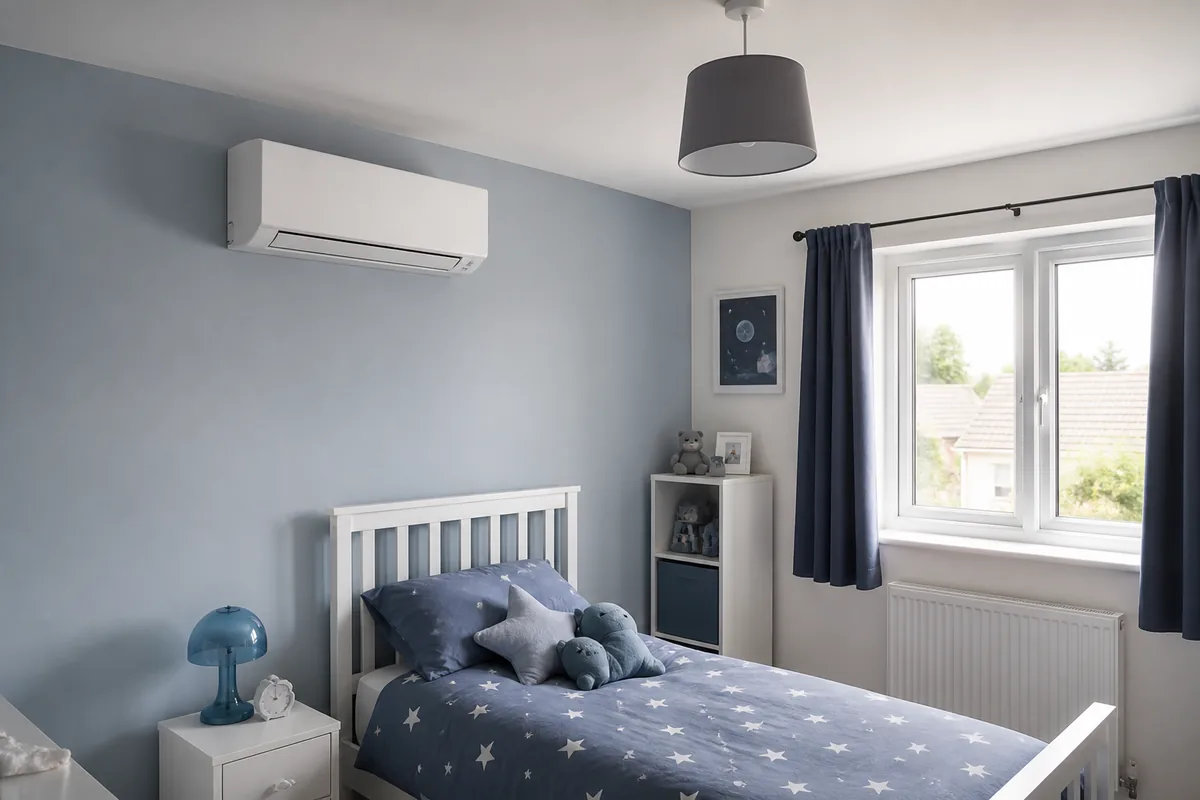
The engineer measures the rooms you will actually shut, notes glazing and which way the windows face, and looks at how you occupy the space on a hot afternoon. That is the cooling duty. A hallway figure, or a guess from floor area alone, is how a bedroom ends up with a unit that short-cycles or never catches up. They should stand where the indoor unit would go and trace the air across the bed or the sofa. If the only clear wall blows straight at the pillow, that is a reason to move the bracket, not a reason to buy a bigger machine.
Clear photos of the indoor wall, the outside elevation and the consumer unit, plus the floor level and whether you want heating as well as cooling, let the engineer arrive with the right ladder. Any lease or listing constraint belongs in that note too.
Pipes, the board and the drain before a price
The survey follows the pipe from the indoor backplate to the outdoor unit: through the wall, along a chase or trunking, and down to a bracket or a ground stand. Total pipe length and the height difference have manufacturer limits. A run that looks short on the landing can fail once it drops two floors and travels the length of a terrace. One outdoor spot has to be big enough for airflow and service, quiet enough for the neighbour, and acceptable under the Planning Portal conditions in England. If that single spot cannot serve the pipe run, the survey should say so. A multi-split drawn on a kitchen table does not fix a missing place to put the condenser.
Someone competent looks at the consumer unit. A dedicated circuit for a 230 V split is the usual outcome. The survey should say whether the board has a spare way or whether a separate electrical visit comes first. Do not expect the air conditioning crew to invent capacity in a full, obsolete board on install morning. Condensate is a pipe, not a drip. Gravity to a gully is the quiet option. A pump is for when the indoor unit sits away from a drain, and it needs a route and a power connection of its own. Ask who registers the warranty and who issues the F-gas record when the system is commissioned. After the visit, the indoor and outdoor model codes, the pipe length, the drain method and the electrical note should be in writing. Compare those lines, not a single lump sum. Ordering from a brochure size before the wall, the pipes, the drain and the outdoor position are agreed is how the wrong kilowatt arrives. As a 2026 illustration, the survey itself is often a modest fee or is folded into the quote, and it is cheaper than ordering the wrong unit.
Frequently asked questions
How long does a house survey take?
A single room with an obvious outdoor wall is often under an hour. Several rooms, a difficult drain or a board that needs an electrician runs longer. Clear photos shorten the visit.
Can the installer order the unit on the day?
Only after the wall, the pipes, the drain and the outdoor position are agreed. Ordering from a brochure size before that visit is how the wrong kilowatt arrives.
Do I have to be at home?
Yes if you can. The decision about which door stays shut, and where you sit or sleep, is yours. A key safe does not answer that.
Core buying guides
Start with these high-intent guides, then dig into the rest of the library.
Related guides
Sources and further reading
How this guide was prepared
This guide was written by the Local AC Installers Editorial Team. We compare official guidance, legislation and established consumer information, separate general information from project-specific advice, and show publication dates and sources. We do not accept installer accreditation claims at face value.