
If the walls are still open, that is the moment to first-fix a split: interconnecting pipes, cables and a condensate route with a proper fall, insulated so they do not stain new plaster. The indoor fascia and the outdoor unit can be second-fixed when the surfaces are finished. Survey the route before anyone chases a wall. Avoid joints you will never be able to see again. The company that later commissions the circuit must be F-gas certified. Plasterers and electricians need the same drawing.
Studs still open, skim not booked
Open walls and floors are cheaper to route through than finished ones. A gravity drain to an outside gulley, a short pipe run to a sensible outdoor wall, and a cable to a dedicated supply can all be placed before plasterboard or wet plaster. Once the skim is perfect, every extra metre becomes trunking or a repair.
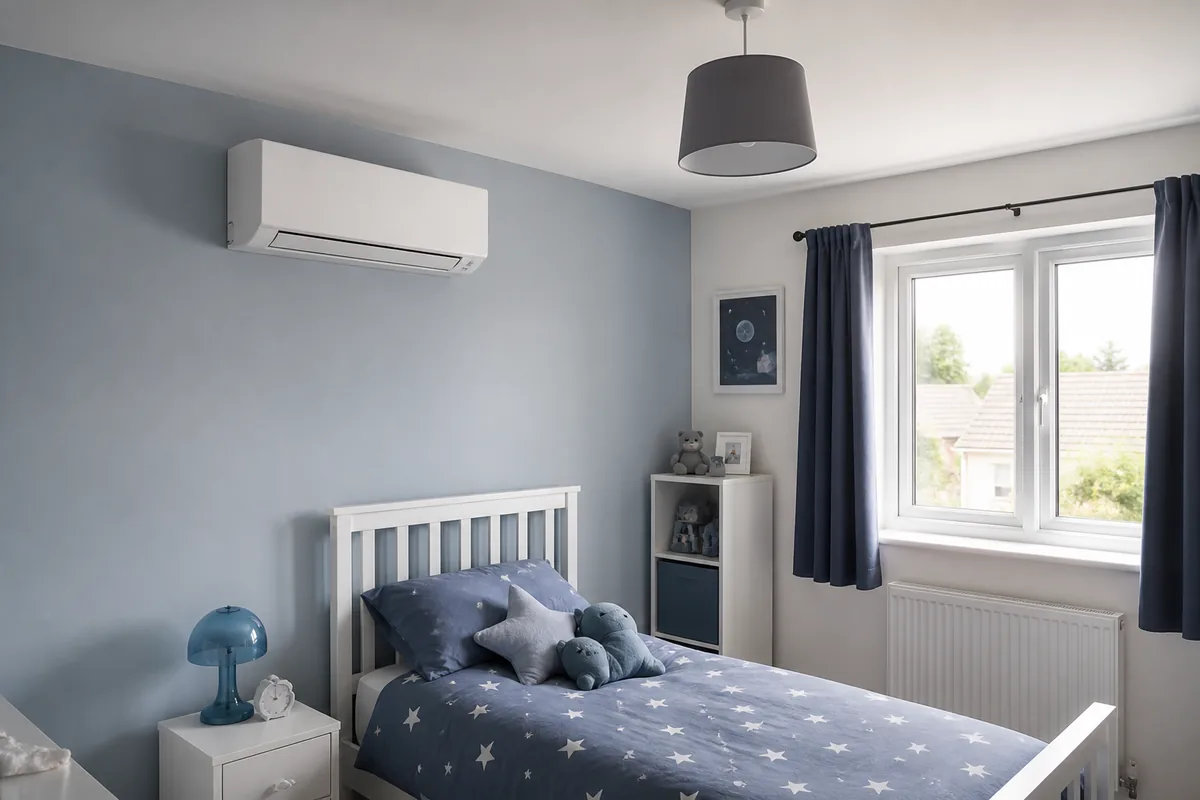
Agree the indoor position while you can still see the studs. A unit centred on a pretty wall is useless if the only timber is at the edge, or if a steel is in the way. The survey should happen before the chases, not after the decorator has left. Route pipes, cables and the drain before plaster. Fit and commission the units after the surfaces are in, ideally after decoration.
What goes into the fabric while you can still see it
Insulate pipework so condensate does not mark new plaster. Photograph routes and depths before they close.
- Pipes, cable and drain in the fabric first.
- Prefer a continuous pipe run to a hidden joint.
- Hang the fascia after plaster, ideally after decoration.
A joint the vacuum cannot see through plaster
If a joint is unavoidable, it has to be made properly and you need a record of where it is. A leak inside a finished wall is an expensive find. The commissioning vacuum cannot see through plaster. You can hide straight, insulated runs if they are recorded. Do not bury uninspectable joints and pumps. A future leak or a failed pump needs a way in.
Condensate must keep its fall. A pipe that rises to dodge a socket will hold water and then overflow the indoor tray. Pumps are for when gravity is impossible, and they need power and access, not a burial in a ceiling with no panel.
The cable size follows the kilowatts
The electrician needs a way in the board, an outdoor isolator position, and a cable size that matches the unit the survey actually chose. First-fixing a random cable because the brand was not picked yet is how you open the wall twice. Decide the kW, then the cable. The Planning Portal is the outdoor-position check before brackets go up because a scaffold happens to be there.
Second fix after plaster keeps the indoor casing clean. If you hang it early, mask it properly and accept that filters and vanes still get dust. Outdoor brackets can go up when the elevation is agreed, including planning and neighbour questions. Energy Saving Trust describes the air-to-air heat pump you are first-fixing. The plasterer should not be the person opening the circuit.
Stop chasing a wall nobody has agreed outside
Share the programme: when walls close, when plaster is dry, when decoration finishes, when the outdoor wall is accessible. Ask for a marked-up photo of first fix before it disappears. GOV.UK F-gas commissioning belongs at second fix, when the equipment is actually on the pipes. Say if the outdoor position is still undecided. A first fix into the wrong wall is worse than waiting a fortnight.
Frequently asked questions
Can I hide all the pipework with no access?
You can hide straight, insulated runs if they are recorded. Do not bury uninspectable joints and pumps. A future leak or a failed pump needs a way in.
Who connects the refrigerant after the plaster is done?
An F-gas certified company, at commissioning. The plasterer should not be the person opening the circuit.
Core buying guides
Start with these high-intent guides, then dig into the rest of the library.
Related guides
Sources and further reading
How this guide was prepared
This guide was written by the Local AC Installers Editorial Team. We compare official guidance, legislation and established consumer information, separate general information from project-specific advice, and show publication dates and sources. We do not accept installer accreditation claims at face value.