
An Essex air-conditioning project should respond to the individual building and its district planning context. Countywide labels are not enough because converted barns, suburban houses, coastal properties and modern flats present different fabric, access and neighbour-noise issues. Local AC Installers can match enquiries with local installers covering Essex and helps customers compare published company details and quotes.
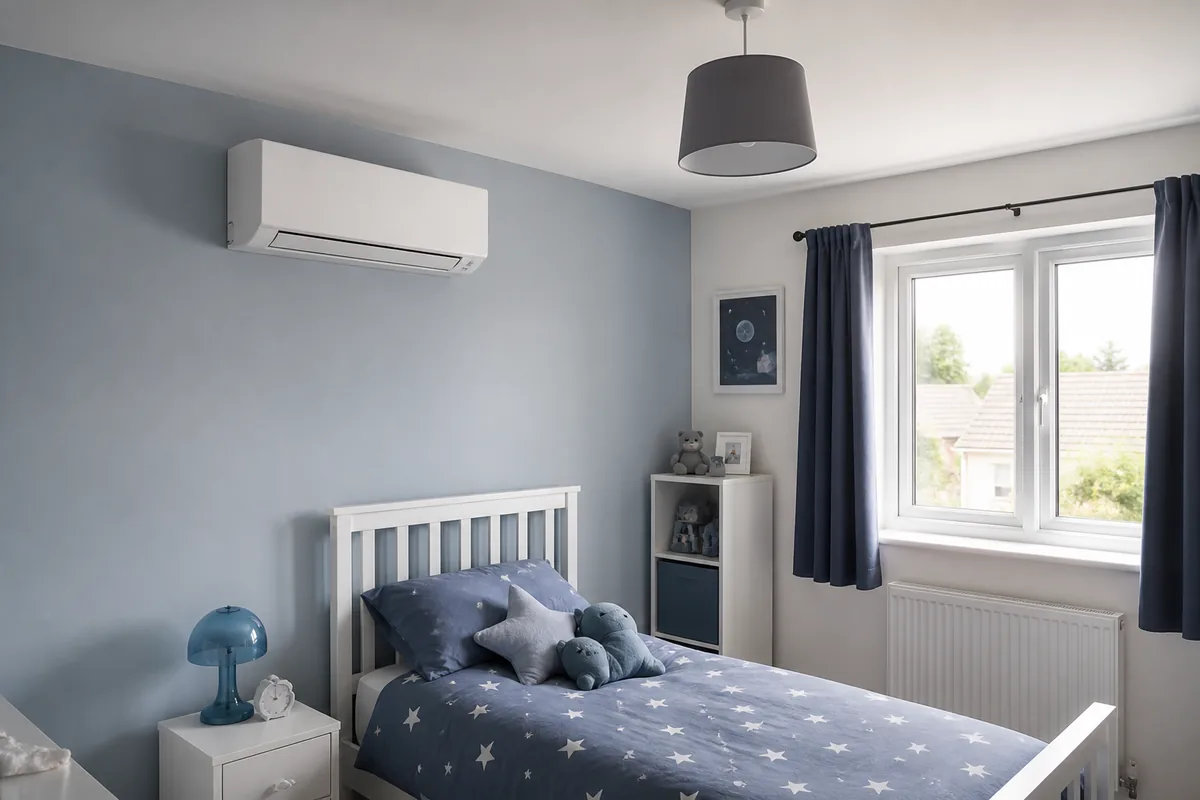
Treat Essex as a collection of local contexts
Planning decisions are generally handled by district, borough or city councils rather than Essex County Council. Before choosing equipment, identify the correct local planning authority and check whether the home is listed, in a conservation area or subject to earlier planning conditions.
Property form matters more than county averages. A lightweight loft conversion may gain heat rapidly, while a deep-plan older house may have cool ground-floor rooms and hot bedrooms. A survey should separate these loads instead of specifying one temperature solution for the whole home.
Rural and edge-of-settlement properties
Detached homes can offer more siting options, but open surroundings do not remove noise concerns. Sound can remain noticeable in a quiet rural background, and a unit facing a neighbouring garden may be intrusive even at a substantial distance.
Long outdoor pipe routes, exposed walls and limited service access can add cost. Where a property relies on private drainage, condensate must not simply be routed into an unsuitable location. Agricultural dust, leaves and salt-laden air in some settings can also influence maintenance planning.
- Protect the unit without restricting intake or discharge airflow.
- Keep service clearances accessible throughout the year.
- Assess the view from neighbouring homes and public routes.
Extensions, glazing and home offices
Large rooflights and glazed garden rooms can create short, intense solar loads. Cooling capacity should be calculated for the glazing orientation and shading, while blinds or external shading should be evaluated first. Cooling an open-plan extension may require a different air-distribution strategy from cooling an enclosed bedroom.
A garden office is often lightweight and intermittently occupied. It may need fast response and frost protection rather than continuous cooling. Its electrical supply, trench route, security and planning status should be checked as part of one design.
Permissions, refrigerants and handover
Use the Planning Portal as an initial guide, then seek a case-specific view from the relevant local planning authority. Listed-building consent is separate from ordinary planning permission, and restrictive covenants or estate rules may create additional private controls.
The company and engineer handling regulated fluorinated refrigerant must hold the appropriate certification. A useful handover includes equipment data, pressure and commissioning records, controls guidance, electrical documents, warranty registration and a clear maintenance schedule.
Frequently asked questions
Which council deals with an Essex air-conditioning application?
Usually the district, borough or city council for the address. Use the government planning authority finder or the Planning Portal rather than assuming Essex County Council decides the application.
Does a detached house always avoid planning permission?
No. The equipment, location, designation of the property and local constraints all matter. Listed buildings, conservation areas and planning conditions need particular care.
What should an Essex survey include?
It should cover room heat gains, glazing and shading, indoor and outdoor locations, sound, electrics, pipe and drain routes, access, permissions and ongoing servicing.
Core buying guides
Start with these high-intent guides, then dig into the rest of the library.
Related guides
- Air Conditioning for Brentwood Homes: A Careful Buying Guide
- Air Conditioning in Chelmsford Homes: From New Flats to Village Houses
- Air Conditioning in London Homes: A Practical Planning Guide
- Air Conditioning Installation in Dagenham: What Households Should Check
- Air Conditioning in Hornchurch and Upminster Homes
Sources and further reading
How this guide was prepared
This guide was written by the Local AC Installers Editorial Team. We compare official guidance, legislation and established consumer information, separate general information from project-specific advice, and show publication dates and sources. We do not accept installer accreditation claims at face value.