
A bike shop is a small retail space, a door that opens onto the pavement, and display lighting on the floor stock. Size the cooling for that pattern. A sealed-office kilowatt figure will look clever on paper and fail on a Saturday. Keep the workshop, if there is one, as its own zone: lube, rubber dust and an open back door are not the sales floor. Staff comfort follows HSE temperature guidance. There is no legal maximum. The split is not a substitute for a door you prop open all day without saying so.
Saturday, the door and the lights on the bikes
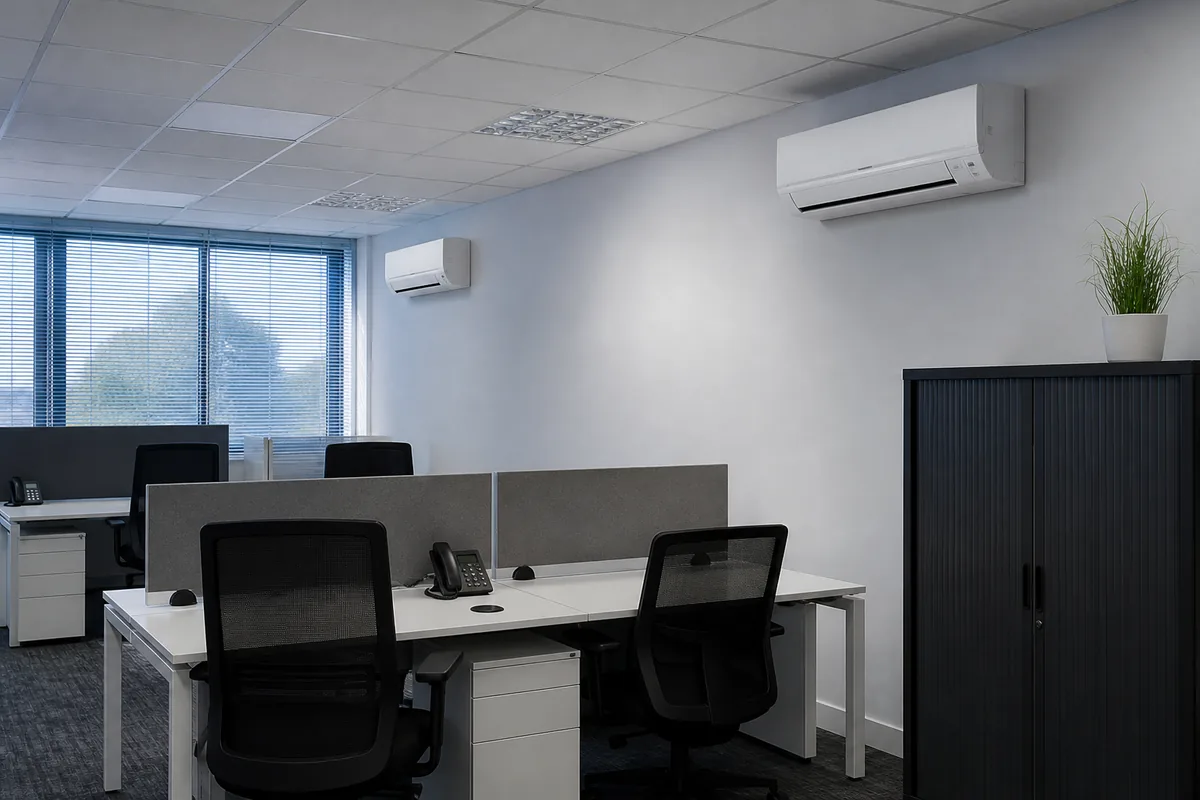
Every test ride and every customer moves the door. If you trade with it propped, say so. The unit then fights the street, and a lower setpoint only spends money. A wall unit or a small cassette aimed along the shop, not at the till person's neck, matches the scale of most independent shops. Spots on bikes add heat at head height. Include them. A Saturday trading pattern is the load that matters. Staff comfort follows HSE temperature guidance. There is no legal maximum.
Workshop dirt, the yard and the van
A repair stand throws a different mess: dust, spray, and a door to a yard. A filter sized for a boutique will blind. Either separate the workshop with a door and its own ventilation, or accept a shorter service interval and a more robust filter. Do not put the only indoor unit over the workstand and hope the shop feels it. Keep workshop dirt out of the shop filters. One retail zone is enough for many shops. A door between the workshop and the sales floor is the usual split of the job.
Yards behind bike shops fill with stands, boxes and a van. The condenser needs airflow and a place the van will not reverse into. A bracket over the workshop door is a common clash. Security matters on a side street: a unit that offers a step up to a flat roof is a bad mount. Noise toward the flat above, if there is one, is the complaint that arrives in June. Anti-vibration mounts are cheaper at install. The lease decides the elevation. A domestic Planning Portal note is not automatic permission for a shop.
Condensate off the brakes and the public floor
Condensate must not drip onto brakes, boxes or the public floor. Route it outside properly. F-gas certification applies. If the plant is large enough, check GOV.UK air conditioning inspections. A single shop split is often under that line. Ask rather than assuming either way. Name staff numbers at the till.
Frequently asked questions
Can one cassette cool the shop and the workshop?
Only if they are one open space and you accept workshop dust in the retail unit. A door between them means two zones, or a choice about which room you actually cool.
The door is open all summer. Should I set it colder?
A colder setpoint with the door fixed open mostly raises the bill. Tell the installer the door habit so they do not pretend the shop is sealed.
Will the unit dry wet bikes?
No. Do not aim it at a row of wet cycles as a dryer. It is for the people in the shop. Water on the floor is a slip risk the unit will not solve.
Should I cool the stock mezzanine or the tyre cellar?
A mezzanine of stock is not occupied, and it does not need its own indoor unit unless someone works up there. Do not cool the cellar of tyres because the shop is warm.
Core buying guides
Start with these high-intent guides, then dig into the rest of the library.
Related guides
Sources and further reading
How this guide was prepared
This guide was written by the Local AC Installers Editorial Team. We compare official guidance, legislation and established consumer information, separate general information from project-specific advice, and show publication dates and sources. We do not accept installer accreditation claims at face value.