
A phone repair shop is a small room, a counter, heat from lamps and charged screens, and a door that opens to the pavement. One wall unit or a small cassette fits that scale. Soldering and adhesive fumes are not a job for the split. They need the extract the task requires, to outside. The air conditioner recirculates. Use it for staff comfort under HSE temperature guidance, and keep condensate off the bench where handsets sit. There is no legal maximum workplace temperature, and a colder remote does not make fumes safer.
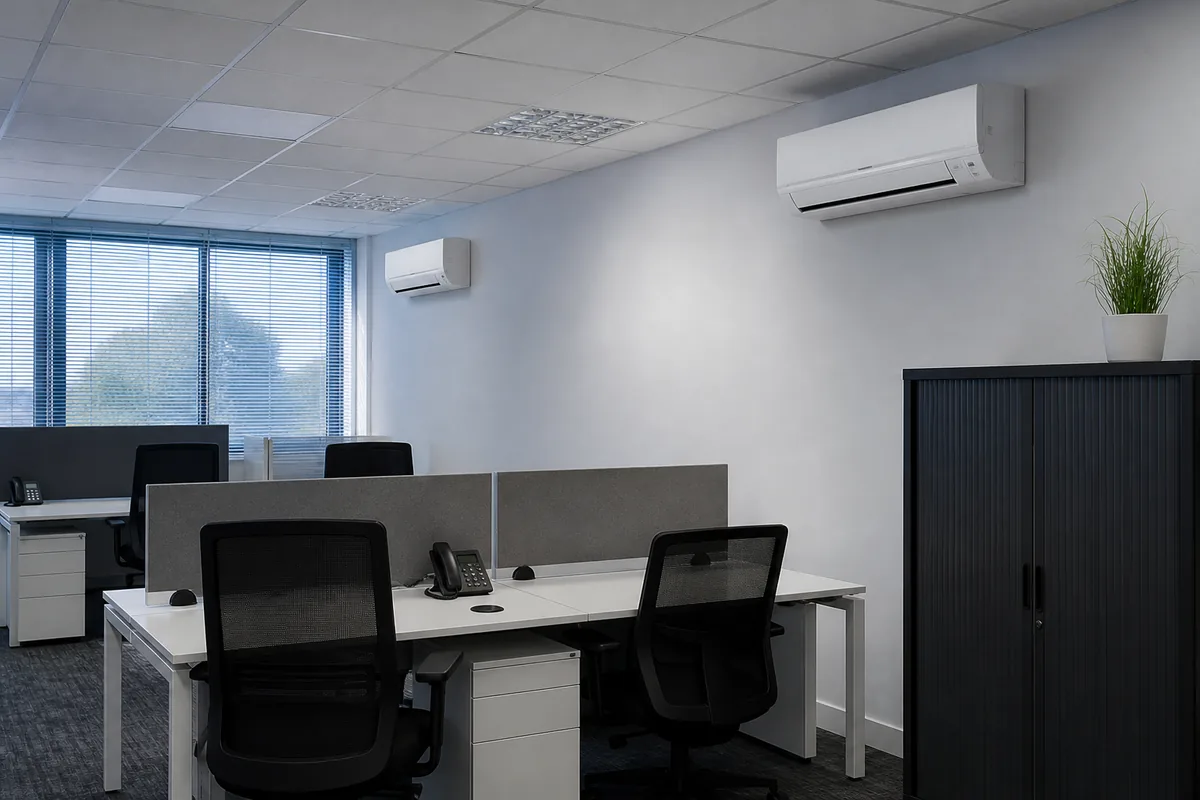
Sun on a few metres of glazed front
Most of these shops are a few metres deep with a glazed front. Sun on that glass, plus a display of lit phones, is the gain. Two people behind a bench is the occupancy. Survey that. Copying a big retail cassette because the street looks busy will overcool a shut shop on a Tuesday and still fail if the door is propped.
Lamps, lit phones and how the door trades
Say how you trade. A door that opens every few minutes is a real load. A door held open all day is a different design. Do not leave the installer to guess from a photo taken at closing time. A phone shop and a bike shop are both small retail with a door. The repair bench, the fumes and the size of the stock are different. Price this counter, not a workshop next door.
Flux leaves through an extract
Flux and adhesives belong with an extract or a bench arrangement that the product instructions allow.
- Size the small retail volume and the glass.
- Include lamp and screen heat.
- Extract soldering fumes separately.
- Keep water off the repair bench.
Swarf and a bench that stays dry
Plastic swarf and dust still reach a filter. It is light compared with a bike workshop, and it still wants a reachable filter. High value handsets should not sit under a drain joint. Route condensate outside, and do not run a pump discharge across the bench. Condensate must not drip behind the counter. Ask for a drain to outside that you can see tested. If a store room holds stock and people never sit there, do not pay to cool unoccupied drawers.
Alley mounts, cages and the flat above
The outdoor unit on a back alley should not become a step to a window or a place to hide. Ask the installer about mount height, cages only if airflow survives, and lighting you already use. A cage that starves the coil is a cooling fault. F-gas certification applies. Check GOV.UK air conditioning inspections if you add more shop units later. One counter split is a small system. The lease and planning still decide the outside face. Noise into a flat above a parade is the usual limit. HSE temperature guidance is the staff comfort duty. There is no legal maximum workplace temperature.
When a colder remote is the wrong answer to fumes
Closing the door and running the split concentrates what you should have sent outside. Comfort cooling comes after the extract, with the room in the state you will actually use. A colder remote does not make fumes safer, and it does not remove soldering or adhesive vapour. The air conditioner recirculates. Use it for temperature once the bench extract is in place.
Core buying guides
Start with these high-intent guides, then dig into the rest of the library.
Related guides
Sources and further reading
How this guide was prepared
This guide was written by the Local AC Installers Editorial Team. We compare official guidance, legislation and established consumer information, separate general information from project-specific advice, and show publication dates and sources. We do not accept installer accreditation claims at face value.