
Cool a counselling room so two people can sit and talk without a draught on the chairs or a compressor on the other side of the wall. Quiet on a low fan matters more than a large kilowatt figure. Book the engineer. An unannounced visit breaks the confidentiality the room exists for. This is about comfort and installation. It is not advice about therapy. HSE workplace temperature guidance applies to you as the person working there. There is no legal maximum temperature, and a colder setpoint is not a clinical tool.
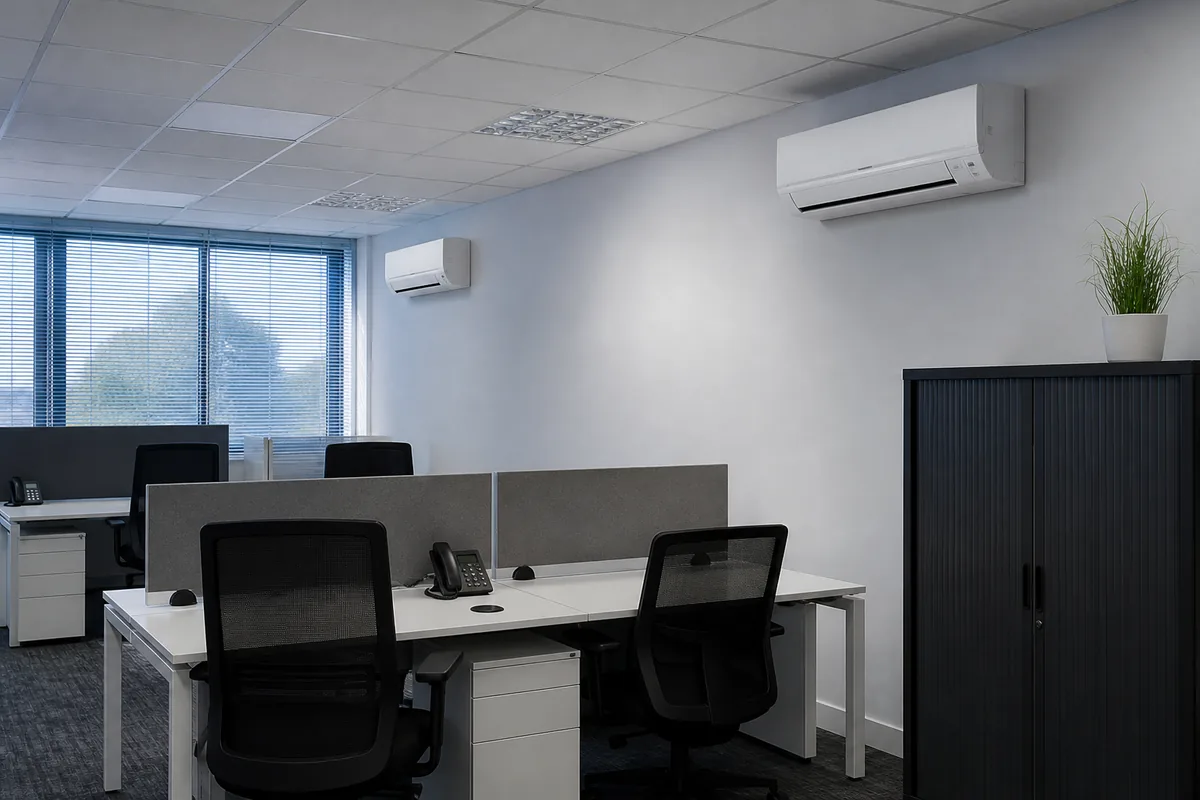
Air along the ceiling, not across the two chairs
Mount the indoor unit so the vane sends air along the ceiling, not across the two seats. A blast on the back of a neck ends a session faster than a warm room does. Sit in both chairs at the survey and trace the throw. A floor console under a window often fails this test because it blows at ankle and shin. One small wall split is the usual machine for a single room. Size it for that room with the door shut. An open door to a waiting area shares private sound and dumps the cooling. The waiting area, if it needs comfort too, is a second zone, not a door wedge.
The indoor sound figure on low fan is the number to compare. The outdoor unit on a bracket the other side of the talking wall is the number clients actually hear. Anti-vibration mounts and a side or rear elevation, away from the chairs, are the practical fix. A premium fascia does not cancel a humming brick pier. Pipes in a plastic trunking can tick as they warm and cool. Ask for a route that does not cross the quietest wall.
Booked visits and a condenser off the talking wall
Tell the installer, in writing, that they cannot attend on a guess. Give windows when the room is empty, and a phone number that is not answered mid-session. Filter changes and services belong in that diary. A condensate leak is the exception, and even then the approach should be a call, not a knock during the hour. Name the hours you cannot be interrupted.
If the building is a flat, the lease and the neighbour below matter as much as the remote. Planning still has to be checked. A householder page on the Planning Portal is only a start when the room is a workplace in a block. F-gas certification applies to the install. Keep the paperwork off the client table and in the file. If the system later grows past a single room, check GOV.UK to see whether air conditioning inspections apply. A single quiet split often sits below that concern. Do not buy a commercial inspection to sound thorough. HSE workplace temperature guidance applies to the person working there. There is no legal maximum temperature, and a colder setpoint is not a clinical tool. Ask for a setpoint the room can hold quietly.
Frequently asked questions
Can the engineer call in between clients?
Only if you have booked that gap. A gap you did not confirm is still a session risk. Put visit times in writing.
Will clients feel a draught if the room is cool enough?
They will if the vane points at the chairs. Aim along the ceiling and use a low fan. Comfort is the room temperature, not air on skin.
Does a colder room help the work?
This page cannot say that, and it would be the wrong reason to buy a unit. Cool the room to a temperature you can both sit in. Clinical questions stay with the relevant profession.
Core buying guides
Start with these high-intent guides, then dig into the rest of the library.
Related guides
Sources and further reading
How this guide was prepared
This guide was written by the Local AC Installers Editorial Team. We compare official guidance, legislation and established consumer information, separate general information from project-specific advice, and show publication dates and sources. We do not accept installer accreditation claims at face value.