
A home recording studio needs the room cool and the microphones free of fan noise and structure-borne hum. A domestic wall split can serve a project studio if it runs on a low fan, the outdoor unit is off the studio wall, and the mounts stop vibration entering a party wall. It will not deliver broadcast silence. Brochure figures near 18 dB(A) are lab values on the quietest setting, not the sound of a unit working in a vocal booth. For a treated live room, a ducted indoor in a cupboard is often easier to record beside.
Voice-over, podcast or a loud band room
Speech and acoustic guitar show up fan whir, grille hiss and a compressor ticking through a bracket. Drum rooms and loud guitar rooms mask more. Write the use down: voice-over, podcast, band practice. The plant specification follows that, not a generic bedroom quote.
Ask for indoor sound at the fan speeds you will actually use while recording, and outdoor sound with the unit on the wall you propose. Compare those figures. Do not compare a minimum marketing number with a cinema NC target you have not defined. Keep the outdoor unit off the live-room wall. Use anti-vibration mounts on any bracket. Prefer a low fan and enough capacity that it is not racing.
A fan in the same air as the microphone
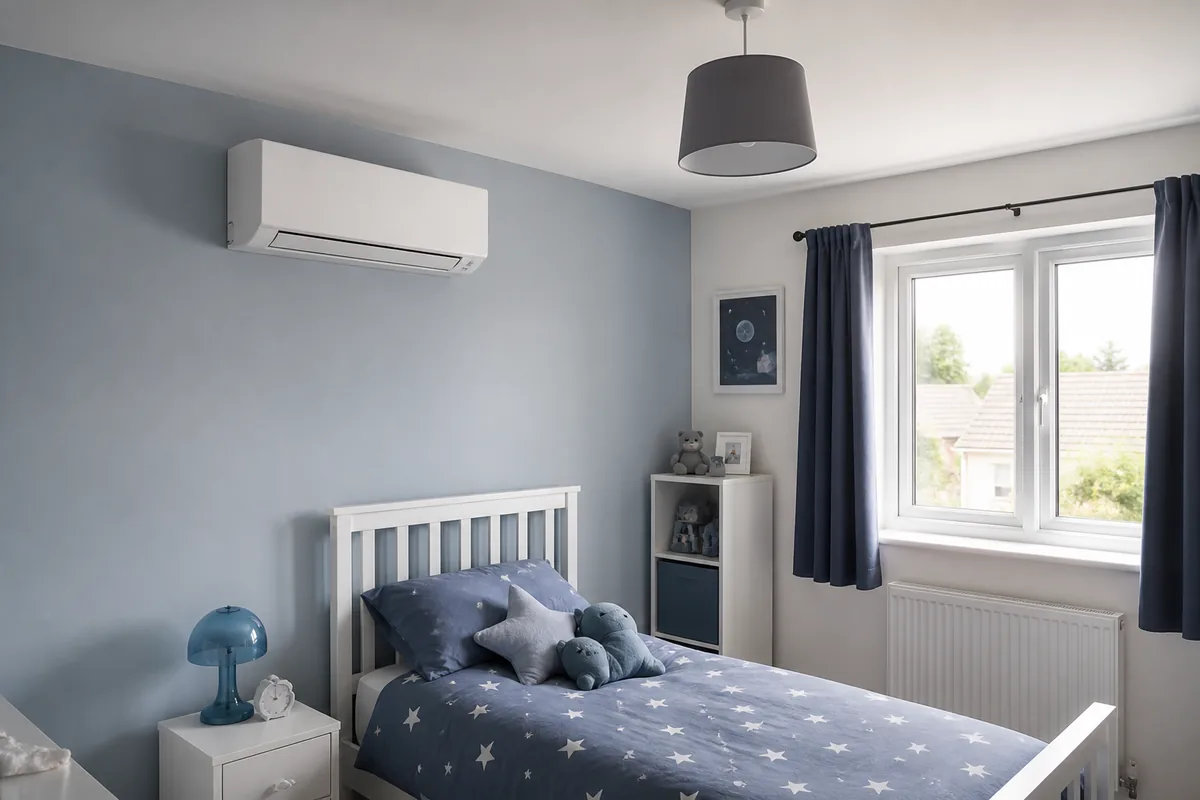
A wall indoor in the booth is simple and visible, and the fan is in the same air the microphone hears. You can record with it on a low speed between takes, or switch it off for the take and accept the temperature drift. That is a workable project-studio compromise. It is not a dubbing theatre.
Let the survey set kW from people, computers and lights. Acoustic treatment adds insulation and changes the load. Computers, monitors and people are the gains.
A cupboard, lined duct, and the party wall
A short ducted run from a cupboard, with lined duct and a sensible grille velocity, moves the fan noise away from the mic. Consider a ducted indoor outside the booth if vocals must be clean. It needs space, a condensate pump and commissioning so the grilles do not whistle. That is more install than a wall unit and a better recording tool.
The outdoor unit remains the low-frequency risk. Put it away from the live room and from party walls, on anti-vibration mounts. Rubber feet, a solid mass under a ground stand, and distance from the party wall matter. Structure-borne hum is the problem a microphone and a neighbour both notice. Neighbours hear structure-borne noise even when the microphone does not. F-gas installation, 230 V electrics and planning for the outdoor unit all apply. In England, start with the Planning Portal. Do not promise a noise criterion the domestic system has not been designed to. A split recirculates. It does not provide fresh air by itself.
Frequently asked questions
Will a quiet bedroom split be silent on a recording?
Not silent. On a low fan it can be acceptable for podcasts and loud sessions. Close-mic vocals often need the fan paused or a ducted unit outside the booth.
Where should the outdoor unit go?
Away from the live room and from party walls, on anti-vibration mounts. Structure-borne hum is the problem a microphone and a neighbour both notice.
Does the studio need fresh air as well as cooling?
If it is sealed for sound, yes, ventilation is a separate design. Cooling alone recirculates the room air.
Should I oversize the unit so it always loafs?
Oversizing so the unit always loafs can reduce noise, and it can also control humidity badly in a small treated room. Let the survey set kW from people, computers, lights and the acoustic treatment.
What if the studio is in a flat?
A studio in a flat needs the lease as well as planning for the outdoor unit. In England, start with the Planning Portal. Do not promise a client a noise criterion the domestic system has not been designed to.
Core buying guides
Start with these high-intent guides, then dig into the rest of the library.
Related guides
Sources and further reading
How this guide was prepared
This guide was written by the Local AC Installers Editorial Team. We compare official guidance, legislation and established consumer information, separate general information from project-specific advice, and show publication dates and sources. We do not accept installer accreditation claims at face value.