
The right air conditioning unit for a flat is decided by the building before the brochure: what the freeholder will consent to and where a condenser can legally and quietly sit filters the options to a shortlist. With consent, a wall split, or a multi split for two or more rooms, is the best unit on noise, running cost and comfort, with balconies and roofs as the usual condenser homes. Without consent for external plant, monobloc through-wall units are the strongest fallback, and portables cover renters and single heatwaves. Ceiling and concealed options exist for flats with voids, mostly in penthouses and new builds.
Rank the units by what blocks allow
Wall split with an external condenser: best performance, needs freeholder consent and usually planning permission. Multi split: same consent, one condenser serving bedroom and living room, the standard two-room flat answer. Concealed ducted or slim cassettes: superb in flats with ceiling voids, generally new builds and top floors.
Monobloc through-wall: no condenser, two vent grilles, consent usually easier, compressor noise indoors. Portable: no consent at all, hose out of the window, the renter's unit. Every flat lands somewhere on that ladder.
- Consent difficulty rises with anything fixed to the external envelope.
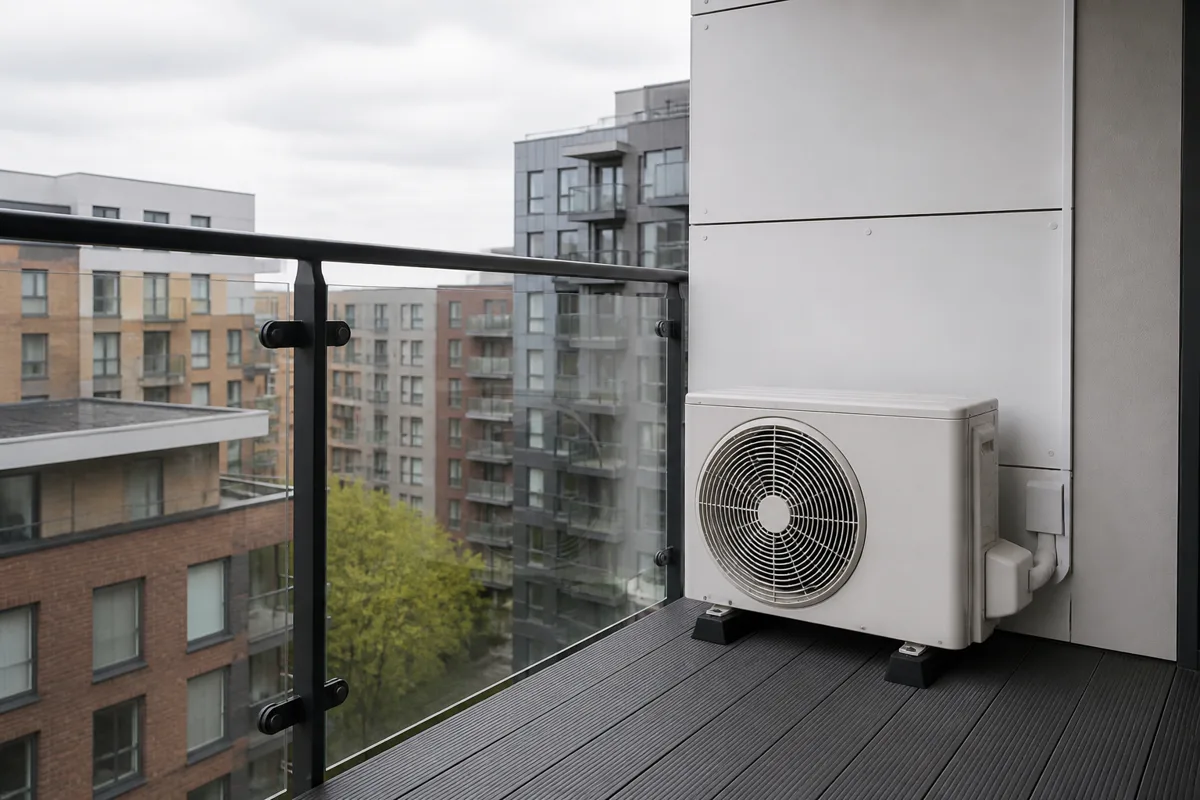
- Balconies and flat roofs are the most commonly approved condenser homes.
- Multi splits serve two or three rooms from one outdoor unit.
- Monoblocs are the strongest no-condenser option for owners.
- Portables are for tenants and stopgaps, not permanent comfort.
Noise decides more than brand
Flats put neighbours a wall away and sleepers in the cooled room. Check the outdoor unit's sound pressure at the nearest neighbouring window and the indoor unit's night figure at low fan speed; both numbers exist in every quality datasheet.
Anti-vibration mounts, sensible condenser siting away from bedroom walls, and night mode settings prevent the complaint that gets consent revoked. The outdoor unit noise guide covers the details.
Cost shape by unit type
As 2026 illustrations: a single wall split installed in a flat with easy access commonly lands in the low thousands of pounds; a two-room multi split in the mid thousands; monoblocs price near a premium single split once building work is counted; portables cost hundreds upfront and roughly triple the electricity per cooled kilowatt.
Freeholder licence fees, block access rules and out-of-hours working windows are flat-specific costs that houses never see. Budget for them before comparing quotes.
The order of operations
Lease check, freeholder conversation in writing, then survey, then quotes naming the condenser position. Skipping to quotes wastes everyone's month, as the leaseholder consent guide explains at length.
Use the quote form with floor level, external photos and the consent position. Installers experienced in blocks respond with realistic options rather than a house quote wearing a flat's address.
Frequently asked questions
What is the best air conditioning unit for a flat?
With freeholder consent, a wall split, or a multi split for several rooms, wins on noise, efficiency and comfort. Without consent for external plant, a monobloc through-wall unit is the strongest fixed fallback, and portables cover tenants and short heatwaves.
Can I put an air conditioning condenser on my balcony?
Often yes with freeholder consent, subject to noise at neighbouring windows, safe fixing and drainage. Balconies and flat roofs are the most commonly approved positions in blocks; the lease and planning position still need checking first.
How much does air conditioning cost for a flat?
As a 2026 illustration: low thousands of pounds installed for a single wall split, mid thousands for a two-room multi split, plus any freeholder licence costs. Monoblocs land near premium single split money; portables are hundreds upfront with high running costs.
Core buying guides
Start with these high-intent guides, then dig into the rest of the library.
Related guides
Sources and further reading
How this guide was prepared
This guide was written by the Local AC Installers Editorial Team. We compare official guidance, legislation and established consumer information, separate general information from project-specific advice, and show publication dates and sources. We do not accept installer accreditation claims at face value.