
A bungalow bedroom is often an outside wall at ground level, so the pipe run can be short: indoor unit on the bedroom wall, outdoor unit just outside or around one corner. If the bedroom sits in the middle of the plan, the loft is the usual route for pipes, while the condenser stays outdoors. Night noise matters because the outdoor unit is at pillow height. Condensate can often fall to a nearby gully. Survey the room even though the building is single storey.
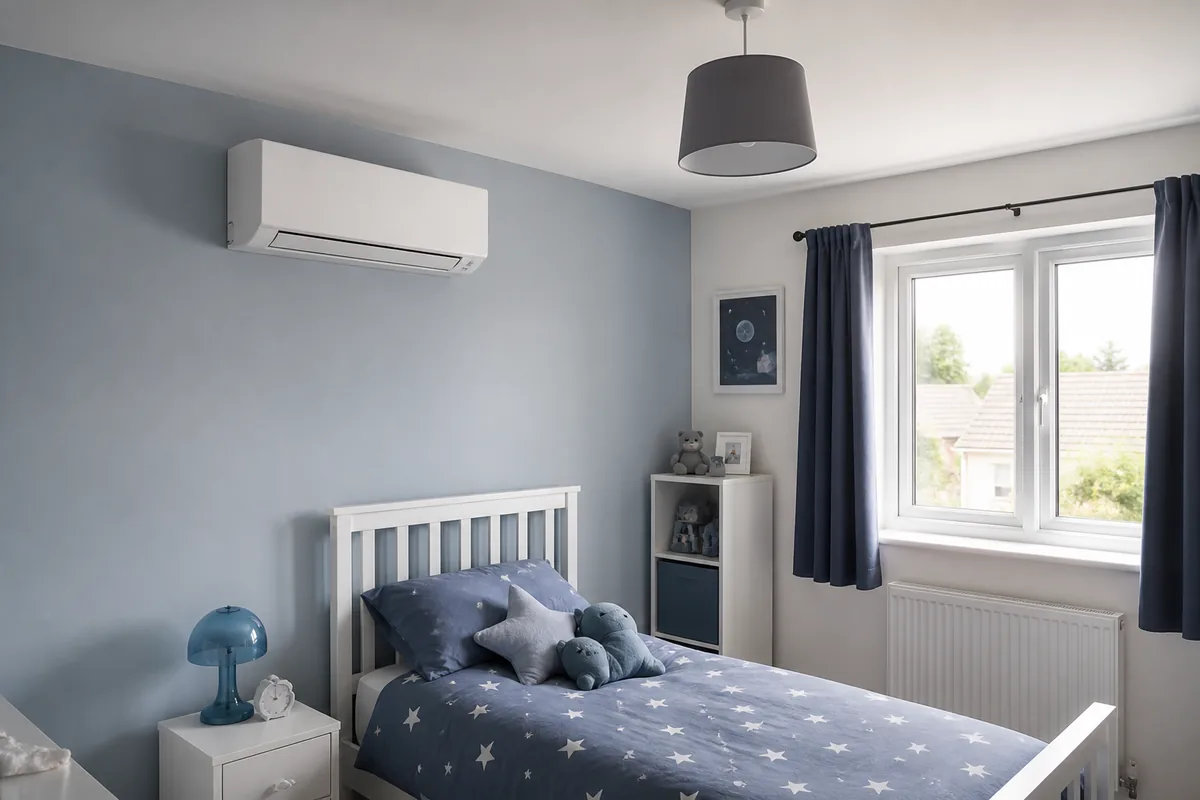
A condenser at pillow height under the bedroom window
On a two-storey house the bedroom pipes drop a full floor. In a bungalow the outdoor unit can sit on a slab or brackets a metre or two from the indoor unit. That convenience tempts people to put the condenser under the bedroom window. It will be the loudest place in the house at midnight.
Use the short run on a quieter wall
Shorter pipes stay inside manufacturer limits easily and lose less performance. They still need insulation, a proper flare or jointing practice, and an F-gas commission. Walk the garden for a gable, a utility wall or a ground stand away from the headboard.
- Use the short run. Do not waste it on the noisiest wall.
- Loft routes serve internal bedrooms. The outdoor unit stays outside.
- A gravity drain to a gully is often possible at ground floor.
- Anti-vibration feet matter because the unit is low and close.
Across the loft, not planted in it
Bungalow lofts are handy for crossing a corridor to reach a better outdoor wall. Support the pipes, keep them out of the walking path on stored boards, and do not crush the insulation. The condenser does not sit in that void. Yes, pipes can run through the bungalow loft. That is a normal route to a better outdoor wall.
Older bungalow lofts hold water tanks and fragile ceilings. Ask for boards for the installer and a plan that does not leave you with a stained ceiling. Condensate should leave through a drain, not into the loft.
A modest bedroom and a vane off the bed
Many bungalow bedrooms are modest and land around 2.0 to 2.5 kW, unless they have a sunny patio door. Aim the vane away from the bed. A quiet indoor on a low fan is worth specifying because this is a sleeping room.
Reverse-cycle heating is attractive in a bungalow bedroom that is far from the boiler. Read the output. The unit supplements the room. It is not a whole-house heating redesign.
Stop when the wall is a thin panel or the patio is the boundary
Single storey does not remove planning rules. In England, check Planning Portal conditions for air source heat pumps, including where the unit sits relative to boundaries. Bungalow gardens are open, so sound travels to the neighbour's patio. The short run is not a cheaper job if the outdoor position is bad, the loft is crowded with tanks, or a covenant removes the advantage.
Park-home style bungalows and estate covenants are a separate limit. If the bedroom wall is a lightweight panel, use a ground stand rather than brackets ripped into a thin frame. Do not put the outdoor unit under the bedroom window just because the pipe would be short.
Frequently asked questions
Is a bungalow bedroom a cheaper air conditioning job?
Often the pipe run is shorter than on a house with stairs, which helps. A bad outdoor position, a loft crowded with tanks, or a covenant can remove that advantage.
Should the outdoor unit go under the bedroom window?
That is the short pipe and the worst noise. Prefer a nearby wall or ground stand away from the bed and from neighbours.
Core buying guides
Start with these high-intent guides, then dig into the rest of the library.
Related guides
Sources and further reading
How this guide was prepared
This guide was written by the Local AC Installers Editorial Team. We compare official guidance, legislation and established consumer information, separate general information from project-specific advice, and show publication dates and sources. We do not accept installer accreditation claims at face value.