
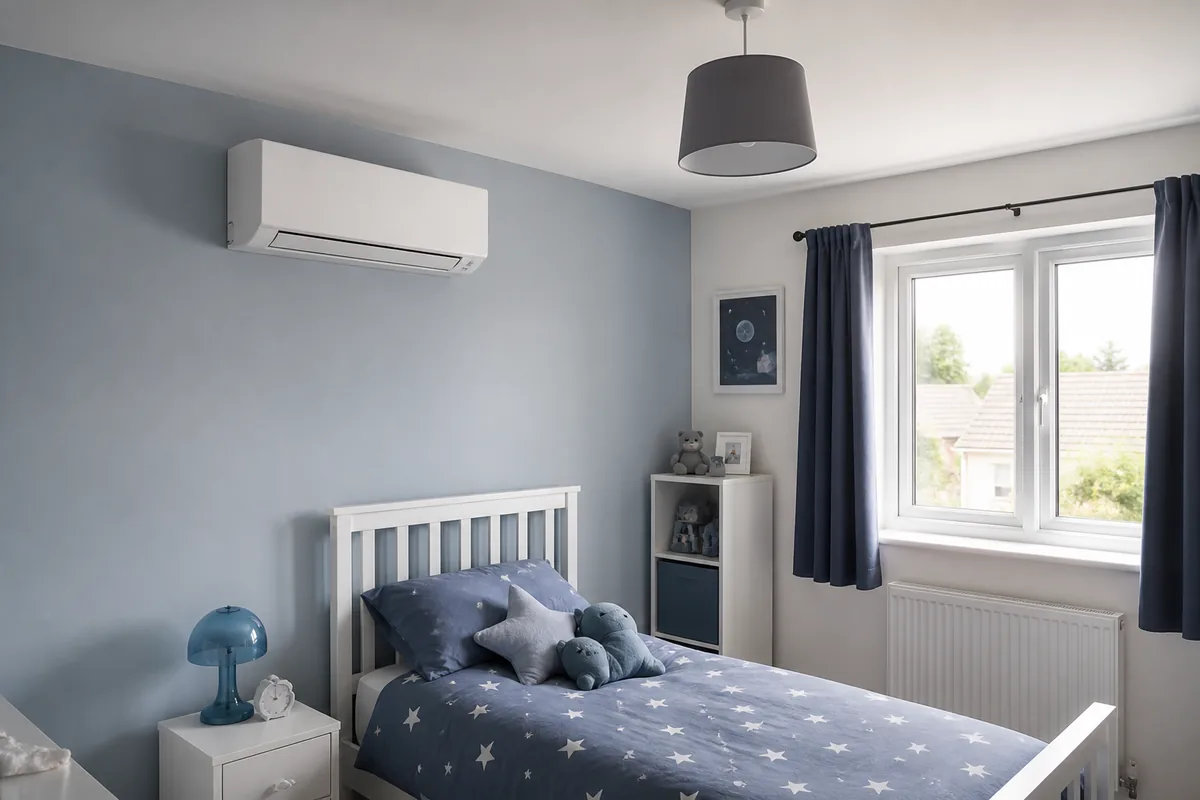
For a bedroom, prioritise low sound at the intended night setting, gentle airflow and correct heat-load sizing. A professionally installed split system is generally quieter indoors than a portable exhaust-hose unit, but passive cooling should be tried first and the outdoor unit must not disturb neighbours. Avoid choosing capacity from floor area alone.
Reduce the night-time heat load first
Keep direct sun out before it heats the room. External shading is most effective where practical and permitted, while well-managed blinds or curtains can still help. Ventilate securely when outdoor air is cooler and local noise and air quality make that sensible.
Loft insulation, shaded rooflights and lower internal gains can be especially important for top-floor bedrooms. These measures reduce dependence on active cooling and can improve comfort elsewhere in the home.
Choose for sleeping, not just headline output
Ask for indoor sound information at low, normal and maximum fan settings. The quietest published mode may deliver less cooling, so the installer should explain whether it can maintain comfort during expected night conditions.
Indoor-unit position matters. Air should mix through the room without blowing directly across the sleeper. Control lights, beeps, minimum set points and timer behaviour are worth checking before purchase.
Portable and split options
A portable air conditioner can be useful in a rented room, but the compressor remains indoors and the exhaust hose needs a properly managed window opening. Leaving a window widely open around the hose admits heat and noise.
A split refrigerant system moves the compressor outdoors and normally provides steadier, quieter bedroom operation. It needs professional installation, a condensate route and permission for the outdoor unit where required. It is not safe or lawful to improvise the refrigerant connection.
- Measure sound at the bed position if comparing an existing installation.
- Keep airflow away from the pillow and occupied zone.
- Provide a gravity drain where feasible and protect against leaks.
- Keep filters reachable without moving heavy furniture.
Outdoor-unit and permission checks
Night use makes outdoor-unit location sensitive. Avoid relying only on a catalogue sound number. Consider neighbouring bedroom windows, reflective corners, vibration paths, mounting and the unit's behaviour at night.
Check current planning rules, lease terms and freeholder or landlord consent before installation. Listed buildings and conservation areas may involve additional controls. A clear written proposal should show positions, routes, dimensions and noise information.
Frequently asked questions
What temperature should a bedroom air conditioner be set to?
There is no single correct setting for everyone. Use the highest setting that remains comfortable, avoid a large abrupt difference from outdoors and use timers or sleep controls sensibly.
Is a bigger bedroom unit quieter because it works less?
Not necessarily. Oversizing can cause short cycling, draughts and unstable comfort. Correct selection should account for the room load and low-load operation.
Can I run a portable unit all night?
Only in accordance with its instructions and with a secure, suitable exhaust arrangement. Check noise, drainage if applicable and electrical requirements, and never obstruct the hose or grilles.
Will closing the bedroom door stop a split system working?
A correctly designed room unit should work with the door closed. If the system relies on shared return air or cooling from another room, closed-door performance needs specific assessment.
Core buying guides
Start with these high-intent guides, then dig into the rest of the library.
Related guides
Sources and further reading
How this guide was prepared
This guide was written by the Local AC Installers Editorial Team. We compare official guidance, legislation and established consumer information, separate general information from project-specific advice, and show publication dates and sources. We do not accept installer accreditation claims at face value.