
Clear water dripping from a UK outdoor unit during heating is usually defrost melt, and in humid cooling you may also see a little water if an outdoor coil sweats. It should run from the base pan drain holes, not from electrical glands. Keep those holes clear of silt if you can reach them from the ground with the unit off. Oily stains, greenish oil on pipe joints, or water mixed with a slick are not defrost. Stop and call an F-gas engineer. Do not taste the liquid, do not open valves, and do not assume every puddle is a refrigerant leak.
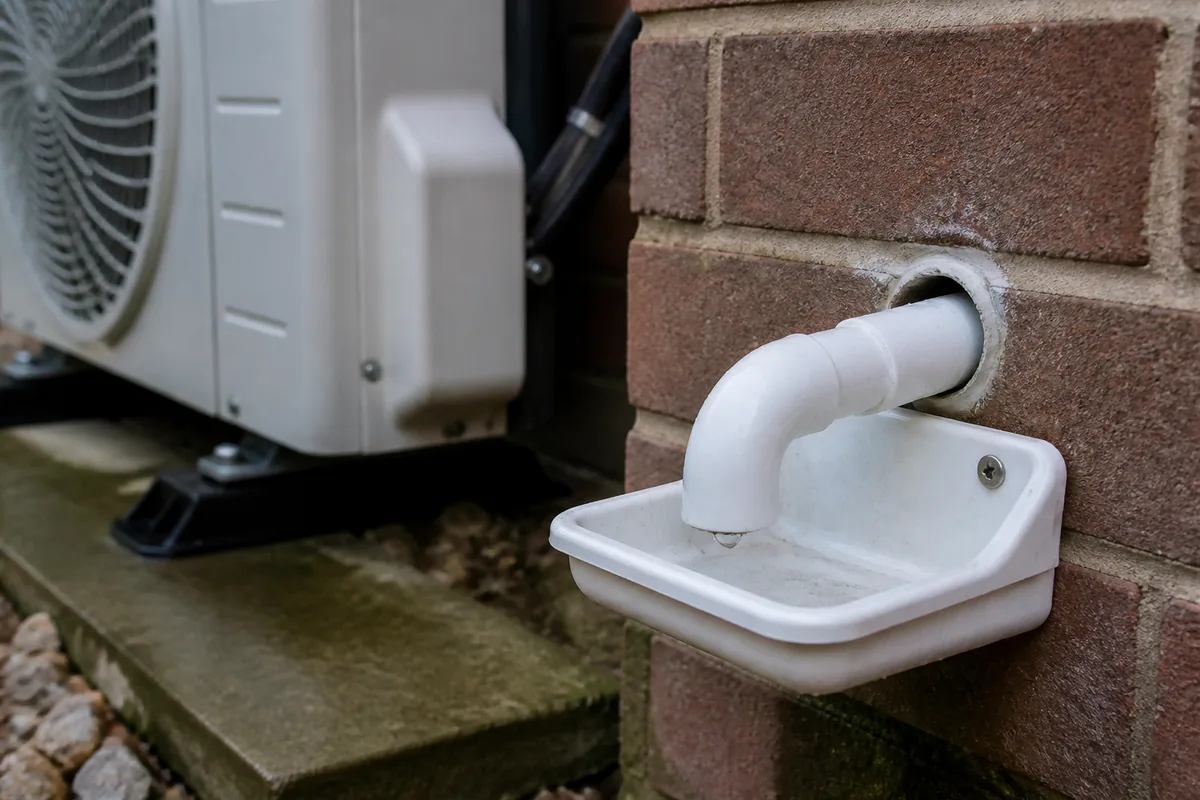
Clear winter water from the base, and the cooling spout that is different
In UK winter the outdoor coil frosts and then defrosts. Energy Saving Trust describes heating mode as an air-to-air heat pump collecting heat outside, which is why that coil ices and then sheds water. A surprising amount of clear water leaves the base for a few minutes. It should drain and stop. Units on balconies annoy the flat below when that water is not piped away. Units on decking refreeze if the holes are blocked and the water has nowhere to go but back into the coil. A constant oily weep is not that puddle.
In cooling, the main condensate should leave from the indoor drain, outside through a spout or via a pump. A wet outdoor base in cooling is not automatically the indoor drain. It can be rain, a blocked base, or coil sweat. Look at when it happens. Defrost water follows heating in cold damp weather. Indoor drain water follows cooling and usually exits a small pipe, not the whole base pan. If water appears on an internal wall, that may be the indoor condensate or a pipe sweating in the fabric. It should not be defrost water running back indoors.
Clear the slots, leave the pan undrilled, and stop for oil
With the isolator off and the fan still, from the ground, clear leaves and mud from the existing base drain slots with a soft tool. Do not drill the pan. Do not tip the unit. Do not route the water into a neighbour's garden with a makeshift gutter that falls the wrong way. Do not plug the holes to stop drips on the path. Blocked holes refreeze the base and can lock the fan. The water needs a planned route, which an installer can add. If the puddle freezes on a path, that is a slipping hazard and a siting problem. You might carefully break ice on the paving with the unit off. Do not chip ice off the fins. Say whether a balcony below catches the drip.
Refrigerant oil leaves a persistent mark and holds dust. Clear water does not. If joints look wet with oil, if the insulation is saturated and brown, or if cooling and heating have both fallen away, leave the system off and call an F-gas engineer. HSE F-gas rules and GOV.UK certification are why that leak check is theirs. Do not wipe it and hope. Do not tighten flares. Do not use a leak detector app or a bubble mixture on live electrics. Do not taste the liquid. A puddle of clear defrost water does not need gas added. An oily joint might need a repair and a proper recharge, which is their work, not a top-up bottle. Photograph the base and say if the water is oily.
Frequently asked questions
Is it normal to see a puddle in winter?
Yes, if the unit is heating and the water is clear defrost melt. It should drain and stop. A constant oily weep is not normal.
Can defrost water run back indoors?
It should not. If water appears on an internal wall, that may be the indoor condensate or a pipe sweating in the fabric. Photograph both and switch off if plaster is getting wet.
Should I block the outdoor drain holes to stop drips on the path?
No. Blocked holes refreeze the base and can lock the fan. The water needs a planned route, which an installer can add. Do not plug the pan.
Core buying guides
Start with these high-intent guides, then dig into the rest of the library.
Related guides
Sources and further reading
How this guide was prepared
This guide was written by the Local AC Installers Editorial Team. We compare official guidance, legislation and established consumer information, separate general information from project-specific advice, and show publication dates and sources. We do not accept installer accreditation claims at face value.