
One firm click as a UK split starts, stops or changes between cooling and heating is usually a relay, contactor or reversing valve doing its job. Clicking every few seconds, a tick from a loose indoor panel, or a louvre that hunts and clicks against its stop is not the same noise. You can note the timing, reseat a filter door that the manual shows you how to open, and check that nothing touches the outdoor grille. Do not open electrical covers, do not bridge a contactor, and do not keep resetting a unit that clicks and then dies. Rapid electrical clicking is a stop-and-call job for an F-gas engineer, with an electrician if the breaker is involved.
One click as the compressor is connected
On a typical UK wall split the outdoor unit has a contactor or relay that connects the compressor. You hear one click, then the fan and compressor come in, sometimes after a short pause. In heating, a reversing valve can click once as the circuit swaps direction. Defrost can add another click and a change in fan noise. Those events line up with the unit starting work, not with a random tick all evening.
Indoors, the louvre motor may click once as it finds its position when you press swing or switch on. A single position click at start-up, then silence, is ordinary. The useful test is a clock, not a guess: one click per start is different from a click every two seconds for ten minutes.
A loose filter door, a leaf, or a chatter that never settles
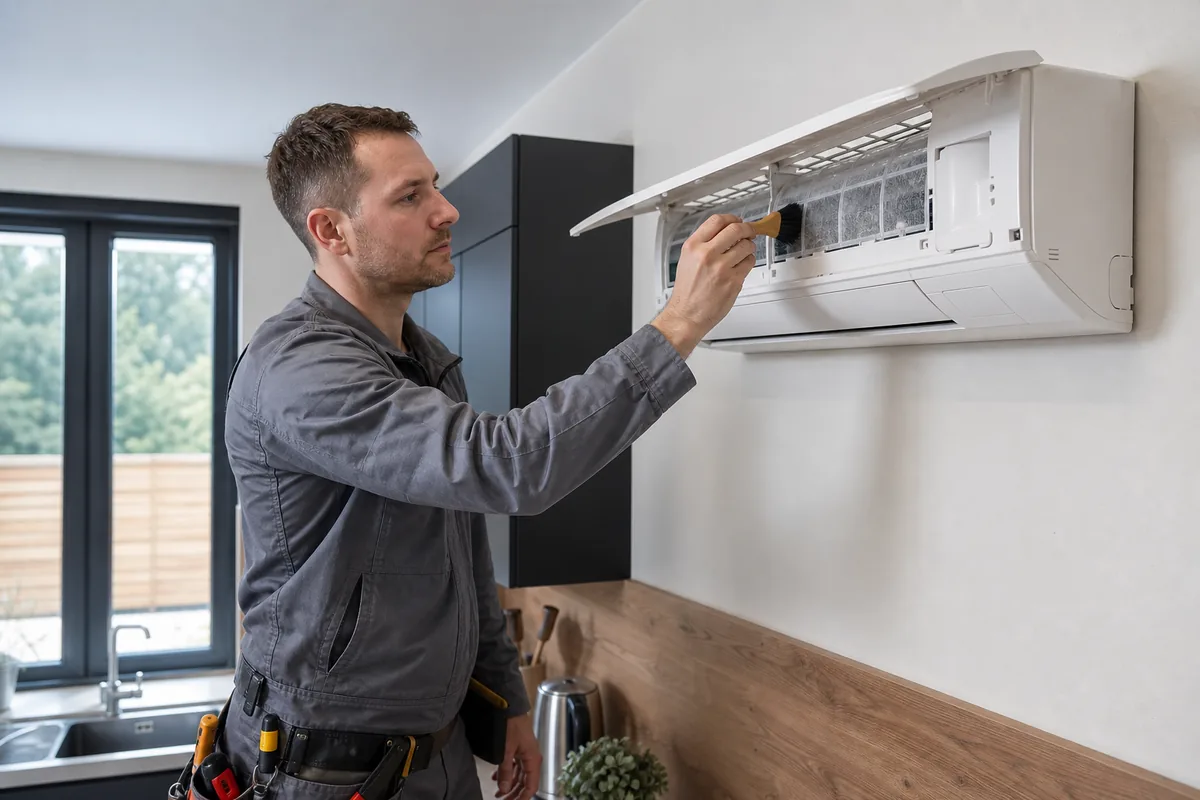
Indoor fascias on UK high-wall units are clipped. A filter door that is not fully home ticks as the fan vibrates it. If the manual shows the filter release, open it, check the mesh is seated, and close the door until it clicks home once. Do not force other panels off to chase the noise. Do not oil vanes or motors. Oil collects dust and makes the next seizure worse.
Outside, a leaf or a seed pod against the fan grille can tick once per revolution. With the isolator switched off and the fan fully stopped, you may lift debris off the outside of the grille if you can reach it from the ground without standing on the unit. Do not put fingers through the grille. A louvre that travels, clicks, travels back and clicks again is a vane or stepper problem. Stop pressing swing. Forcing the vane by hand can strip the gears.
Only if a cover screw is obviously loose, and you can reach it with the isolator off and the fan stopped, is a single tighten reasonable. Do not open the electrical compartment. If the rattle is from the compressor body, leave it.
Stop if the outdoor unit clicks rapidly, hums, clicks again and never settles into a steady run. That pattern can be a contactor, capacitor or compressor that is trying and failing. Do not bridge terminals, wedge a relay, or spray contact cleaner into a live panel. Leave covers on. Stop if clicking arrives with a hot smell, a tripped breaker, ice on the pipes, or the indoor unit blowing room-temperature air while the outdoor unit chatters. Book an engineer certified for F-gas equipment under the GOV.UK company rules. If the consumer unit trips as well, say so. The electrical fault and the refrigerant circuit are not a homeowner repair, and they may need both an electrician and an F-gas engineer.
Write the rhythm before you reset
Note whether the click is once at start, once when heating starts, or many times a minute, and whether the room still cools or heats afterwards. A phone video of the sound, taken from a safe distance, holds the pattern. One reset after a power cut is reasonable. A week of random off-and-on hides what an engineer needs to hear.
Frequently asked questions
Is a click when the outdoor unit starts a fault?
Usually no. One click as the compressor is connected, then a steady fan, is normal on most UK splits. Clicking that repeats without a steady run is the pattern to stop and report.
Can I tighten the outdoor panels to stop a tick?
Only if a cover screw is obviously loose and you can reach it with the isolator off and the fan stopped. Do not open the electrical compartment. If the rattle is from the compressor body, leave it and call an engineer.
Will oiling the louvre stop indoor clicking?
No. Do not oil vanes or motors. A louvre that hunts needs a service diagnosis. Oil collects dust and makes the next seizure worse.
Is one reset after a power cut enough?
One reset after a power cut is reasonable if you have already noted the rhythm. Repeating off-and-on through the week hides the pattern. If the unit clicks and then dies, stop and leave it for an F-gas engineer.
Core buying guides
Start with these high-intent guides, then dig into the rest of the library.
Related guides
Sources and further reading
How this guide was prepared
This guide was written by the Local AC Installers Editorial Team. We compare official guidance, legislation and established consumer information, separate general information from project-specific advice, and show publication dates and sources. We do not accept installer accreditation claims at face value.