
An indoor unit opposite a window often short-cycles and draughts the seats in between. The jet hits the glass, cool air falls on whoever sits there, and the return can satisfy the sensor while the rest of the room is still warm. Prefer a wall that throws along the room, parallel to the glazing, when that wall exists. If the facing wall is the only structure, say so and expect the limit. The outdoor unit is a separate siting job under the Planning Portal in England, installed by an F-gas certified company.
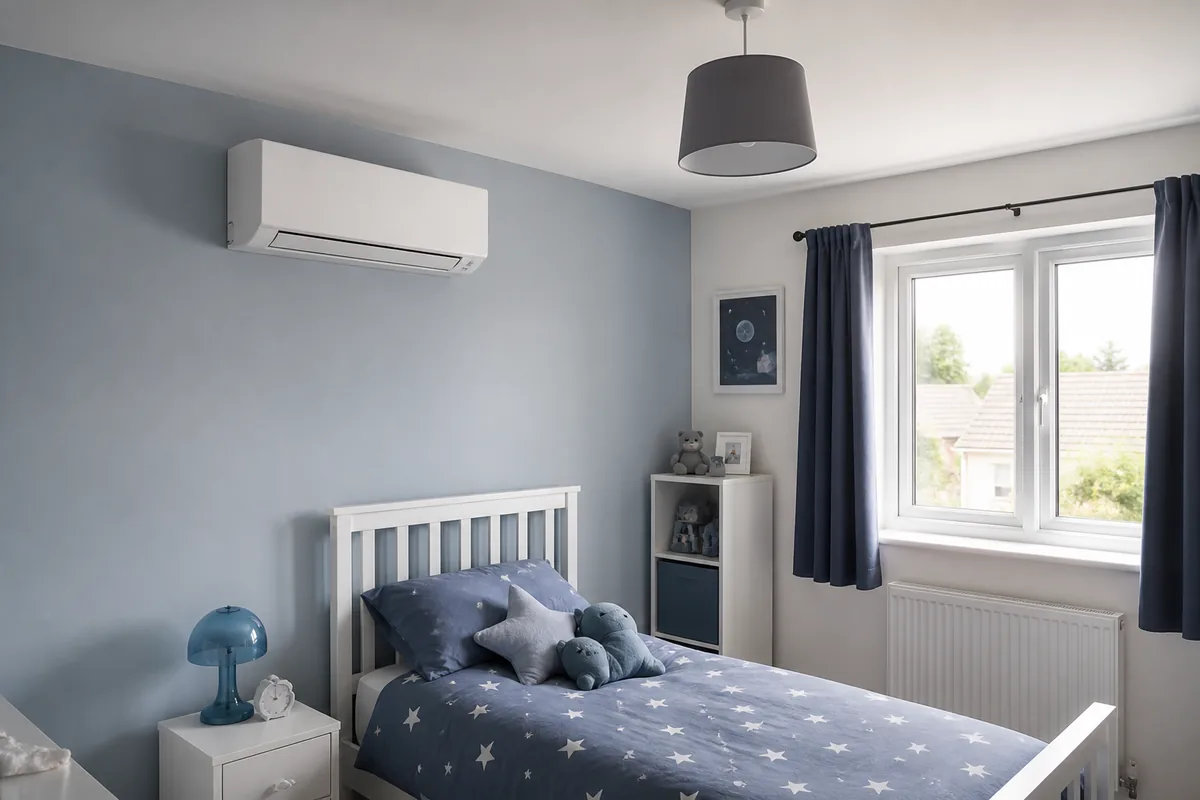
A jet that hits the glass and stops
The unit cools the air it can see. Aimed at a window, it treats a slice of room and the glass, then its sensor decides the job is done. It stops, the room equalises, and it starts again. That short cycle is noisier and less even than a unit that washes the long dimension.
Anyone between the fascia and the window sits in the throw. In cooling that is a cold neck. In heating it is a hot face and cold feet, because the high jet never reaches the floor properly anyway. It is likely seeing its own cooled air at the glass and satisfying the sensor while the room still feels warm.
Glass load, a side vane and where the sensor sits
The window is where the sun comes in. Blowing at it dumps conditioned air onto the pane and out of trickle vents if they are open. Leave those required vents alone. The fix is a throw that mixes the room, shading where you can, and a capacity chosen for the glass, not a bigger unit aimed harder at the frame.
A vane pointed hard to one side can salvage a facing install in a small room. It is a compromise an installer should demonstrate, not a slogan. Tall windows and bifold doors make the compromise worse. In a small room, with the vane sent along a side wall and the unit not oversized, opposite the window can be tolerable. On a large glazed wall it is a poor layout. Say that the facing wall is what you have.
The return air enters the fascia. If that air is the jet bouncing off the glass, the unit is measuring its own output. Some models allow a remote sensor in the occupied zone. Ask whether this indoor code can do that, and put the sensor off the window and off the draught. Do not oversize a unit that will short-cycle at the glass.
Outdoor siting still sits apart from the glass
None of the airflow detail changes the outdoor clearances, the condensate route, or the need for an F-gas certified company. Planning Portal conditions in England still decide whether that outdoor spot is acceptable. Say which way the glass faces so the throw can be planned along the room.
Frequently asked questions
Why does the unit stop while the room still feels warm?
It is likely seeing its own cooled air at the glass and satisfying the sensor. That is short cycling. A throw along the room, or a remote sensor, is the survey answer.
Is opposite the window ever acceptable?
In a small room, with the vane sent along a side wall and the unit not oversized, it can be tolerable. On a large glazed wall it is a poor layout. Say that the facing wall is what you have.
Should I tape the window vents so the jet stays indoors?
No. Required trickle vents stay. Size and aim the unit with the vents as they are.
Should the unit be larger because the window is the load?
No. Do not oversize a unit that will short-cycle at the glass. Choose capacity for the glass, and throw along the room if a side wall exists. Keep people out of the direct jet.
Core buying guides
Start with these high-intent guides, then dig into the rest of the library.
Related guides
Sources and further reading
How this guide was prepared
This guide was written by the Local AC Installers Editorial Team. We compare official guidance, legislation and established consumer information, separate general information from project-specific advice, and show publication dates and sources. We do not accept installer accreditation claims at face value.