
A smell of burning, hot plastic, electrics or scorched dust that gets stronger is a reason to stop a UK split immediately. If you can reach the rotary isolator safely, with dry hands and without opening the enclosure, switch it off. If the smell is coming from the consumer unit, leave that board alone and get an electrician. Do not pull covers, do not look for the hot part with the unit live, and do not reset the breaker to see if the smell returns. A faint dusty smell for a minute the first time you use heating in autumn can be dust on a warm coil. Anything sharper than that, anything that persists, or any smoke, stays off until an F-gas engineer and, where electrics are involved, an electrician have seen it.
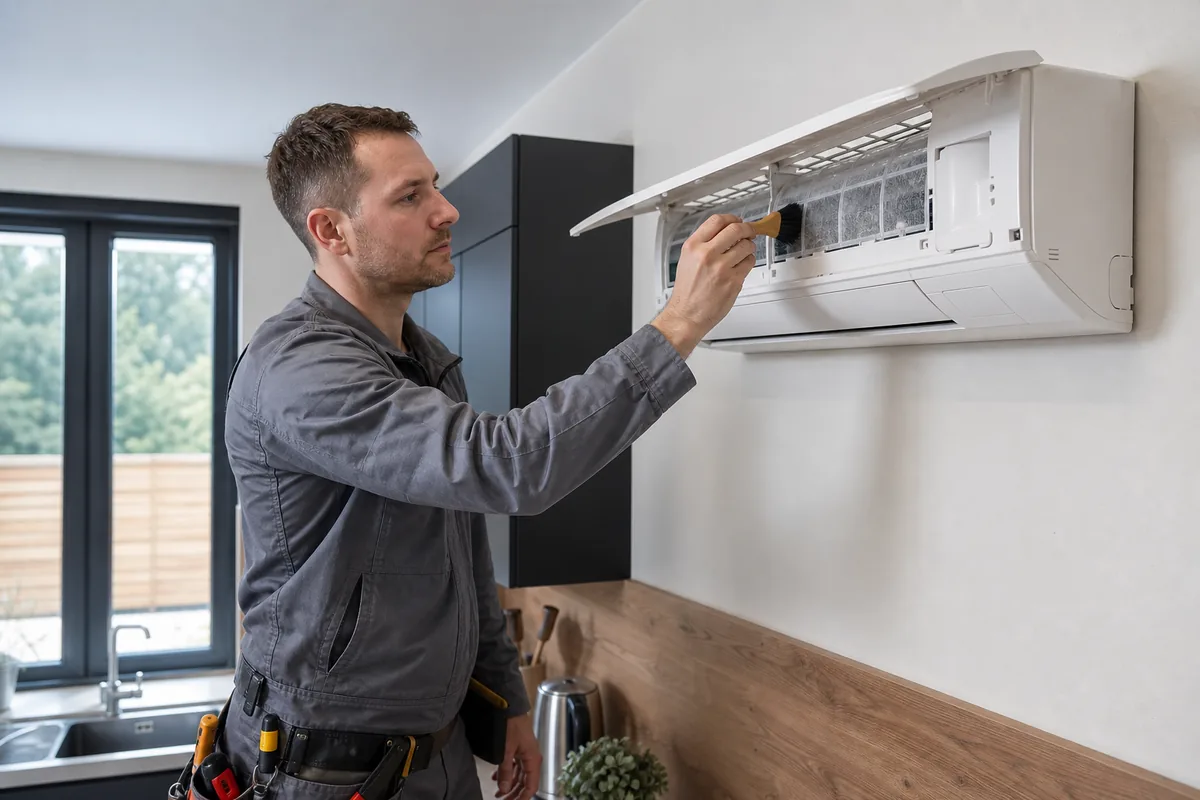
Off first, diagnosis later
Splits move a lot of current through the outdoor compressor and a smaller amount through the indoor fan and controls. A failing connection, a seized fan, or a compressor in trouble can smell of hot insulation before a breaker opens. Water in an outdoor plug or isolator after a UK storm does the same. The right response is off, not a diagnosis from the sofa.
Use the rotary isolator beside the outdoor unit if the path to it is safe. Do not step through water. Do not open the isolator cover to pull fuses. If you cannot isolate locally, switch the labelled air conditioning device off at the consumer unit only if you can do that without removing covers and without standing in water. HSE electricity guidance is to stop there. Electrical Safety First's Part P material is about electrical work in dwellings, which this smell is not inviting you to start. If you are unsure, keep people out of the room and call for help. Do not keep the unit running because the room is hot. State that you want it left off until inspected. This visit is about heat damage and electrical safety. Do not ask anyone to add refrigerant. GOV.UK certification matters when an F-gas engineer has to open the outdoor unit, not as a reason to reset.
The dusty first minute of autumn heat, and everything sharper
The first heating run of autumn can lift household dust onto a warm indoor coil and smell like a radiator coming on after summer. It should be faint, last a short time, and not return every time the unit starts. There should be no smoke, no tripped breaker, and no smell of fishy electrics or sweet plastic. If you are not sure it is that dusty first minute, treat it as burning. Open a window, leave the unit off, and do not spray air freshener into the intake to test your nose. Filters can be washed later, after someone has confirmed it is safe to run. Do not wash them while you are still hunting a live burning smell.
An electrician should test a burnt connection, a damaged isolator, or a breaker that opened with the smell. An F-gas engineer should attend if the outdoor unit, compressor or indoor fan is the source, because those parts sit on a refrigerant system. Do not split the unit open so you can photograph a board for a forum. Do not replace a capacitor, do not bridge a thermal cut-out, and do not pour water on a smoking condenser. Do not open flare nuts. Refrigerant does not put out an electrical smell, and adding gas is irrelevant. Leave the system isolated until it has been checked. Do not swap modes to work around a burning smell. The same electrics and compressor are involved.
Frequently asked questions
Should I reset the breaker if the burning smell has gone?
No. A smell of burning that made you isolate the unit means it stays off. One reset to test a smell is how small faults become a fire. Book an electrician and an F-gas engineer.
The smell is only there for a few seconds on heat. Is that safe?
A faint dusty smell on the first heating run of the season can be normal if it fades and never returns. If it is sharp, smoky, electrical, or it comes back every start, keep the unit off.
Can I keep using cooling if it only smells in heating?
No. Do not swap modes to work around a burning smell. The same electrics and compressor are involved. Leave it isolated.
Core buying guides
Start with these high-intent guides, then dig into the rest of the library.
Related guides
Sources and further reading
How this guide was prepared
This guide was written by the Local AC Installers Editorial Team. We compare official guidance, legislation and established consumer information, separate general information from project-specific advice, and show publication dates and sources. We do not accept installer accreditation claims at face value.