
A bedroom and a home office can share one outdoor unit when both indoor units sit inside the pipe length and height limits and you have one lawful place for that condenser. If either room fails those tests, fit two single splits or cool the room you use most. Survey both rooms before you choose. Each indoor unit needs its own control, because you do not sleep and take calls on the same schedule. An F-gas certified company commissions the refrigerant circuit.
An office by day and a bedroom at night
The office works in the day and the bedroom works at night. Each indoor unit has its own control. The outdoor unit runs as required. You can turn the office off at night and leave the bedroom running. Shut doors are the assumption. An office on the landing with no door is part of the landing volume, not a neat second zone. Say how you actually close the house. A reverse-cycle pair also gives you heat in a north-facing office that the rest of the house does not need in April.
Both rooms running on the same afternoon
A multi-split still has one outdoor unit that must cope with both indoors running together on the worst afternoon if you cool the office while the bedroom recovers from the morning sun. The survey sizes that combined duty, not one room doubled. A small office and a larger bedroom often take different indoor units on one outdoor model, from the manufacturer's combination list. The survey sets each duty. Size the system so the bedroom still works alone on a hot night.
Checks before one condenser serves both
Both indoor units have to reach the same outdoor spot inside the manufacturer's limits.
- One indoor unit in each shut room.
- Combined duty if both can run at once.
- Separate controls and a sensible night setpoint in the bedroom.
- Pipe length and height checked to the same outdoor spot.
A low fan for calls
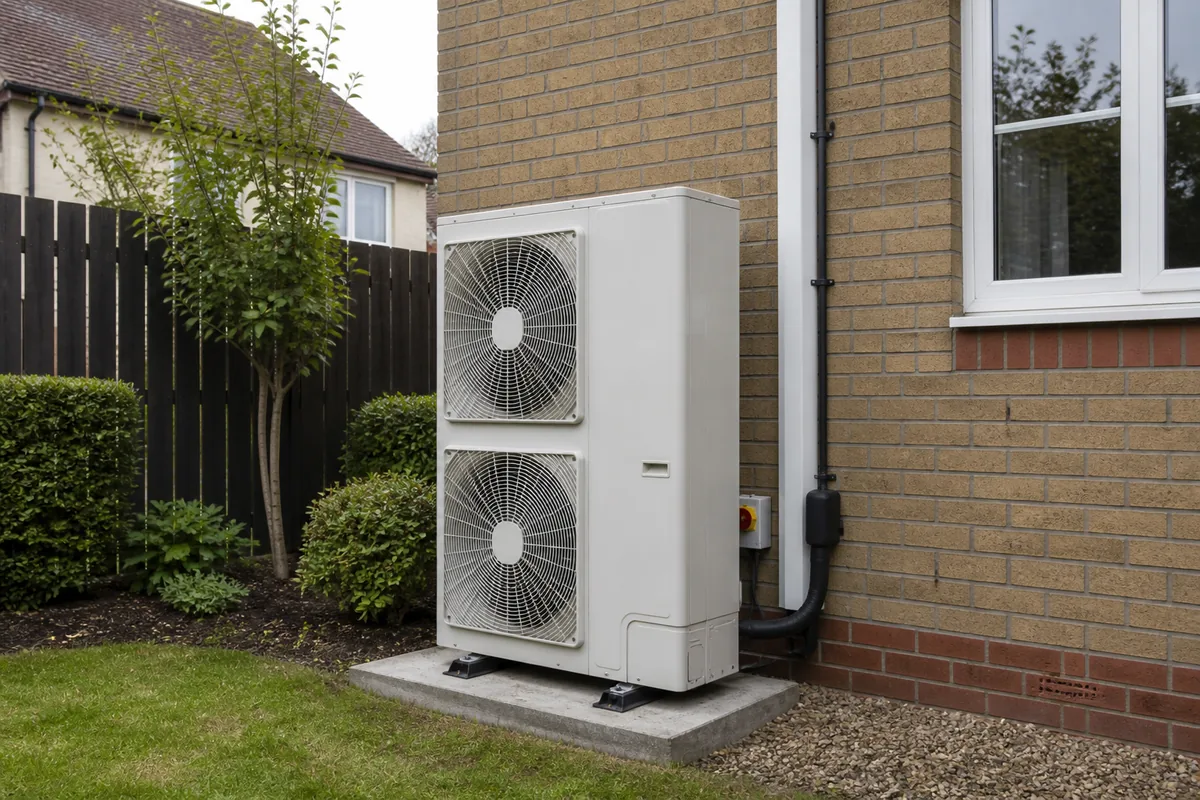
The office indoor unit wants a low fan that does not fight a call. Compare the sound figure on the model code, not the badge. The outdoor unit wants to be off the office window as well as off the bedroom window. Anti-vibration mounts matter more when the bracket shares a wall with a desk.
Capacity for these two rooms only
Do not hide a noisy choice behind a spare port you might use someday. Capacity should match these two rooms. A new indoor unit hung later on this outdoor unit is only possible if the manufacturer lists that combination and the pipes were allowed for it at the start. A written quote should name both indoor model codes, the outdoor code, the two pipe lengths, and a gravity drain or a pump for each indoor unit, with photos of each indoor wall and of every elevation where a condenser could stand. Include the hours you use each room.
When the loft and the rear extension should not share
The layout fails when the office is a loft at the front and the bedroom is a rear extension, and the only place you may put a condenser is the side passage. Total pipe length, the run to the furthest indoor unit, and the height difference are manufacturer limits, not suggestions. Exceed them and the distant room is the one that disappoints. A loft is the room most likely to push a two-room multi-split over the limit. It also fails when that single outdoor spot is not lawful. In England, Planning Portal conditions on noise, size and use can rule out the passage under a neighbour's window. Two smaller outdoor units, each near its room, may then be the layout that is allowed. One big condenser in the wrong place is not a bargain. If the firm cannot show the runs against the datasheet, ask for two single splits instead.
Core buying guides
Start with these high-intent guides, then dig into the rest of the library.
Related guides
Sources and further reading
How this guide was prepared
This guide was written by the Local AC Installers Editorial Team. We compare official guidance, legislation and established consumer information, separate general information from project-specific advice, and show publication dates and sources. We do not accept installer accreditation claims at face value.