
Air conditioning can replace a boiler for space heating in some well-insulated, well-surveyed UK homes if you install enough reverse-cycle indoor units and a separate hot-water solution. It cannot magically heat every leaky room and the hot-water cylinder from one living-room split. Treat it as a heating-system design, not a cooling upgrade.
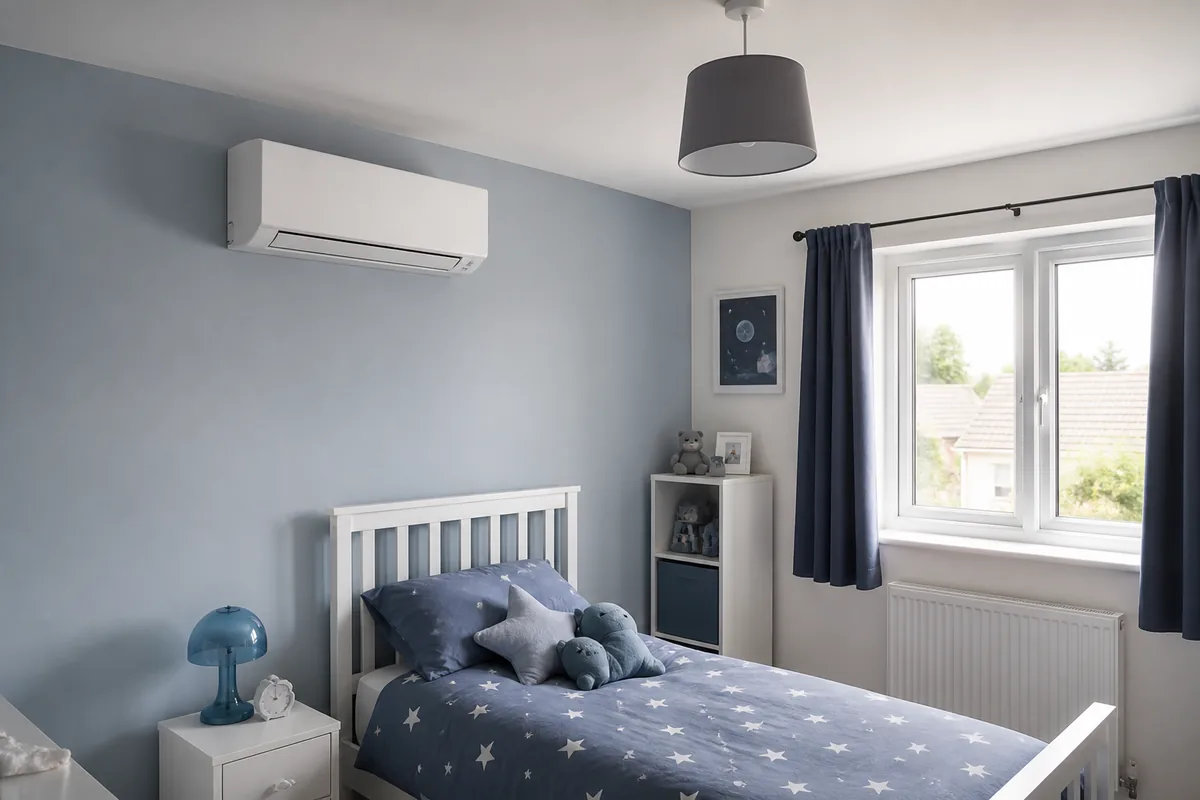
Two jobs: rooms and hot water
A gas boiler in a UK house usually does radiators and domestic hot water. A split air conditioner that heats is an air-to-air heat pump. It can warm rooms. It does not heat the cylinder. If you switch the boiler off, you still need hot water: an immersion, a cylinder heat pump, a heat-pump cylinder, or similar. Forgetting hot water is the usual amateur error.
Space heating with air-to-air can work in flats, new builds, and houses where every occupied room has an indoor unit or a ducted system. It fails when the landing, bathroom and north bedroom have no emitter and the doors stay shut. Hybrid is common and honest: keep the boiler for water and the coldest week, use air-to-air for the rooms you live in. That still cuts gas use without a religious conversion. The can-air-conditioning-heat guide and the new-build cooling guide sit next to this page.
- Air-to-air heats rooms. It does not heat the cylinder.
- Every occupied room needs an emitter if you turn the boiler off.
- Hybrid use is a legitimate, common UK outcome.
Fabric, electrics and noise
Heat-loss calculation first. If the house needs 8 kW on a design day, one 3.5 kW wall unit is not a boiler. Insulation, windows and infiltration decide whether air-to-air is viable. Part L and, in new dwellings, overheating rules sit in the background.
Electrical supply must take winter heating loads, not only a summer cooling current. Outdoor units in heating mode can be noisier in defrost. Neighbours and planning still apply. 2026 cost illustrations for whole-house air-to-air plus a hot-water plan can rival or exceed a boiler swap, especially once every room has an indoor unit. Do not use a single-split cooling quote as a heating-system budget.
When to keep the boiler
Listed fabric you cannot alter, rooms you will not pipe, occupants who want towel rails piping hot, and unreliable electricity. Also keep it if you only want one reception room cool in August. That is not a boiler replacement.
Air-to-water heat pumps are the usual whole-house low-carbon heating route with radiators or underfloor. Air-to-air is the comfort and cooling product that can also heat rooms. They are cousins, not the same tender. Installer quality matters more on a heating job because winter failures are miserable. Choose for aftercare, not a badge.
How to ask for a heating-capable quote
Say you want winter heating, list rooms, and say what will heat the water. Share EPC, boiler age, and electrical supply. Photos of every proposed indoor wall and the outdoor location.
Ask for heating capacity at a stated outdoor temperature. Ask what happens if one outdoor unit fails in January. Use the quote form and write heating as well as cooling in the message so the introduction is not a cooling-only engineer.
Frequently asked questions
Can I turn the gas off after fitting air conditioning?
Only if every occupied room has a designed heat source and you have a hot-water plan. A single split plus hope is not a gas isolator.
Is air-to-air cheaper to run than gas?
It depends on tariffs, fabric, and how you use the house. Heat pumps can be efficient. Leaky houses and peak-rate electricity can erase the gain. Model it, do not slogan it.
Will this work in a bungalow?
Often yes for the rooms you treat, because bungalows are single storey and outdoor siting can be easier. Whole-home replacement still needs a heat-loss survey.
Core buying guides
Start with these high-intent guides, then dig into the rest of the library.
Related guides
Sources and further reading
How this guide was prepared
This guide was written by the Local AC Installers Editorial Team. We compare official guidance, legislation and established consumer information, separate general information from project-specific advice, and show publication dates and sources. We do not accept installer accreditation claims at face value.