
Hot weather is hard on care home residents and on staff. Comfort cooling can make lounges and bedrooms more bearable when the airflow is gentle, the controls are staff-led, and each room is surveyed rather than guessed from a corridor unit. This is building guidance. It is not clinical advice, and it does not replace care plans, GP guidance or the home's own heat procedures. HSE temperature guidance still applies to employees. Survey the rooms people actually occupy, then use an F-gas certified company for refrigerant work. Reliability and a calm installer matter more than a badge.
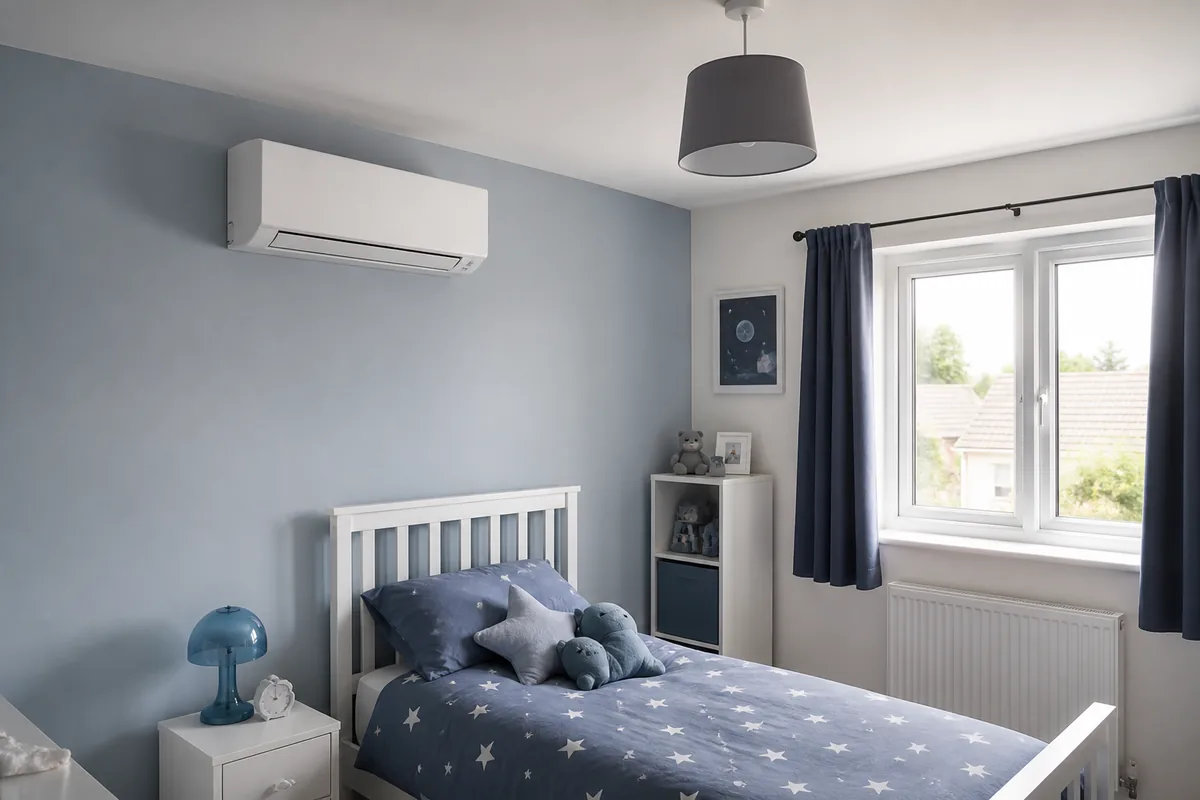
Lounges and bedrooms people actually occupy
Older people and people with health conditions can suffer in heatwaves. How that is managed for each resident is for the home, clinicians and care plans. An air conditioner does not treat anyone. It lowers the temperature of a room when it is specified and used properly. Do not ask a contractor for health promises, and do not take setpoint advice from this article as care guidance. What the building can do is practical: shade, a cooled lounge that stays available, bedrooms that are not blasted, and a maintenance contract that starts before summer.
Gentle air and a staff check
Prefer a gentle fan speed. People who sit still feel a strong jet as discomfort even when the room temperature is reasonable.
- Cooling supports comfort. Care decisions stay with the home and clinicians.
- Lounge and bedroom loads are different. Survey both.
- Mount units where a resident cannot easily interfere with cables.
- Write a simple staff check for trips, closed vents and dripping units.
Fire doors and draughts on people who sit still
A lounge with sun and many people needs more capacity than a single bedroom. A unit in the corridor will not cool either once doors are shut for dignity and fire safety. Do not wedge fire doors to share cooling. Keep air off chairs and beds. Mount units where a hoist or a wardrobe will not block the coil. Condensate pumps above bedrooms need alarms. A leak into a room is unacceptable in this setting.
Night plant and a failure on a hot Friday
Residents should not be left to fight a remote. Staff setpoints, a limited range, and a clear note in the office are kinder. Night operation should be the quiet speed, with outdoor plant away from bedroom windows. Roof plant needs a safe access route for engineers, not a climb over fragile roofs. Plan what happens if a unit fails on a hot Friday. A contract with a response time, spare filters, and more than one cooled room is more useful than a single heroic system. Night staff need to see if a unit has tripped.
Bedrooms added up against the inspection line
HSE's workplace temperature pages are written for employees, including the point that the law does not set one maximum workplace temperature. They are a prompt for staff arrangements, not a resident protocol. Resident care is governed by the home's duties and clinical arrangements, not by a fitter's thermostat claim. Over 12 kW of effective rated cooling output, GOV.UK inspection duties can apply, and many homes will cross that once bedrooms are added up. F-gas certification applies to the refrigerant work. Choose a contractor who has worked in occupied homes and will wait for staff, not the cheapest domestic gang.
Stop when the promise is medical or the corridor is the only unit
Stop a quote that claims the unit will protect residents, treat illness, or replace the care plan. It can make rooms more comfortable as part of the home's own heat planning. It is not treatment. Stop a scheme that only works if fire doors are wedged or if one corridor head is meant to cool bedrooms behind closed doors. You do not need to send medical histories for a survey of the building.
Core buying guides
Start with these high-intent guides, then dig into the rest of the library.
Related guides
Sources and further reading
How this guide was prepared
This guide was written by the Local AC Installers Editorial Team. We compare official guidance, legislation and established consumer information, separate general information from project-specific advice, and show publication dates and sources. We do not accept installer accreditation claims at face value.