
A nursery can be cooled with a quiet split if the air does not blow across the cot, the indoor unit is out of reach, and the outdoor unit will not rumble through the night. This is a comfort and installation question. It is not health advice, and a wall unit is not a medical device. Survey the room, the cot position and the outside wall first. An F-gas certified company should do the refrigerant work. Choose the installer who will set a gentle fan speed and show you the controls, ahead of any badge.
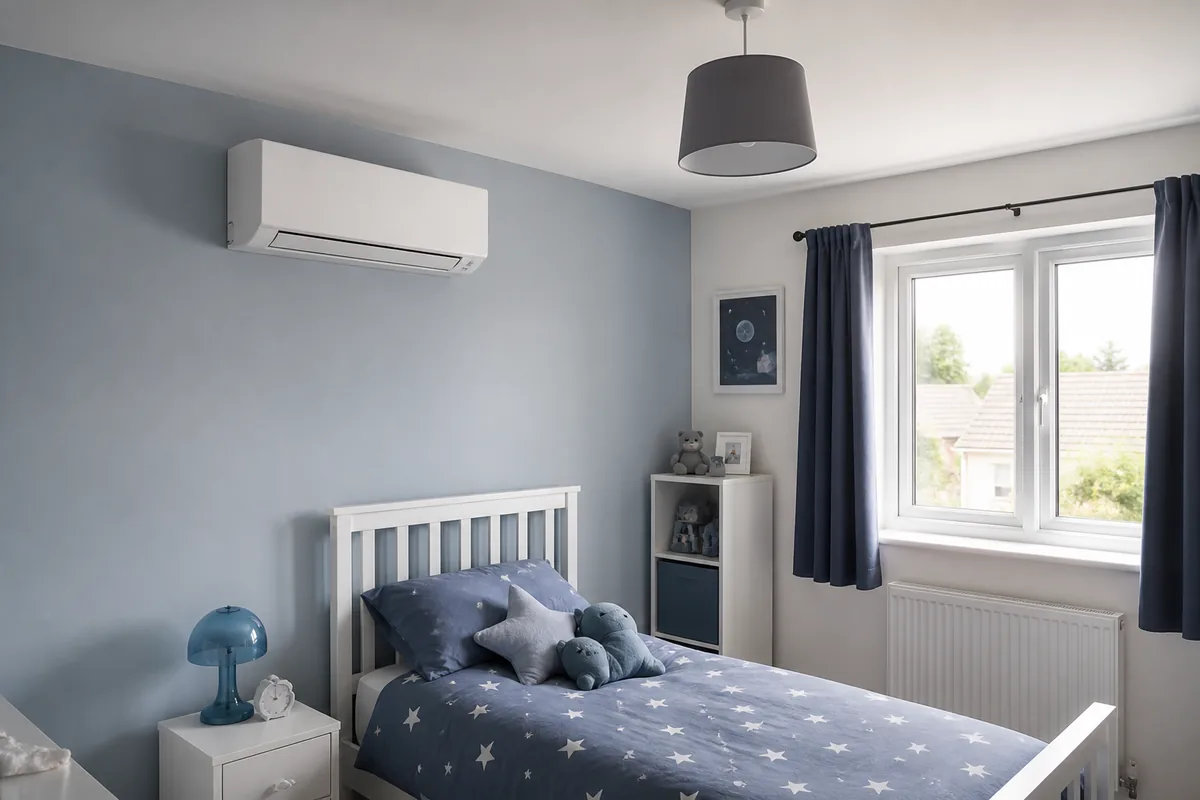
Cot position, night fan and the outdoor unit
Babies and small children should not sleep in a draught from the indoor unit. Place the cot outside the throw of the louvre, and ask the surveyor to stand where the cot will be and point the vane away. A unit centred over the cot, or on the wall the cot sits against, is the layout to refuse. Controls and the remote stay out of reach, or the setpoint is locked. Cables, pumps and isolators stay where a toddler cannot grab them.
The indoor fan on its quietest useful speed is what you hear at 2am. Ask for that figure on the exact model, and ask them to run it during commissioning while the room is furnished. A number from a bigger room in a showroom is not your nursery. Keep the outdoor unit off a lightweight wall that backs onto the cot, and off a neighbour's bedroom window if you can. Rubber feet and a solid wall help. Planning and nuisance still apply to that box. Read the Planning Portal air source heat pump notes before brackets go up on a street elevation.
Room size, drains and a gentle setpoint
Cool the room, then let it settle. Chasing a very low setpoint so the unit runs flat out is how you get noise and a cold jet. A modest setpoint and a low fan are the aim. Your health visitor or GP is the right place for questions about a child who is unwell. The fitter is there to mount and commission a heat pump. No brochure should promise a health outcome.
Room volume, window size, whether the nursery is in the roof, and whether a parent also sleeps there decide the kilowatt. A small, shaded room often needs less capacity than a west-facing loft nursery. Oversizing gives short bursts and more noise. Undersizing means the fan never rests in a heatwave. Condensate must leave on a fall or a pump with a safe route. A pump in a nursery needs an alarm plan so a failure does not drip onto a socket or the floor by the cot. Electrics should be certified by a competent person where a new circuit is required. The refrigerant circuit stays with a company certified under the GOV.UK F-gas rules.
Frequently asked questions
Is air conditioning safe in a nursery?
A properly installed split can make a hot room more comfortable when airflow misses the cot and controls are out of reach. It does not treat illness, and it is not a reason to skip advice from a clinician if a child is unwell.
Should the unit run all night?
Many families use a quiet fan speed and a moderate setpoint rather than a blast. The survey should leave you with a simple schedule. Empty-room cooling all day is wasted electricity.
Can I fit a small unit myself to save money?
No. Charging and connecting refrigerant pipework is F-gas work. A nursery is a poor place to experiment with drains and electrics as well.
Core buying guides
Start with these high-intent guides, then dig into the rest of the library.
Related guides
Sources and further reading
How this guide was prepared
This guide was written by the Local AC Installers Editorial Team. We compare official guidance, legislation and established consumer information, separate general information from project-specific advice, and show publication dates and sources. We do not accept installer accreditation claims at face value.