
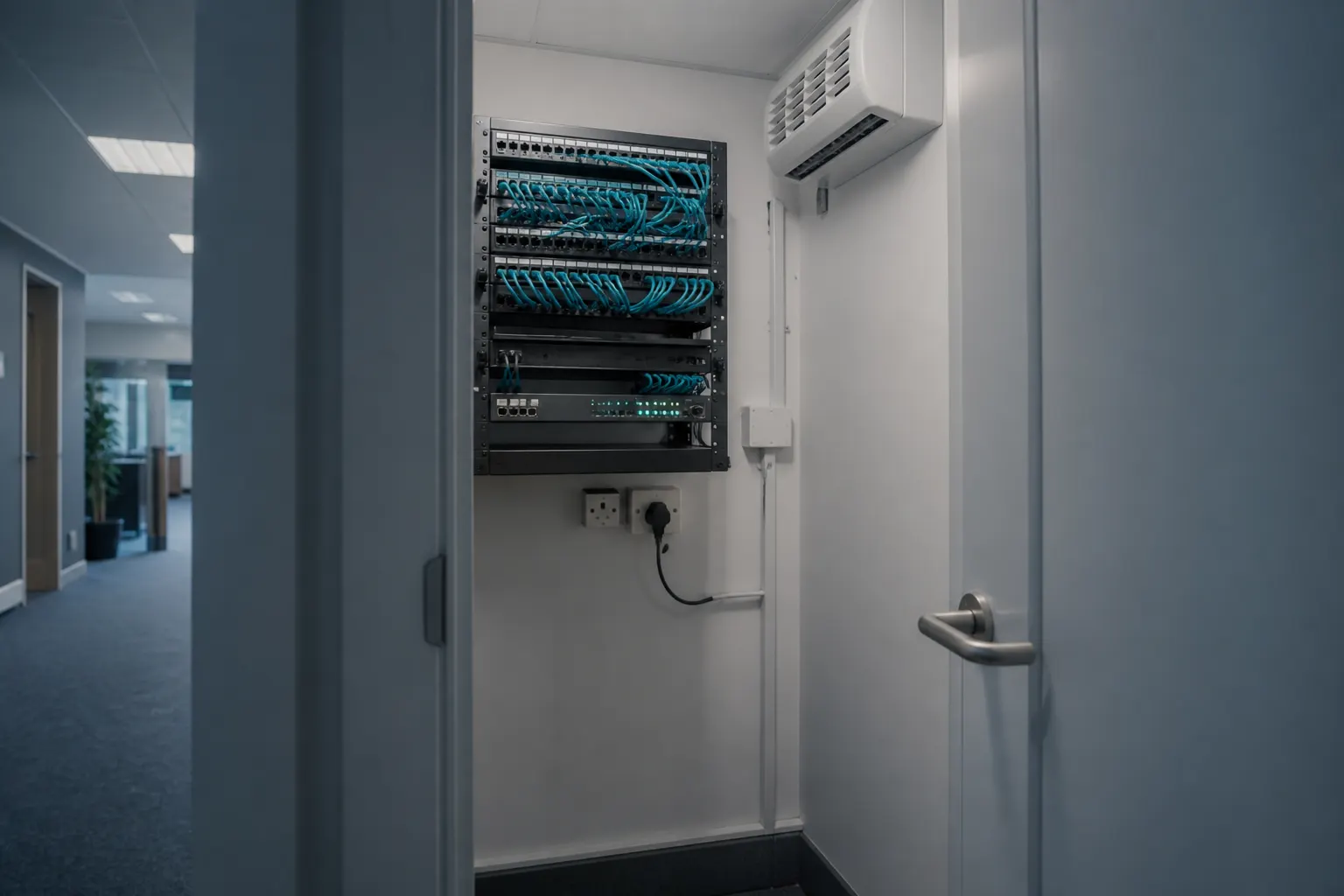
This composite pattern describes a common SME failure path, not a named client win. A network cupboard ran hot after office hours; a comfort split was quoted on floor area; condensate had nowhere safe to go; there was no alarm to a human. The corrected brief started from continuous heat load, drain design and failure notification, then compared installers on those terms.
The first quote that looked fine
The office manager asked for air conditioning for a small cupboard. The first proposal reused a meeting-room template: one indoor unit, one outdoor unit, daytime commissioning. Capital cost looked tidy. Nobody asked what happened at 2am on a Sunday if the drain blocked.
IT load was estimated from nameplates later and sat higher than the comfort assumption. The outdoor position sat in a recess that risked recirculating hot discharge air in midsummer.
Rewriting the brief as process cooling
A second round asked for measured or nameplate continuous load, condensate route to a safe discharge, filter access without shutting the rack, and an alarm path to a phone or monitoring inbox. The price rose. So did clarity.
Redundancy was declined for budget reasons, but single points of failure were at least named. That honesty is more useful than a fake N+1 badge.
- Separate IT cooling from office comfort schedules.
- Design drains before choosing the prettiest indoor unit.
- Require a human-reachable alarm.
- Confirm service clearances for the life of the kit.
How the server room calculator helped
Selecting an IT cupboard profile and adding monitoring plus electrics widened the planning range into territory that matched the serious quotes. The tool did not design the room. It stopped the buyer anchoring on the comfort template.
Maintenance was booked as a planned visit, not an afterthought. Continuous plant earns its keep only if someone cleans filters and checks drains.
Takeaway for similar cupboards
If the kit cannot sleep, the cooling design cannot pretend it is a meeting room. Start with load, drain, alarms and access. Price follows.
This pattern is educational. Your site still needs a survey, and credentials still need checking with the issuing bodies.
Frequently asked questions
Is this a testimonial?
No. It is a composite teaching pattern. It does not claim a specific customer result.
Do all network cupboards need N+1?
No. Many SMEs accept a single system with strong monitoring. The important step is making that risk choice explicit.
Can a domestic split still be right?
Sometimes for modest continuous loads with good outdoor air, drainage and alarms. It must be assessed as process cooling.
Core buying guides
Start with these high-intent guides, then dig into the rest of the library.
Related guides
Sources and further reading
How this guide was prepared
This guide was written by the Local AC Installers Editorial Team. We compare official guidance, legislation and established consumer information, separate general information from project-specific advice, and show publication dates and sources. We do not accept installer accreditation claims at face value.