
A ceiling cassette costs more installed than a wall split of the same capacity, mostly through labour. As a July 2026 illustration, a single cassette in a shop or office with a suspended ceiling commonly lands in the low-to-mid thousands of pounds installed, while domestic cassettes in solid ceilings cost more than the equivalent commercial job because access has to be created. The cassette itself is only part of the story: void depth, condensate pumping, ceiling grid work and the outdoor unit position build the rest. Cassettes earn their premium in open plan spaces where one unit replaces two or three wall units.
What drives the installed price
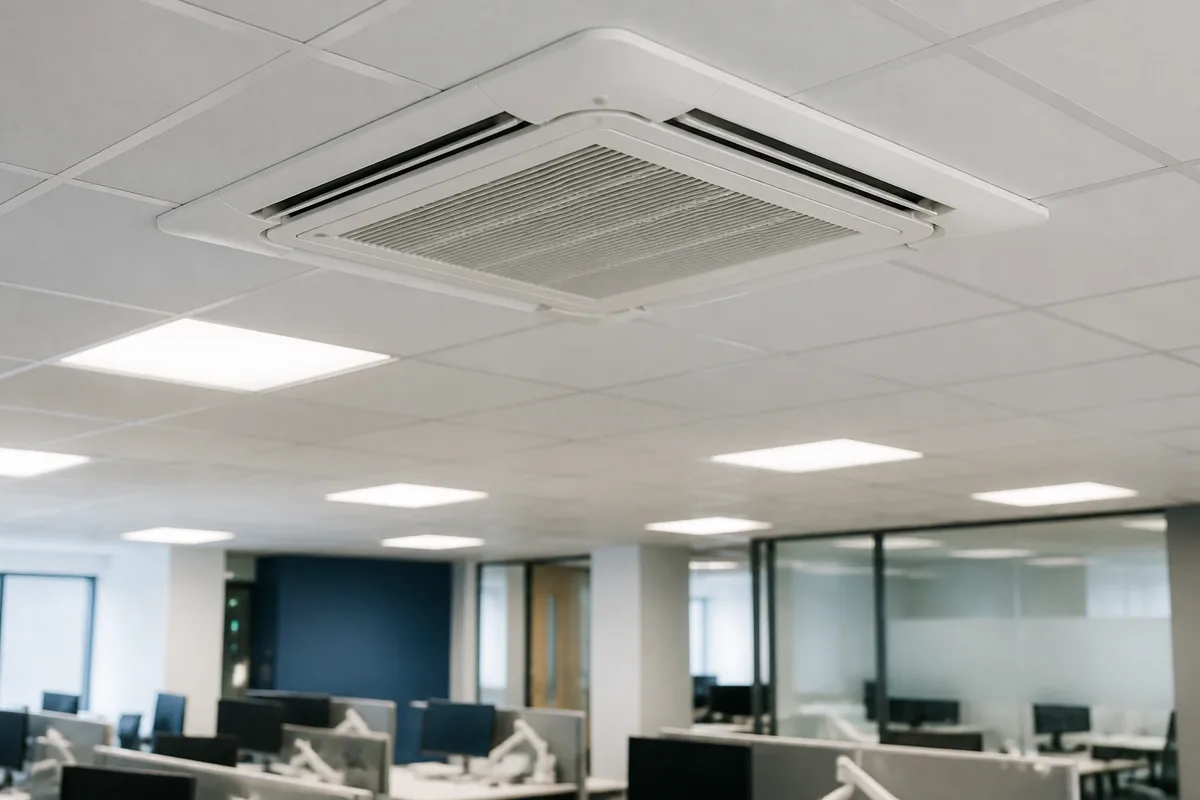
A cassette sits in the ceiling void, throws air in four directions, and drains condensate upward through a built-in lift pump into a route that must be planned, not improvised. The unit needs roughly 250 to 300 mm of clear void, safe access above the grid, and an outdoor unit within a sensible pipe run.
In a suspended ceiling the grid opens in minutes and labour stays predictable. In a plasterboard or solid ceiling, access panels, joist work and making good can double the fitting time, which is why domestic cassette quotes surprise people.
- Suspended grid ceilings are the cheap installation environment.
- Void depth below about 250 mm rules most cassettes out early.
- Condensate has to be pumped and routed with an overflow plan.
- One cassette can replace two or three wall units in open plan space.
- Roof-mounted or high-level condensers add access cost to the same job.
Illustrative bands
As 2026 planning shapes: a single mid-range cassette in an accessible suspended ceiling often sits in the low thousands installed. Larger capacity units for open retail floors, premium brands, or awkward condenser positions move to the mid thousands. Multi-cassette shops and restaurants scale roughly per unit, with some saving on the shared outdoor unit.
Domestic cassettes in flats and houses typically price above the commercial equivalent for the reasons above. The home ceiling cassette guide covers whether the format makes sense in a house at all.
Cassette versus wall units on money
In an open plan office or shop, one 10 kW cassette frequently beats three wall units on total installed cost, controls simplicity and appearance. In a corridor of small rooms, wall units win because each room needs its own air anyway.
The cassette air conditioning guide covers formats and sizing. For shops specifically, the retail guide walks through customer comfort and door-opening loads that decide capacity.
Quotes that hold
Insist the surveyor looks above the ceiling, states void depth in the quote, and marks the condensate route and outdoor position in writing. Those three items are where cassette prices move after acceptance.
Use the quote form with ceiling type and floor area. Local commercial installers price cassettes weekly and answer quickly.
Frequently asked questions
How much does a cassette air conditioner cost installed in the UK?
As a 2026 illustration, a single cassette in an accessible suspended ceiling commonly lands in the low-to-mid thousands of pounds installed, with capacity, brand tier, condenser access and ceiling type moving the number. Solid domestic ceilings usually cost more than commercial grids.
Can you fit a cassette in a house?
Yes with enough ceiling void, which usually means bungalows, top floors under lofts, or extensions built with the void planned. Standard 240 mm domestic ceilings rarely have the space, so slim one-way cassettes or concealed ducted units take over.
Why do cassettes need a condensate pump?
The drain pan sits in the ceiling with nowhere to fall to, so cassettes lift condensate with an internal pump into a pipe run above ceiling level. The route and its overflow protection are part of a proper quote because a failed route means stained ceilings.
Core buying guides
Start with these high-intent guides, then dig into the rest of the library.
Related guides
Sources and further reading
How this guide was prepared
This guide was written by the Local AC Installers Editorial Team. We compare official guidance, legislation and established consumer information, separate general information from project-specific advice, and show publication dates and sources. We do not accept installer accreditation claims at face value.