
A ceiling cassette in a home gives even four-way airflow with nothing on the walls, and in a big open plan kitchen-living space it cools better than any single wall unit. The obstacle is the void: a standard cassette wants roughly 250 mm of clear depth plus access, which most UK ceilings do not have. Bungalows, rooms under lofts, and extensions designed for it are the natural homes. Where the void is shallow, slim one-way cassettes and concealed ducted units deliver most of the benefit. Expect to pay more than a wall split for the same capacity, mostly in labour.
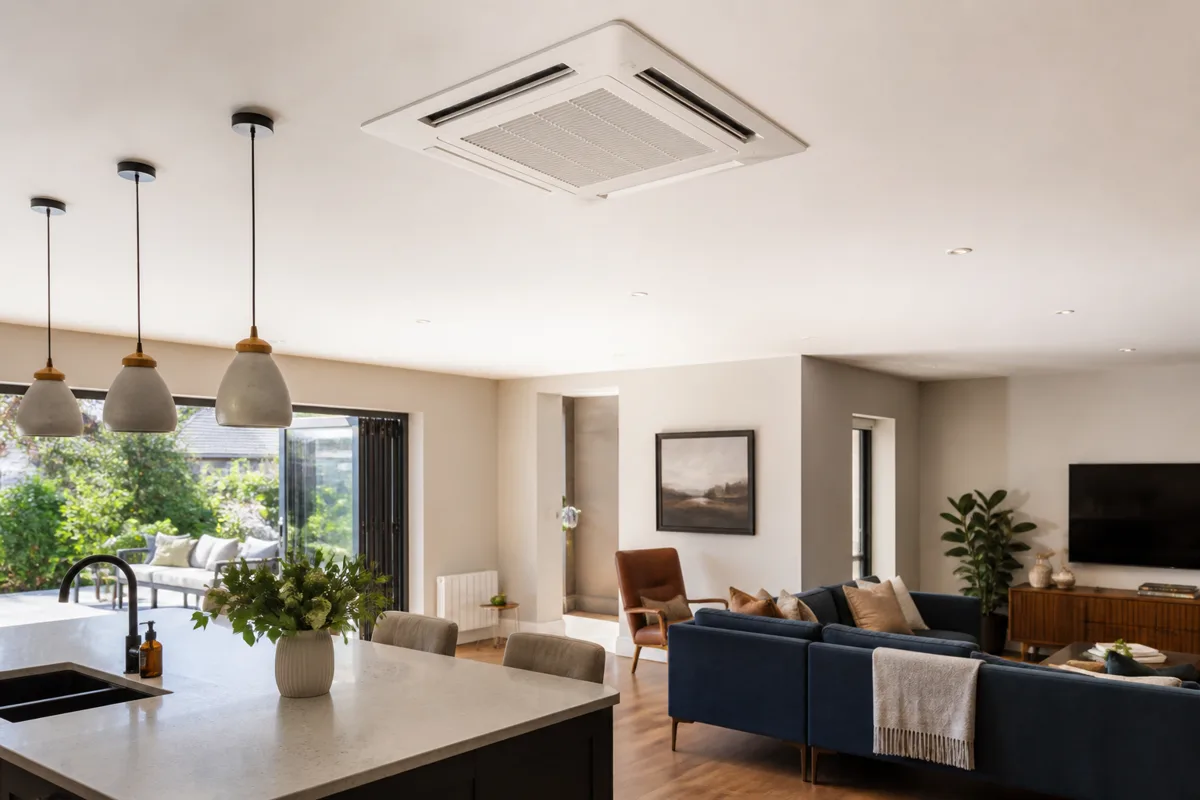
Where cassettes fit in real houses
Under a loft is the sweet spot: the unit drops between joists, the pipework and drain run through the loft, and the ceiling shows only the fascia. Bungalows and top-floor flats with roof access behave the same way.
Mid-floor rooms in a two storey house are the hard case. The void between floors is shallow and full of joists, so fitting a standard cassette means structural work that rarely justifies itself against a good wall unit or a slim ducted run.
- Loft above the room: cassette-friendly, survey will confirm joist spacing.
- Open plan spaces get the most from four-way air throw.
- Slim one-way cassettes need much less depth and suit narrow voids.
- Bedrooms benefit from the near-silent fascia noise at low fan speed.
- The fascia needs clear ceiling around it; downlights and beams fight it.
Cassette against wall and ducted at home
Against a wall unit: the cassette wins on airflow evenness and looks, loses on price and simplicity. Against ducted: the cassette is one visible fascia with cheaper access needs, while ducted hides everything but wants longer void runs and more labour.
The one-way cassette guide and the concealed ceiling guide cover the middle options. In many homes the honest answer is a premium wall unit and the difference in the holiday fund.
Cost shape at home
As a 2026 illustration, domestic cassette installations commonly land above the equivalent wall split by a meaningful margin once ceiling access, condensate pumping and making good are counted, typically starting in the low thousands and rising with capacity and access difficulty.
The cassette cost guide runs the full numbers. Heating performance matters too: cassettes heat rooms evenly in winter, which strengthens the value case in an all-year system.
Getting it surveyed properly
The survey must go above the ceiling. Joist direction, void depth, drain route and outdoor unit position decide feasibility, and a surveyor who quotes a cassette without looking is quoting someone else's house.
Use the quote form with photos of the room and loft if you have access. Local installers state cassette or alternative within a day or two.
Frequently asked questions
Can you install a ceiling cassette in a normal house?
Yes where there is roughly 250 mm of accessible void, which usually means rooms under lofts, bungalows and purpose-built extensions. Mid-floor rooms with shallow voids usually get slim one-way cassettes, concealed ducted units or wall splits instead.
Are ceiling cassettes noisy in bedrooms?
At low fan speed a quality cassette is among the quietest indoor formats because the fan is above the ceiling plane. Check the sound pressure figure at the setting you will sleep on, and keep the outdoor unit away from the bedroom wall.
Do home cassettes also heat?
Nearly all modern cassettes are reversible heat pumps and heat rooms very evenly. If winter heating is part of the plan, say so at survey so the capacity and defrost behaviour are chosen for it.
Core buying guides
Start with these high-intent guides, then dig into the rest of the library.
Related guides
Sources and further reading
How this guide was prepared
This guide was written by the Local AC Installers Editorial Team. We compare official guidance, legislation and established consumer information, separate general information from project-specific advice, and show publication dates and sources. We do not accept installer accreditation claims at face value.