
Cooling pulls water out of room air. That condensate has to leave the indoor unit by a drain with a continuous fall, or by a small pump when a fall is impossible. Gravity is the quieter, simpler choice when the pipe can fall all the way to a lawful outlet. A pump is the right choice for basements, internal rooms and many cassettes. The survey picks one. A stain on the plaster is what you get if the choice is left until after the unit is on the wall.
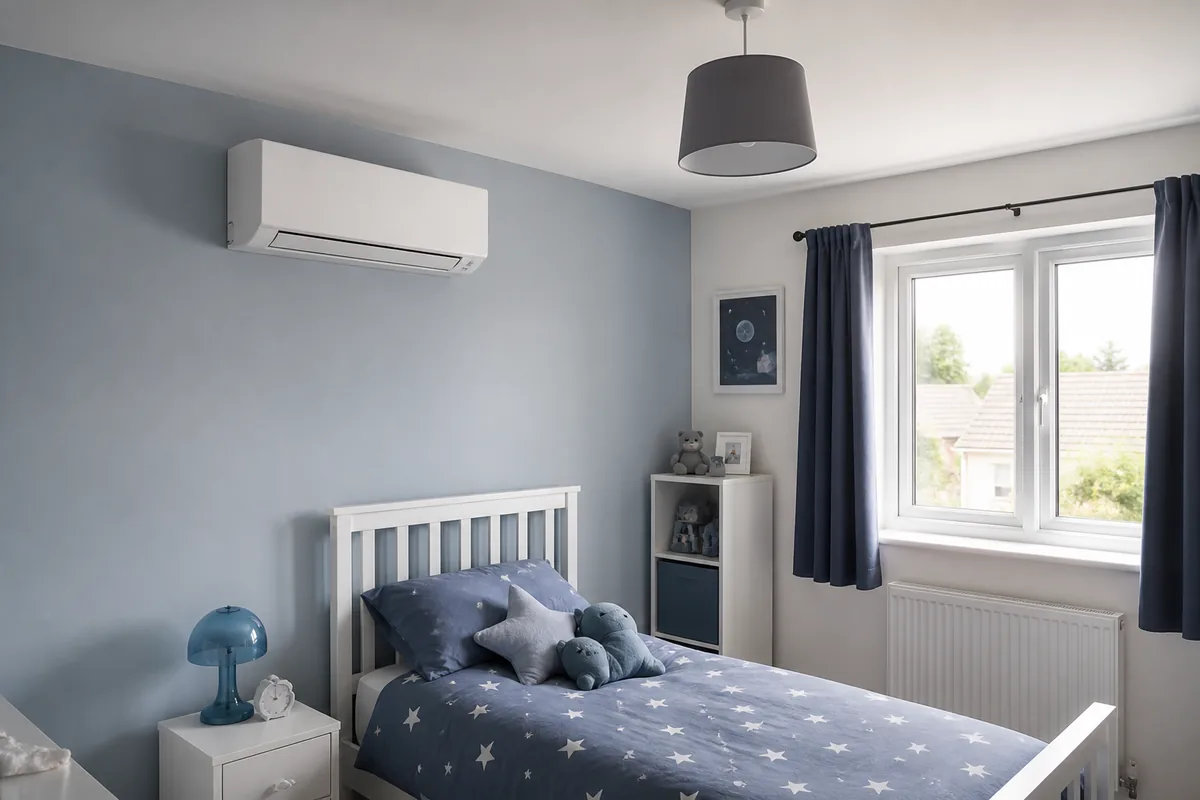
Condensate in July and defrost water in January
The indoor coil runs cold. Moisture in the room air condenses on it, drops into a tray and should leave through a drain. Humid kitchens, packed meeting rooms and ground-floor flats in July produce more water than a spare bedroom used twice a year. Heating mode on a split produces water at the outdoor unit instead, which is why the outdoor unit also needs a place for that water to go. This is ordinary physics, not a fault. A system with no water in a muggy week is worth a question. A system with water running down the wall is a drain question for the installer, not a reason to open the refrigerant circuit. If that circuit does need work, it stays with an F-gas certified company. GOV.UK publishes the certification rules. Energy Saving Trust's air-to-air guidance is the plain account of a split that cools and heats. Sometimes a short gravity drip to a suitable outdoor point is acceptable. A drip onto a path, a neighbour's land or a cavity is not. The survey should name the outlet. In winter, heating mode defrosts the outdoor coil and that water must drain away. Clear leaves from the base and avoid a position that ices a step. Call the installer if the unit itself is icing into a solid block.
A continuous fall, or a pump with a failure plan
If the indoor unit is on an external wall and a pipe can fall to a gully, a planter soakaway the installer accepts, or an internal waste the plumber is willing to connect with a trap, gravity is usually best. It has no float switch and no pump noise. The fall has to be continuous. A pipe that rises to get over a lintel, then falls again, will hold a puddle and eventually overflow the tray. The outlet has to be lawful and neighbourly. Dripping across a pavement, into a neighbour's yard or into a cavity is a defect. The installer and, where the waste is internal, the plumber agree the connection. This page is not a plumbing recipe. Basement rooms, cassettes in a ceiling void, and wall units on internal partitions often cannot fall to an outlet. A condensate pump lifts the water to a higher drain. It needs a power supply, a discharge route with the rise the pump can actually manage, and a way to tell you it has failed. In a shop that means an alarm or a safe visible point, not a drip onto stock. Pumps tick, and cheap ones tick loudly in a bedroom. They also fail. A correctly sized pump with a clean tray is a normal solution where gravity cannot work. Choose a quiet model, service it, and accept that gravity is preferable when the building allows a fall. Maintenance visits should include the pump and the tray, not only the filter mesh. As a 2026 illustration, adding a pump and a proper alarm on a domestic job is often a low-hundreds extra including VAT, and more when the ceiling has to come down to reach it. Ask the quote to say gravity or pump, the outlet, and who connects any internal waste. Ask what happens if the pump stops. Look at the outdoor unit's defrost water too, especially over a path that will ice in January. If you already have a stain, stop using cooling and call the installer. Soaking the wall and then running the system harder does not clear a blocked trap or a dead pump.
Core buying guides
Start with these high-intent guides, then dig into the rest of the library.
Related guides
Sources and further reading
How this guide was prepared
This guide was written by the Local AC Installers Editorial Team. We compare official guidance, legislation and established consumer information, separate general information from project-specific advice, and show publication dates and sources. We do not accept installer accreditation claims at face value.