
An outdoor condenser belongs outdoors. Loft spaces lack the airflow, weather exposure the unit is designed for, and safe service access. Piping refrigerant lines through a loft void is often fine. Dumping the condenser or condensate in the loft is not. Prefer an external wall, roof frame or ground slab. Building ventilation rules (including Part F thinking on moisture and extract) are a light reminder not to trap wet plant in a roof void.
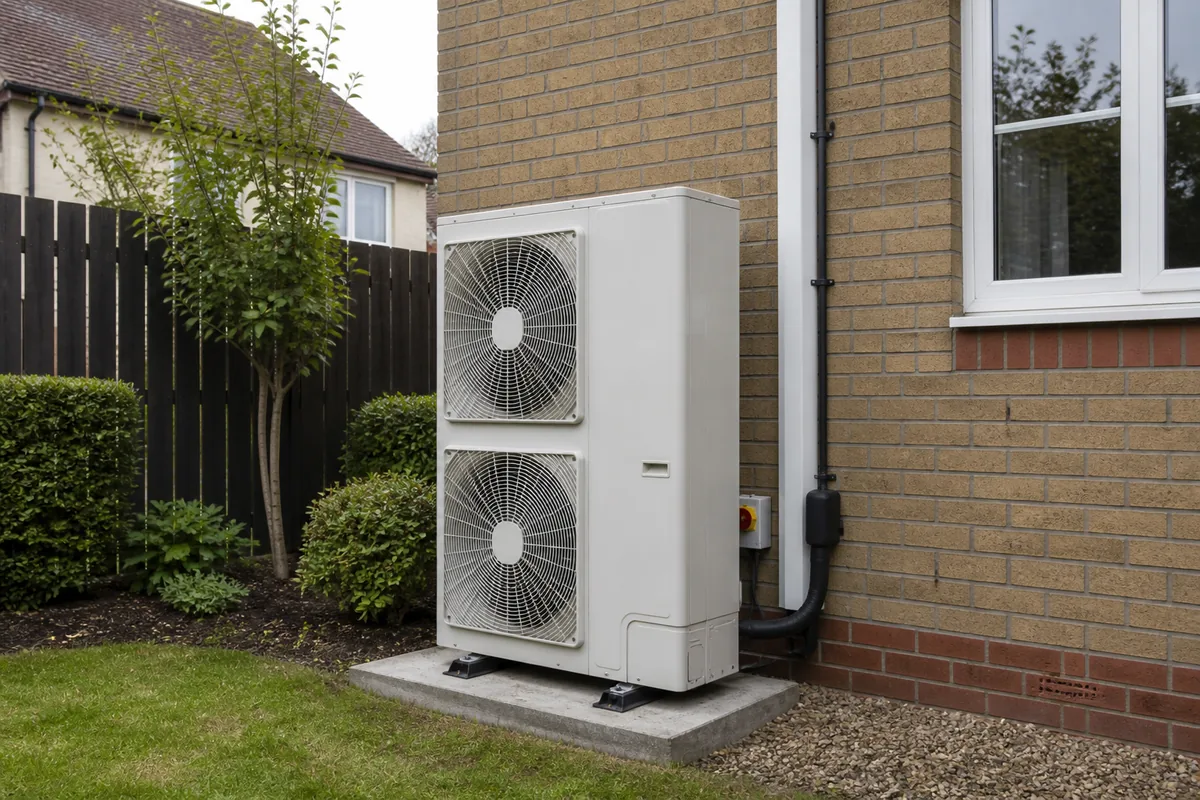
Why lofts fail as plant rooms for condensers
Split outdoors reject heat to ambient air. A loft in summer is already a hot box. Recirculating that heat cooks the condenser, kills efficiency and shortens compressor life. Many units expect rain, frost and free intake. A boarded attic is none of those.
Service access matters. Engineers need space to recover refrigerant, change fans and read nameplates. Crawling over joists with no walk boards is how jobs get refused or priced like a special project.
- Outdoor units need outdoor airflow.
- Loft heat soak destroys performance.
- Condensate must not discharge into insulation or ceilings.
- Pipe routes through lofts are different from plant sitting in lofts.
What is allowed in practice
Running suction and liquid lines through a loft to reach a rear wall or roof condenser is common. Insulate lines, support them, and seal penetrations. Keep joints accessible where the design needs service ports.
When not to improvise: sitting a standard outdoor chassis on loft boards behind a roof window, or terminating a drain so it drips on felt. Internal heat-pump style products exist for special cases, but they are not a silent swap for a cheap outdoor shoved upstairs.
Prefer external wall, roof or ground
A bracketed rear wall, a flat-roof frame with load checked, or a ground slab with clearances are the default UK answers. Mind neighbours, planning and acoustic paths. Planning Portal guidance on air-source heat pumps is the starting consent conversation for many houses.
Flats may need landlord approval for any outdoor position. A loft plant fantasy does not bypass that.
How to brief the survey
Say if someone suggested the loft as a hiding place. Provide loft hatch photos, joist direction and the external walls you can actually use. Ask explicitly for outdoor siting options ranked by noise and access.
Use the quote form. A good surveyor will explain why the loft condenser idea dies on airflow and condensate, then offer a legal outdoor position.
Frequently asked questions
Can refrigerant pipes run through my loft?
Often yes, if insulated, supported and installed by the F-gas installer as part of a proper outdoor condenser design. That is not the same as putting the condenser in the loft.
Are there indoor condensers for UK homes?
Some specialist internal or ducted outdoor alternatives exist for constrained sites. They need correct specification. Do not treat a standard outdoor unit in a loft as that product.
What about condensate in the loft?
Do not allow condensate to spill into loft insulation or onto ceilings. Design a drained route to a legal discharge point.
Core buying guides
Start with these high-intent guides, then dig into the rest of the library.
Related guides
Sources and further reading
How this guide was prepared
This guide was written by the Local AC Installers Editorial Team. We compare official guidance, legislation and established consumer information, separate general information from project-specific advice, and show publication dates and sources. We do not accept installer accreditation claims at face value.