
Condensate pumps are common in UK flats and basements because water cannot fall to an outside spout. If the pump fails, a float should raise an alarm and stop cooling before the tank pours into the ceiling. You can switch the unit off, listen for the pump, and avoid running cooling while it alarms. Do not bypass the float, do not tape the alarm silent, and do not pour water through the indoor electrics as a test. A pump that will not clear, a wet ceiling, or an alarm that returns is an engineer visit. The refrigerant circuit stays closed.
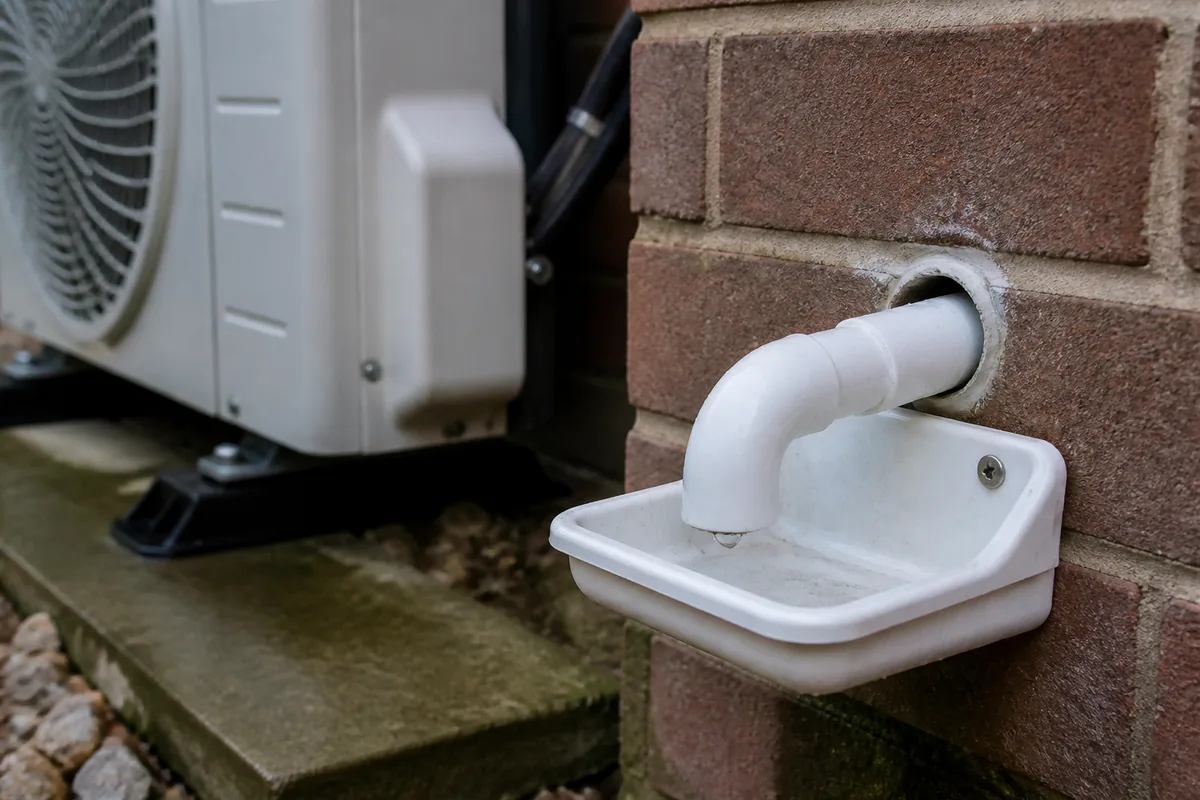
A small pump because the flat has no fall
Gravity drains need a continuous fall. Many leasehold flats have nowhere legal or practical to drip onto a neighbour's balcony, so the installer fits a small pump and a thin tube to a waste or an outside point that may be above the indoor unit. The pump does not run all the time. It waits until the float rises, runs for a short burst, then stops. Silence for long periods can be normal if nobody has been cooling.
In a humid heatwave the pump works harder. A kinked riser, a blocked non-return valve, or algae in the tank makes it run long, gurgle, then alarm. The alarm is the safety device. It is not a faulty beep to mute for the weekend.
Alarm off, ceiling dry, float left in the circuit
Stop cooling as soon as you hear an alarm or see water. Note whether the pump tries to run. From a safe, already-accessible place, look for a kink in the small discharge tube if it is visible along a skirting. Do not pull the tube off. Do not stick pins in it. If the installer left a written note about an accessible tank, follow that note only. Do not open electrical covers on the pump. HSE electricity guidance is to leave those covers shut. Do not reset the air conditioner repeatedly to finish a film. Each reset can add another pan of water. Mop what has already escaped and warn anyone in the flat below if the ceiling is shared. Say which floor you are on.
The high-level float is there to stop the unit or to call for help when the pump cannot keep up. Bridging it keeps cooling going and moves the leak into plasterboard. Do not do it, even for one evening. Do not tape the alarm silent. Book an engineer who understands these pumps on splits. If the indoor unit also needs the coil pan cleaned, that is the same visit, done by a company that can work on F-gas equipment if the unit has to be opened properly. GOV.UK certification is that company standard.
Most concealed flat pumps are not a bucket job. Only empty a tank into a bucket if the manufacturer provides a safe user drain and you can do it without opening electrics. Do not leave a unit producing water with the pump disconnected. Do not pour water into the indoor electrics to test the pump.
Replacing a pump is water and electrics, but it is attached to a refrigerant system. Use a company certified for the equipment they may have to open. Do not fit a hobby pump and hope the float wiring is obvious. If a breaker tripped when the pump failed, keep the isolator off and mention electrics on the booking.
Oil or ice is more than a tired cartridge
Oily residue or ice means more than a pump cartridge. Leave the system off and say so. Do not open refrigerant valves because water appeared. Name the alarm: beep then water, pump silent, pump running constantly, or a one-off overflow.
Frequently asked questions
The pump used to click every few minutes. Now it is quiet. Has it failed?
Not always. It only runs when the tank fills. If you have not been cooling, silence can be normal. If you are cooling and there is no click, no cooling performance, and an alarm or a leak, treat it as failed and switch off.
Can I empty the tank into a bucket for the summer?
Only if the manufacturer provides a safe user drain and you can do it without opening electrics. Most concealed flat pumps are not a bucket job. Do not leave a unit producing water with the pump disconnected.
Will a new pump need an F-gas engineer?
Replacing a pump is water and electrics, but it is attached to a refrigerant system. Use a company certified for the equipment they may have to open. Do not fit a hobby pump and hope the float wiring is obvious.
Can I mute the pump alarm for the weekend?
No. The alarm is the safety device, not a faulty beep. Do not tape it silent and do not bypass the float with a paperclip. Bridging the float keeps cooling going and moves the leak into the ceiling. Switch cooling off and book the visit.
Core buying guides
Start with these high-intent guides, then dig into the rest of the library.
Related guides
Sources and further reading
How this guide was prepared
This guide was written by the Local AC Installers Editorial Team. We compare official guidance, legislation and established consumer information, separate general information from project-specific advice, and show publication dates and sources. We do not accept installer accreditation claims at face value.