
The louvre, or vane, on a UK indoor unit directs the air. If it does not move, the cause may be swing switched off, a vane parked in a fixed position, ice, or a failed stepper motor. You can select swing from the remote, wash the filters, and look for an obvious obstruction in the vane path once the fan is off. Do not force the plastic with pliers, do not oil the pivots, and do not unplug the motor. If it grinds, smells hot, or stays shut so airflow is blocked, stop and call an F-gas engineer. A stuck louvre is not fixed by opening the refrigerant circuit.
Swing off, or a vane parked at an angle you set
Most remotes can stop the vane at an angle you like. That looks like a fault if you expected continuous sweep. Press swing once and watch. Some units also hide a control that locks horizontal and vertical vanes separately. The icons are in that manual.
At switch-on the vane often travels to a stop, clicks, and settles. That single movement is a calibration, not proof the motor is dying. A vane that hunts back and forth every few seconds, clicking each time, is the faulty pattern. Some models use a different fixed angle in heating to push warm air down. Energy Saving Trust's air-to-air page is about that heating and cooling, not about bending the plastic. If the vane is frozen in place in both modes, or it grinds, that is a fault.
A filter sitting proud, then hands off the gears
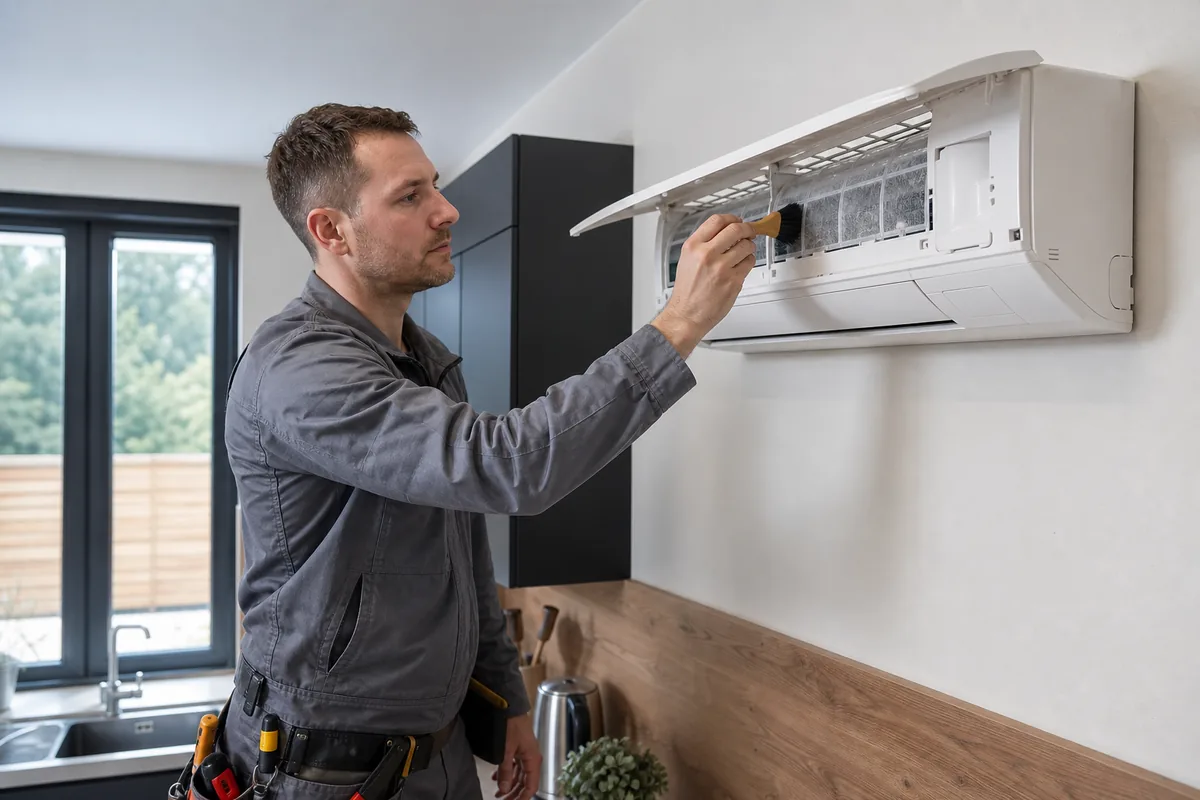
Switch the unit off so the fan is still. If a filter is sitting proud and holding the vane, refit the filter. A cable tie, a child's toy or a fallen piece of insulation can jam the path. Remove only what lifts away without tools on the motor.
Do not bend the vane to a new angle. The gears strip and the next engineer has to replace the mechanism. Do not set the louvre by hand. Do not spray silicone or WD-40 into the pivot. It collects dust and fails again. Ice holding a vane shut needs a melt on fan-only, not a yank.
If the motor buzzes and the vane does not travel, leave it. Continued power overheats a stalled motor and can add a burning smell. HSE electricity guidance is to stop at that smell rather than keep powering a stalled motor. Book an F-gas engineer with the model details. Parts are indoor mechanical parts. They still sit on a unit that contains refrigerant, so the company should be certified even if the gas valves stay shut. GOV.UK certification is that standard.
A vane stuck fully closed will ice the coil or stop the room cooling. Do not run cooling hard while you wait if the discharge is blocked. Fan-only to dry residual ice is enough, then off. Do not wire the motor direct to make it move. A new remote fixes a louvre that does not move only if the old remote is not sending swing and the indoor unit otherwise works. If the unit beeps and the vane stays still, the fault is on the unit, not the handset. Say whether airflow is blocked.
Film the vane and the swing icon
Film the louvre and name the mode. Note whether there is no movement, a hunt and click, or a vane stuck shut after ice. Do not ask for gas to be added because a vane is lazy.
Frequently asked questions
Can I set the louvre by hand?
No. Moving it by hand strips the gears. Use the remote. If it will not hold position, book an engineer.
The vane moves in cool but not in heat. Is that normal?
Some models use a different fixed angle in heating to push warm air down. If it is frozen in place in both modes, or it grinds, that is a fault. Check the manual before you call it broken, then send a video if it still will not track the setting.
Will a new remote fix a louvre that does not move?
Only if the old remote is not sending swing and the indoor unit otherwise works. If the unit beeps and the vane stays still, the fault is on the unit, not the handset.
The motor buzzes and the vane stays put. Can I keep trying swing?
No. A buzzing motor that does not travel can overheat if you leave power on it, and it can add a burning smell. Leave it and book an F-gas engineer. Do not wire the motor direct and do not oil the pivots.
Core buying guides
Start with these high-intent guides, then dig into the rest of the library.
Related guides
Sources and further reading
How this guide was prepared
This guide was written by the Local AC Installers Editorial Team. We compare official guidance, legislation and established consumer information, separate general information from project-specific advice, and show publication dates and sources. We do not accept installer accreditation claims at face value.