
A garage workshop overheats from cars, compressors, welders and a thin up-and-over door, and it fills with dust that blocks coils. A split can cool the space you work in once the shell is tighter and the indoor unit is serviceable. It does not extract exhaust fumes, paint solvent or welding fume. Those need ventilation designed for the hazard, and a comfort unit is the wrong machine to pretend otherwise. This is a tools and cars brief. Survey the loads, the door and the vapour risk first. An F-gas certified company should do the refrigerant work.
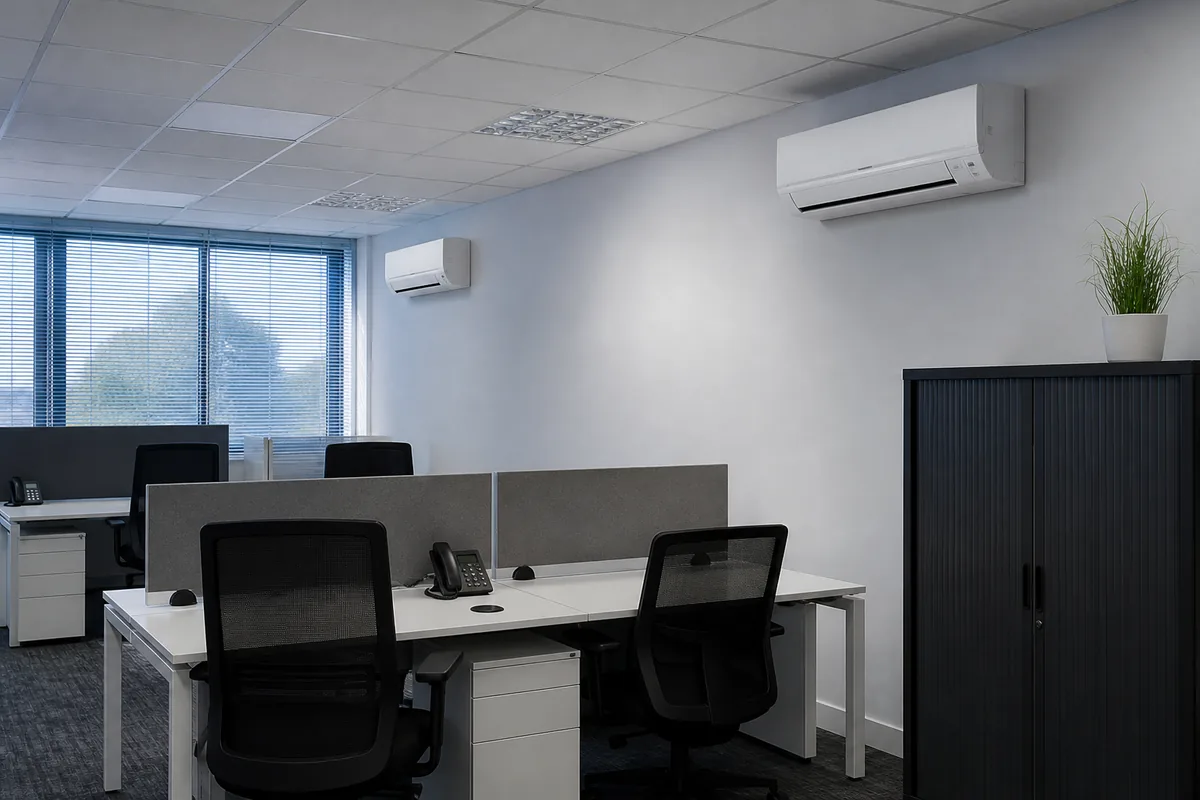
Tools, a hot car and a thin garage door
A car brought in hot, a battery charger, a compressor and a bench grinder all add heat. The garage door is usually the weak wall: thin, poorly sealed, and facing the afternoon sun. Insulation and draught seals change the size of unit you need. Cooling a sieve is how you buy a large unit that never catches up. This is not a gym. People training produce a different moisture and occupancy pattern. Tell the surveyor what you do in the room or you will be sized for the wrong hobby.
What the workshop survey has to hear
A workshop wants the jet off the bench, off the lathe swarf, and off any papers or paint tins.
- List heat-making tools that run at the same time.
- Say if a car engine is ever run inside. Comfort cooling is not extraction.
- Note paint, solvent and petrol storage.
- Keep filters reachable. Workshop dust is relentless.
Filters pack with grinding dust
Filters in a workshop need washing or changing far more often than in a lounge, sometimes monthly in a dusty hobby shop. Build that into the service plan and leave access above the bench. A coil packed with grinding dust ices up, then the unit throws water and stops cooling.
Condensate on the floor and a blocked outdoor unit
Condensate on a smooth garage floor is a slip hazard. Route it to a drain or a pump discharge outside the work area. The outdoor unit should sit where a car bonnet, a trailer or a ladder store will not block it. Attached garages still need a legal outdoor position under the usual heat pump planning tests on the Planning Portal.
Pipes through the wall into the house
Pipework through a fire-separating ceiling or wall needs care so you do not casually breach the house separation. Sometimes a multi-split can cool the workshop and the house if pipe lengths and simultaneous load work. The workshop dust and the house bedrooms still want separate indoors and an honest survey. Refrigerant work stays with a company certified under the GOV.UK F-gas rules.
Stop when the job is fumes, spray or a running engine
A split recirculates room air and dumps heat outside. It does not remove car exhaust, and it does not replace a vehicle exhaust hose, a welding extract, or a spray-booth arrangement. Do not run an engine in a closed garage and rely on a split. If you weld or spray, sort that ventilation with someone competent in that risk. Tell the installer if the room regularly holds flammable vapour. Ordinary domestic splits are not hazardous-area equipment. A firm that still quotes a bedroom unit for a paint shop is the firm to turn away, however keen the price. Confirm the unit is for comfort only, with ventilation left as its own item.
Core buying guides
Start with these high-intent guides, then dig into the rest of the library.
Related guides
Sources and further reading
How this guide was prepared
This guide was written by the Local AC Installers Editorial Team. We compare official guidance, legislation and established consumer information, separate general information from project-specific advice, and show publication dates and sources. We do not accept installer accreditation claims at face value.