
A hallway is usually a bad place for the only air conditioner in a UK home. Cooled air stays in the hall and the stair void once bedroom and living room doors are shut, which is how people actually live. A landing unit can take the sting out of a hot top-floor stair in a heatwave. It will not cool four bedrooms behind closed doors. Survey the doors, the stair and the rooms you care about before you put a head in the circulation space. Refrigerant work needs an F-gas certified company, and a careful survey beats any badge.
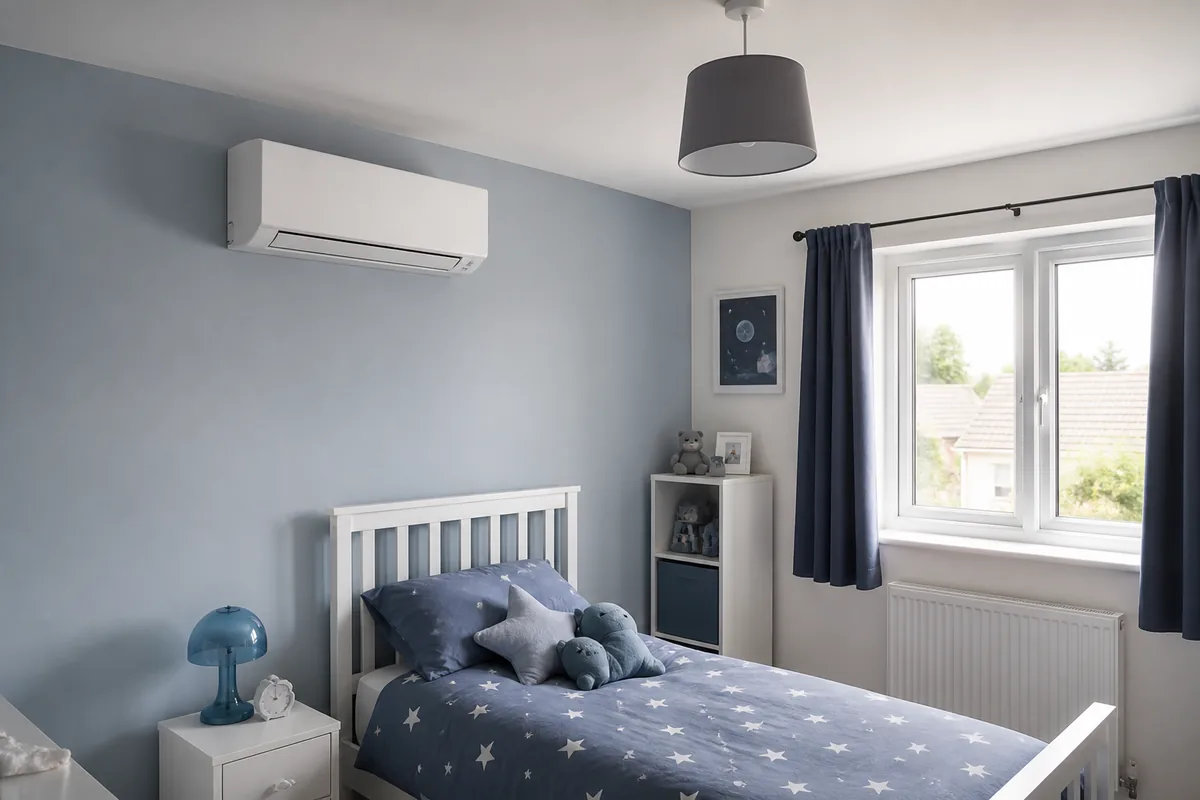
Closed doors leave a hall unit in the hall
Split air conditioning cools the air in the space it can reach. A hall is a corridor. The moment you shut the living room door for the evening, or a bedroom door for the night, that room is on its own. People imagine a hall unit feeding the house the way a boiler feeds radiators. Air does not work like that without ducts and open paths. If the goal is sleep, put capacity in the bedrooms. If the goal is the evening, put it in the living room. A single hall head sold as whole-house cooling is the quote to challenge. Energy Saving Trust describes these machines as air-to-air heat pumps, which still only treat the air they can reach.
Noise, a front door draught and a rear condenser
Halls carry sound. An indoor fan opposite the front door is what you hear in every room with an open door. Cold air dumping down an open stair onto the person by the front door is a common complaint. Ask the surveyor to set vanes and a modest setpoint for a circulation space. You are not trying to hold a hall at a deep chill. Outdoor units on the front elevation face planning limits and the street. Many houses are better with the condenser at the rear even if the pipe run from a front hall is longer. The Planning Portal air source heat pump notes are the siting test, and the refrigerant work needs a company certified under the GOV.UK F-gas rules.
Tall stairs, pumps and painted halls
Tall stair voids need a format that can move air, not a tiny unit hoping heat will wander downstairs. A stair void is a large volume for one small wall unit. High walls make condensate and service access harder. A pump, a long pipe run to a rear condenser, and decorating a hall you have just painted all belong on the survey.
Frequently asked questions
Can a hallway unit cool upstairs bedrooms?
Not in any useful way once the bedroom doors are shut. Heat rise up a stair is not a cooling system. Bedrooms need their own supply or an open-door plan you will really live with.
Is a landing unit ever worth fitting?
Yes when the landing itself is the hot spot, often under a roof. Treat it as cooling for that space, and still survey the bedrooms separately. Keep the throw out of the bedroom doorways if those rooms have their own units, or you will fight two controls.
Will leaving every door open make one unit enough?
It helps a little and still usually fails in a heatwave, because the unit is sized for a hall and asked to treat several rooms. Survey the real layout.
Can fire doors in a flat be wedged to share hall cooling?
No. Fire doors in flats must stay closed. Do not wedge them to share cooling. Put capacity in the rooms you shut, or accept that the hall unit cools the hall.
Should the condenser go on the front wall of the hall?
Often no. Front elevations face planning limits and street noise, and the indoor fan opposite the front door carries through every open door. A rear position with a longer pipe is frequently the better survey outcome.
Core buying guides
Start with these high-intent guides, then dig into the rest of the library.
Related guides
Sources and further reading
How this guide was prepared
This guide was written by the Local AC Installers Editorial Team. We compare official guidance, legislation and established consumer information, separate general information from project-specific advice, and show publication dates and sources. We do not accept installer accreditation claims at face value.