
Low indoor noise is the product of a hearing clinic. Choose plant that is quiet on the fan speed you will actually use, and keep the outdoor unit off the test-room wall. Do not cool an audiology booth by blowing supply air into it or by cracking its door onto a draughty room. Booth ventilation, if the booth needs it, follows the booth maker. The split serves the consultation room around it, for comfort only. HSE temperature guidance applies to staff. This page does not claim any effect on hearing, tests or treatment.
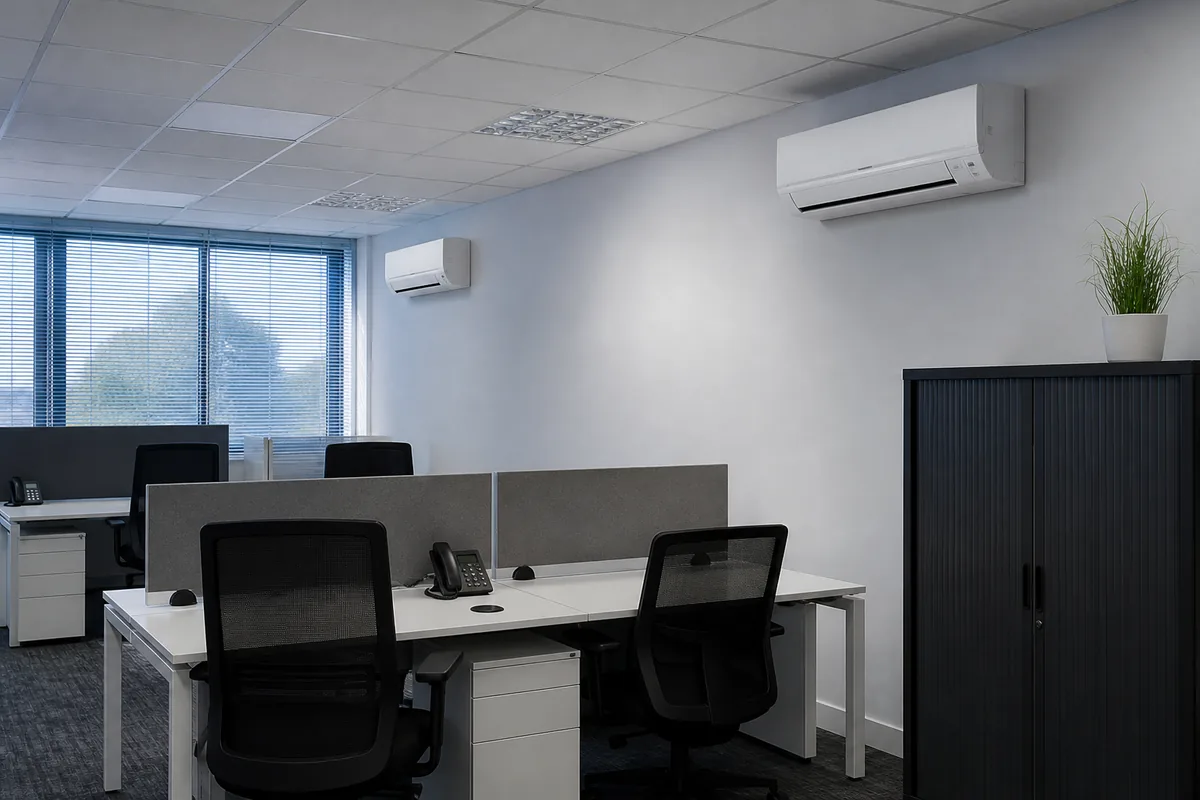
A booth that controls sound
Audiology booths are built to control sound. A draught through a port, a fan blowing at the door, or a cassette over a booth that is only sealed when nobody has added a vent, undoes that. Ask the booth supplier what air, if any, may enter. Then keep the room unit off that face.
The room outside, with the booth door shut
The consultation room outside the booth still has to be a tolerable temperature for staff and for the person waiting to go in. A small, quiet split can do that job with the booth door shut. It is not a reason to prop the booth open so the room unit can reach. HSE temperature guidance applies to staff. This page does not claim any effect on hearing, tests or treatment.
Hum through the test wall
Structure-borne hum from a bracket on the test wall will show up in the quiet. Use another elevation, anti-vibration mounts, and pipework that is not clipped to the booth structure. A quieter install avoids obvious hum and draught. It is not a clinical claim. Test conditions belong with the booth supplier and the clinic's own practice.
- Do not blow into the booth.
- Follow the booth maker on booth air.
- Outdoor unit off the test-room wall.
The fan speed you will actually leave on
Indoor fan noise at high speed will show up too. Specify the low or medium speed you will leave selected, and ask for the sound figure at that speed. A portable is often noisier in the room and needs a window path. It is a poor match for a clinic that is selling quiet. A properly sited split is the calmer machine.
A waiting room on a thin partition
Waiting rooms can be a separate, slightly less strict zone. Do not let a noisy waiting-room cassette share a thin wall with the test. If one outdoor unit serves both, the pipe route and the fan staging still need a look for the test room, not only a price for two heads.
No drilling while a test is booked
Book installation and service when no test is running. Drilling in the next room is obvious. A setpoint is a comfort setting for the occupied room. Do not ask for a temperature that is supposed to change a test result. F-gas certification applies. If the clinic is large enough for inspection duties, check GOV.UK air conditioning inspections. Many single-room clinics are not. The lease, the neighbour and planning still govern the outdoor unit. A quiet indoor with a loud condenser outside the test window is a failed layout. State staff numbers and the hours when tests run.
Frequently asked questions
Can we leave the booth door open so the room unit cools it?
No. That breaks the booth's purpose and blows room air in. Use the booth maker's guidance for air inside the booth. Cool the room outside it quietly.
Core buying guides
Start with these high-intent guides, then dig into the rest of the library.
Related guides
Sources and further reading
How this guide was prepared
This guide was written by the Local AC Installers Editorial Team. We compare official guidance, legislation and established consumer information, separate general information from project-specific advice, and show publication dates and sources. We do not accept installer accreditation claims at face value.