
In cooling, a split makes condensate on the indoor coil as it dries the room. How much depends on how humid the air is, how long you run it, and the size of the unit. This page will not publish a litres-per-hour figure, because that number would be false for the next house and the next weather. It is enough water to need a continuous drain: a steady trickle for hours on a humid afternoon, and enough to stain a ceiling if the drain blocks. In heating, that indoor drain usually goes quiet and the outdoor unit sheds defrost water instead.
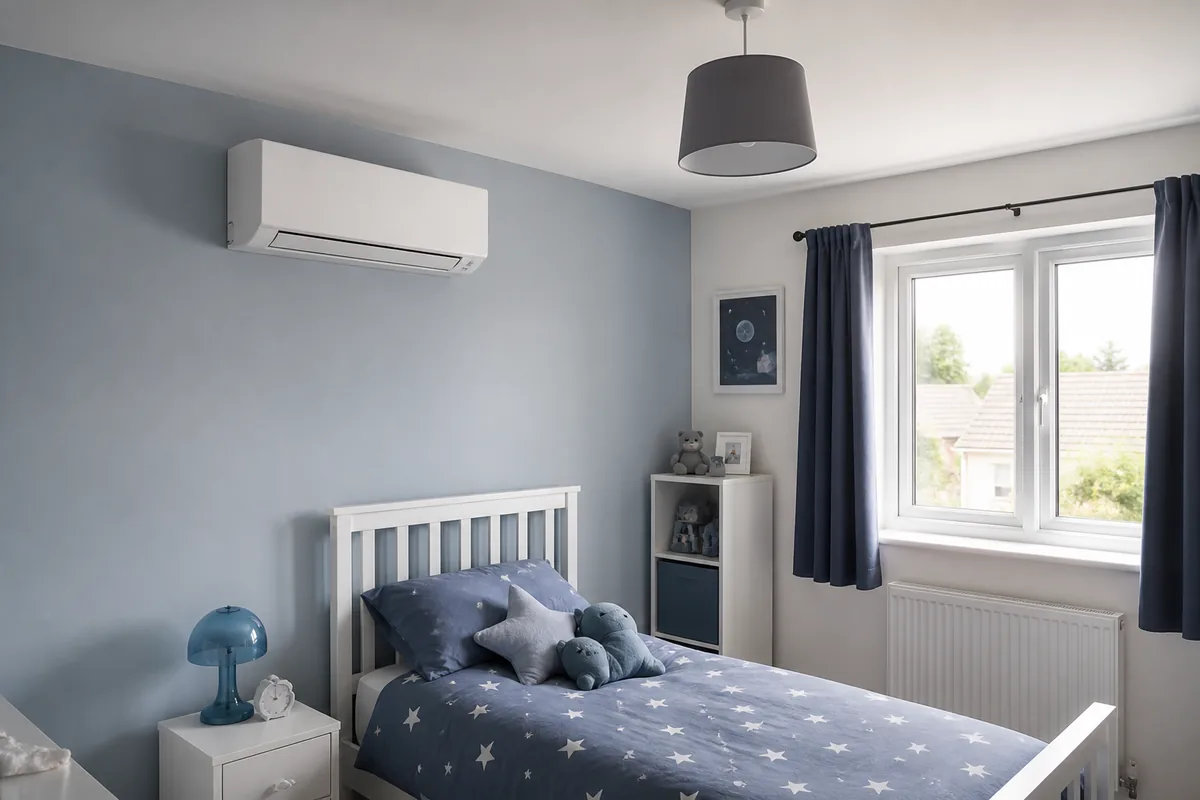
Moisture leaving the air on a cold coil
Warm room air crosses a cold coil. Moisture leaves the air and runs into the indoor drain pan, then into the condensate pipe. A closed, steamy room produces more than a dry one. A unit that runs all afternoon produces more than one that meets the setpoint in twenty minutes. Cooling makes indoor condensate. Humidity and hours change the volume.
A drain sized for a humid afternoon
A bucket test you try once is not a design figure. Size the drain for a humid day and a long run, with a fall or a pump that can keep up. A pipe that copes with a drip and floods on the first muggy Sunday is too hopeful. It is enough to need a real drain. No universal litres-per-hour figure is given here.
A gravity fall, or a pump with a model-specific lift
The pan overflows inside the casing, then through the wall or the ceiling below. That is the expensive version of a small plastic pipe. A gravity drain with a steady fall is the robust plan. A pump is for when gravity cannot reach a waste, and the pump's lift is model-specific. Filters caked in dust make the coil colder and wetter in patches, and can contribute to water in the wrong place. Cleaning filters is housekeeping. It does not replace a trapped or crushed drain. Energy Saving Trust explains air-to-air heat pumps. The water is a design detail of the same machine. F-gas certification matters when the refrigerant side is opened. A condensate pipe is water, and it still has to be done properly.
Frequently asked questions
How many litres an hour does a split produce?
There is no single figure. Humid weather and long hours produce a steady trickle that must go to a drain. Design for that, not for a drip.
Does heating mode make indoor condensate too?
Usually the indoor drain is quiet in heating. The outdoor unit produces defrost water instead. Heating mode water is mainly outdoors, from defrost. A wet indoor unit in heating needs a look, not a shrug.
Can condensate go into a plant pot?
No. You need a continuous drain that cannot overflow into the room. A pot is full by the evening, and then the ceiling pays.
Is an oil sheen on outdoor water the same as condensate?
Clear water under the outdoor unit in heating is defrost, and it is normal. An oil sheen is not. Indoor condensate in cooling should be clear water too.
Does a smelly slow drain mean the gas circuit should be opened?
Smell, algae and a slow drain are maintenance, dealt with by cleaning the drain, not by opening the gas circuit. F-gas certification matters when the refrigerant side is opened.
Core buying guides
Start with these high-intent guides, then dig into the rest of the library.
Related guides
Sources and further reading
How this guide was prepared
This guide was written by the Local AC Installers Editorial Team. We compare official guidance, legislation and established consumer information, separate general information from project-specific advice, and show publication dates and sources. We do not accept installer accreditation claims at face value.