
A bedroom wall split is built to keep people comfortable, with a setpoint in the high teens or low twenties and a swing you do not notice on the sofa. A wine store wants slow, steady conditions, cooler than a living room, with humidity that does not dry corks or soak labels. Do not claim cellar-perfect control from a domestic comfort split. Everyday bottles can sit in a cool cupboard. A collection needs a wine cabinet or a purpose-made cellar cooler. A comfort unit might only stop a hot cupboard becoming a heatwave problem.
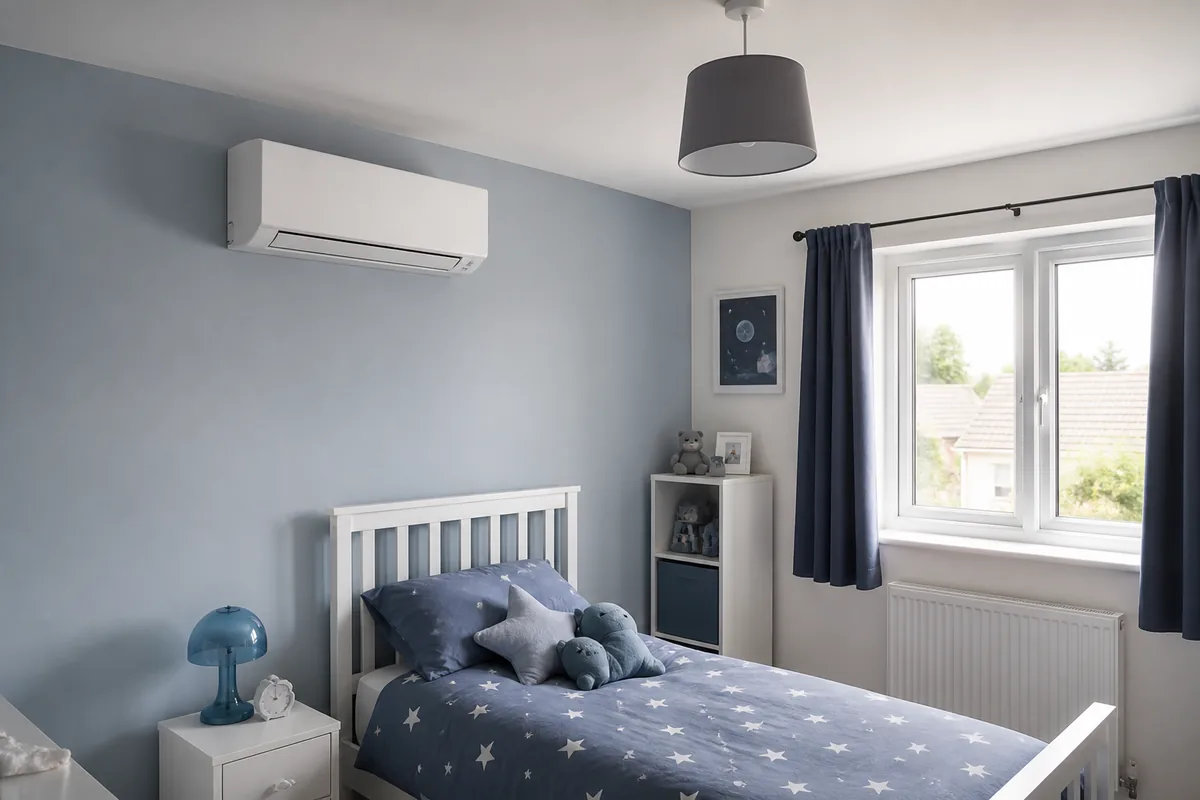
A wall unit aimed at bottles under the stairs
The scene is a comfort split asked to babysit a rack. Domestic splits measure room air and cycle to a comfort band. They are good at that. A collection is a different job, and a few dozen everyday bottles are a smaller one again.
Cabinet, cellar cooler, or comfort cooling
Cellar practice is a tighter, cooler band held for months, not a blast before guests arrive. Many comfort remotes will not hold the low, steady temperature associated with long-term storage, and they are not controllers for humidity. A lower setpoint still leaves a comfort machine that cycles for people. It does not become stable cellar control.
- Use a wine cabinet for a modest collection.
- Use a cellar cooler when the room is actually a cellar.
- Treat a bedroom split as comfort cooling only.
- Do not promise a one-degree stable cellar from a wall unit.
Taking the peak off a warm cupboard
If a store or pantry gets hot because it is under the stairs next to a boiler, a small split may keep the peak down so short-term bottles are not baked. Accept a wide band and check the room with a simple logger before you trust it with anything valuable. Cooling also strips moisture. In a small sealed cupboard that can mean dry corks. In a damp basement it can mean the unit short-cycles while the walls stay wet. Neither result is a designed cellar.
The indoor unit still needs a drain, airflow and an F-gas install, which is a lot of plant for a cupboard of supermarket wine. A cabinet with its own cooling circuit is often the smaller, more stable product.
A lined room and a cooler built for it
Insulation, vapour control and a cooler designed for low temperature and humidity come first. The condenser still has to sit outdoors or as that product allows, with service access. Mixing a comfort wall unit into a lined cellar because it was cheaper will hunt and dry the room. Systems large enough to condition a big store can cross into equipment that needs proper commissioning and, above 12 kW effective rated output, the GOV.UK inspection regime. A cabinet in the dining room will not.
Stop when nobody will write the temperature band
Say whether you are protecting a collection or taking the edge off a warm cupboard. Ask the supplier to state the temperature band and the humidity behaviour in writing. If they cannot, you are being sold comfort cooling. Planning and F-gas rules apply to any split condenser. In England, use the Planning Portal for the outdoor unit. The wine does not change the neighbour's right to quiet.
Frequently asked questions
Can I use a bedroom split as a wine cellar cooler?
No. It is comfort cooling with the wrong control band and the wrong humidity behaviour. Use a wine cabinet or a purpose-made cellar cooler for a collection.
What should I do with a few dozen everyday bottles?
Keep them in a naturally cool cupboard away from the boiler and the sun, or use a cabinet. A full split is rarely justified for that.
Core buying guides
Start with these high-intent guides, then dig into the rest of the library.
Related guides
Sources and further reading
How this guide was prepared
This guide was written by the Local AC Installers Editorial Team. We compare official guidance, legislation and established consumer information, separate general information from project-specific advice, and show publication dates and sources. We do not accept installer accreditation claims at face value.