
There is no single service interval suitable for every domestic air conditioner. Follow the manufacturer's schedule and any warranty conditions, then adjust for usage, dust, pets, coastal exposure and whether the system provides winter heating. Homeowners may clean accessible filters at the intervals in the user manual, while a competent service should inspect cleanliness, drainage, airflow, electrical condition and operation. Refrigerant work and regulated leak checks must be handled by appropriately qualified people.
Use the manual and actual usage
A bedroom system used only during short heatwaves has a different duty from an air-to-air heat pump used for heating and cooling throughout the year. Manufacturer instructions are the starting point because equipment construction, filters and warranty terms vary.
Homes with pets, renovation dust or heavy traffic pollution may need filter attention more often. Coastal Essex exposure can accelerate outdoor corrosion, while leaves and debris can obstruct condensers in garden locations.
What occupants can check
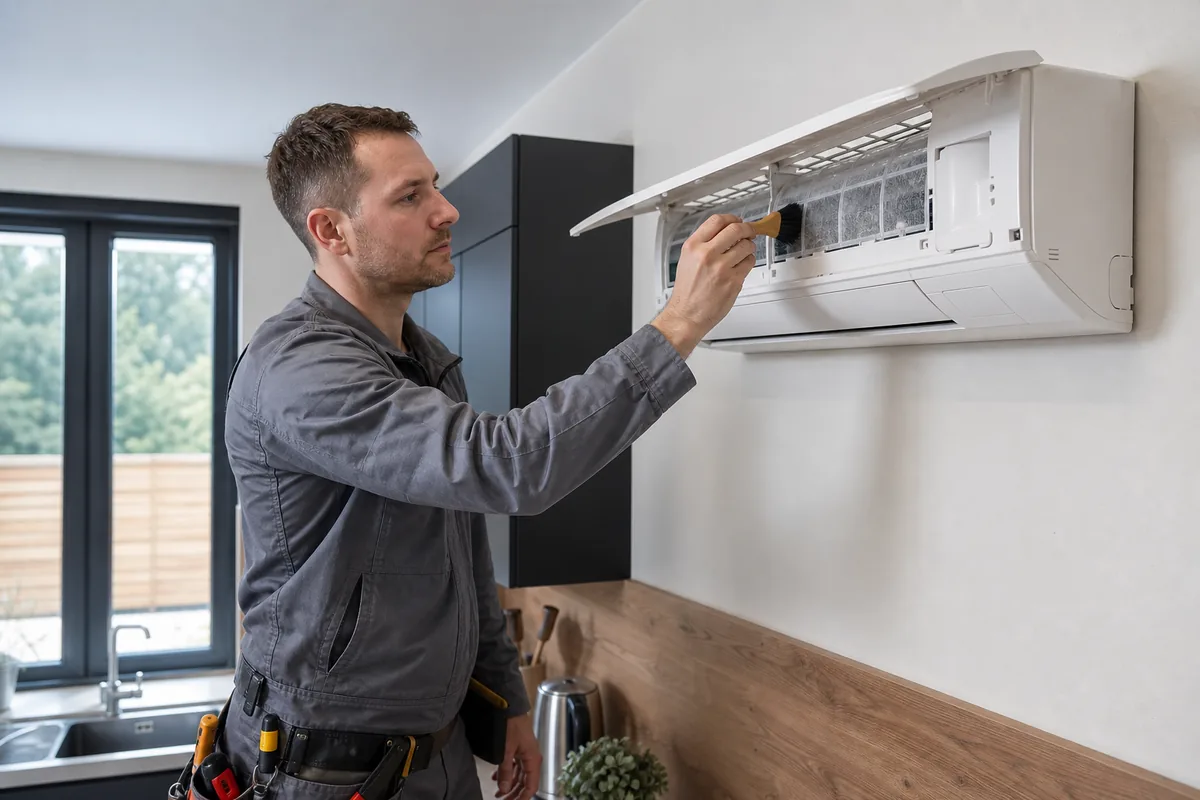
Users can normally clean or replace accessible filters, wipe approved surfaces and keep the outdoor unit's airflow clear, following the manual and safe isolation instructions. They should not remove electrical covers or disturb refrigerant components.
Look for reduced airflow, new noise, odour, water marks, repeated fault codes, ice or unexpected energy use. Early inspection can prevent a blocked drain or loose part from causing wider damage.
- Follow the user manual for filter access and cleaning.
- Keep furniture and stored items away from air paths.
- Remove loose outdoor debris without opening the unit.
- Record faults and conditions before arranging service.
What a competent service should cover
The scope should reflect the equipment and may include filters, coils, fan condition, drain tray, condensate route, pump, electrical connections, controls, temperatures and general operating checks. Outdoor mounting, corrosion, airflow and vibration also merit attention.
Refrigerant should not be routinely topped up without investigating why charge is low. A sealed system does not consume refrigerant in normal operation. Leak investigation and repair require the applicable qualifications and records.
Legal checks and record keeping
Some systems fall within statutory F-gas leak-check regimes depending on refrigerant type, quantity and carbon-dioxide-equivalent charge. Small domestic systems may be below relevant thresholds, but the equipment label and current rules should be checked rather than assumed.
Keep service reports, fault findings, refrigerant records and invoices. These documents support warranty claims, future diagnosis and responsible end-of-life recovery.
Frequently asked questions
Is annual servicing mandatory for every home system?
No universal annual legal rule applies to every domestic unit. Manufacturer schedules, warranty terms and any F-gas obligations depend on the particular system.
How often should filters be cleaned?
Use the interval and method in the user manual, checking more often during heavy use or dusty conditions. Do not wait for airflow to become visibly restricted.
Should refrigerant be topped up at each service?
No. Low refrigerant suggests a leak, previous charging error or other issue that should be diagnosed and rectified by qualified personnel.
Does a heating and cooling system need more attention?
Year-round operation creates more running hours, so inspection frequency may need to reflect that duty. Follow the manufacturer schedule and service findings.
Core buying guides
Start with these high-intent guides, then dig into the rest of the library.
Related guides
Sources and further reading
How this guide was prepared
This guide was written by the Local AC Installers Editorial Team. We compare official guidance, legislation and established consumer information, separate general information from project-specific advice, and show publication dates and sources. We do not accept installer accreditation claims at face value.