
Wash the mesh filters on a UK domestic split about once a month during heavy summer use, pollen peaks and any building work, and every two to three months if the unit is idle or used lightly. Dry them fully before they go back. That is the homeowner job. An engineer's service is different: coil, drain, electrics, and a look at performance, typically once a year on a home system that heats or cools regularly. Do not open the refrigerant circuit, do not jetwash the outdoor fins at close range, and do not skip filters because a service is booked for later in the year.
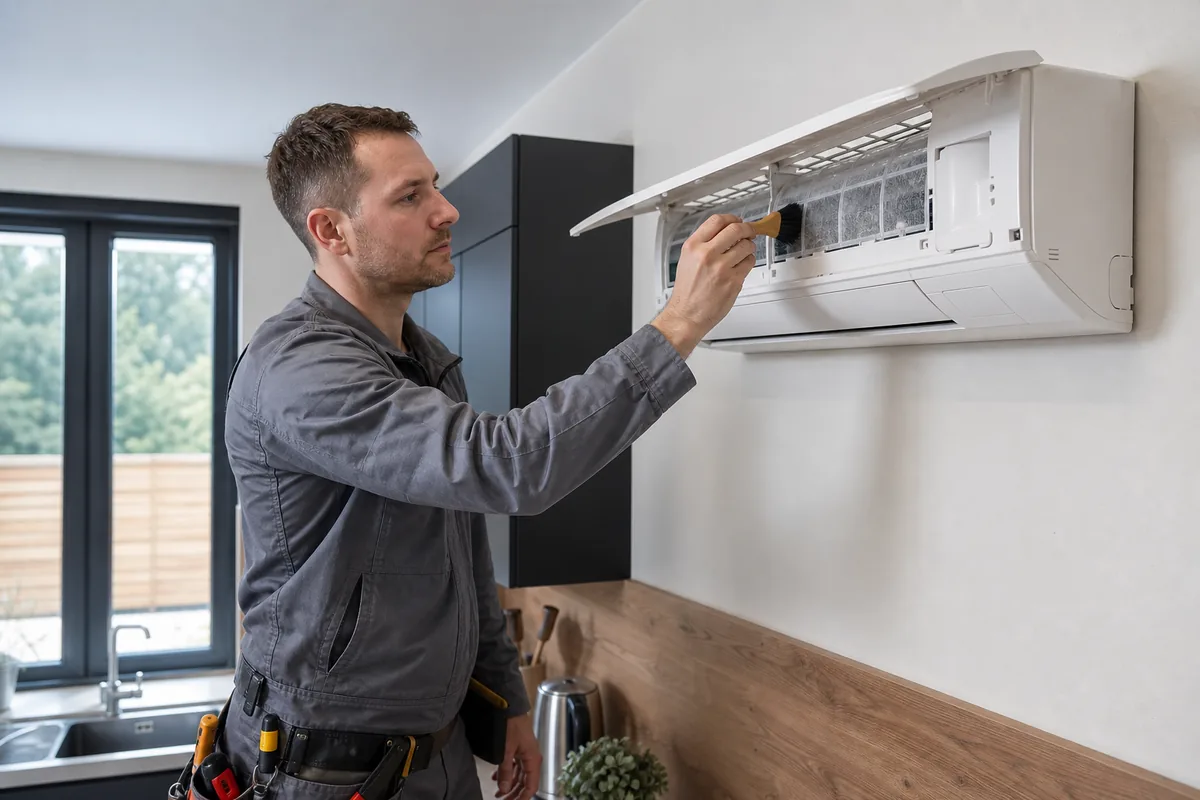
A lumpy British year, not a sticker from abroad
British use is lumpy. A bedroom unit may run hard for a fortnight in July and then sit until a cold snap when you try heating. Dust and pollen still settle while it is off. The practical rhythm is: wash before the first hot week, again mid-season if you are running most evenings, and again before you rely on heating. Homes with pets, smokers, or a kitchen opening into the same room need the shorter end of that range. Heavy use or pets means about monthly in the season you run it. Light use means every two to three months, plus a wash before first use. After sanding or plastering, wash before the next run.
Coastal units collect salt film on the outdoor coil. Urban units collect traffic film. Those are not filter washes. They are reasons to let a service include the outdoor coil, done with the unit isolated and without folding the fins flat. Your monthly job remains the indoor mesh. HSE ventilation guidance is about the air the room is breathing, which a choked mesh makes worse. Energy Saving Trust treats a reverse-cycle split as an air-to-air heat pump when you use it for heat as well as cooling, so say whether yours heats, and whether a pump serves a flat.
Lukewarm water, a full dry, and a yearly visit beyond the mesh
Switch the unit off at the remote. Open only the filter door the manual shows. Slide the meshes out. Lukewarm water and a gentle wipe are enough. Mild detergent is fine if the manual allows it. Rinse well. Dry completely. A wet filter put back grows the musty smell you were trying to avoid. A vacuum lifts dry fluff. Greasy kitchen film needs a wash and a full dry. Do not vacuum the coil fins as if they were a carpet.
Do not run the system with the filters out. Do not put meshes in a dishwasher if the manual does not allow it: heat warps the frames and they then leak dust around the edges. Do not oil them. If a filter is torn, replace it with the part for that model. A tea towel taped over the intake is not a filter. Most domestic UK splits use washable mesh. Some ducted systems have disposable media. Follow the plate on the unit. Do not wash a disposable panel and put it back soggy.
Filters do not clean the drain pan, the indoor coil fins, the pump, or the outdoor electrics. A proper service, about yearly for a home system that runs regularly, isolates the unit, cleans what is safe to clean, checks the drain leaves the building, and looks at how it runs. Refrigerant is handled only if there is a justified reason, by someone certified for F-gas work under the GOV.UK rules. Washing filters monthly does not replace that visit if you rely on the system through the year. Stop and book sooner if ice forms, water leaks indoors, breakers trip, or heating and cooling have fallen away. Do not jetwash the outdoor unit from a few centimetres away. Bent fins cut airflow. Do not open flare nuts because the filters look clean and the unit is still weak.
Frequently asked questions
If I wash filters monthly, do I still need a service?
Yes, if the system runs through the year or you rely on it for heat. Filters are only the mesh you can slide out. Drains, coils and electrics still need a periodic engineer visit.
Can I vacuum the filters instead of washing them?
A vacuum lifts dry fluff. Greasy kitchen film needs a wash and a full dry. Do not vacuum the coil fins as if they were a carpet.
Are washable filters and disposable filters the same job?
No. Most domestic UK splits use washable mesh. Some ducted systems have disposable media. Follow the plate on the unit. Do not wash a disposable panel and put it back soggy.
Core buying guides
Start with these high-intent guides, then dig into the rest of the library.
Related guides
Sources and further reading
How this guide was prepared
This guide was written by the Local AC Installers Editorial Team. We compare official guidance, legislation and established consumer information, separate general information from project-specific advice, and show publication dates and sources. We do not accept installer accreditation claims at face value.