
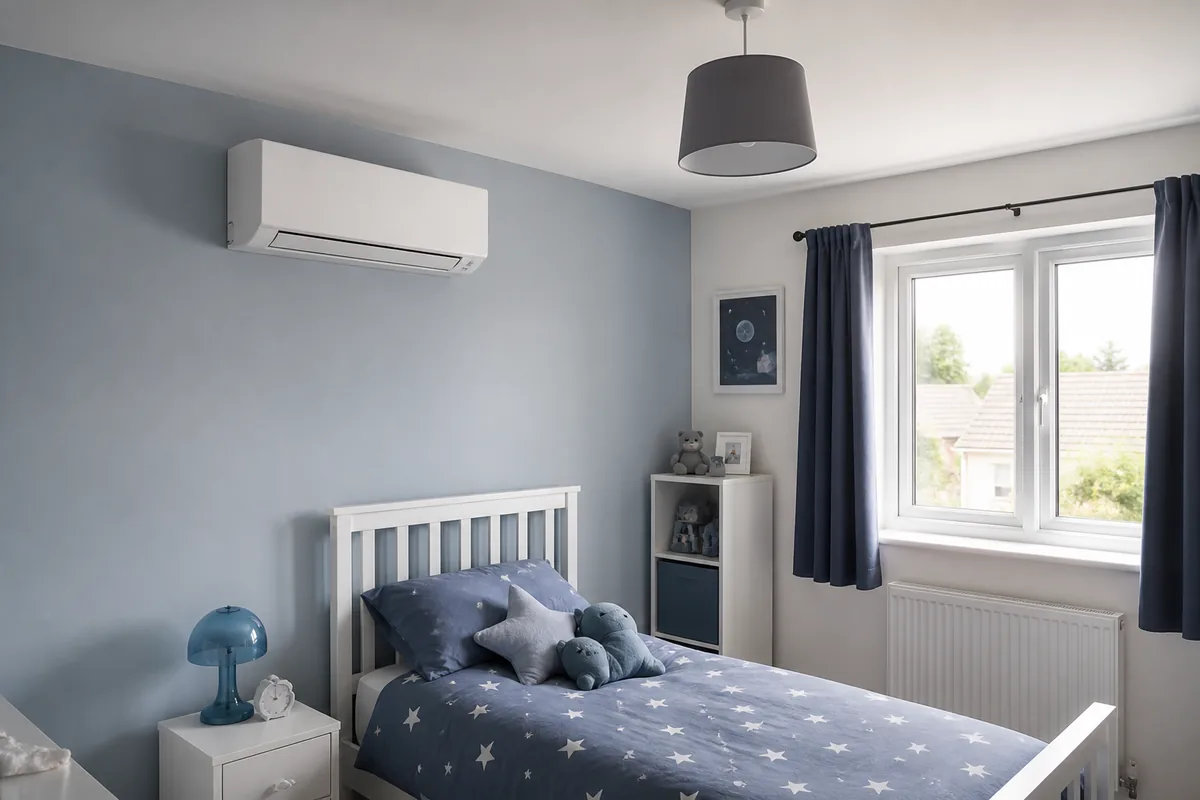
For a bedroom, ask for the indoor sound pressure on the low fan you will actually use at night, in dB(A), at the distance the maker states. The smallest number in the brochure is often a special minimum the unit leaves as soon as the room needs real capacity. Compare low-fan figures, then ask whether that fan speed can hold the setpoint. The outdoor unit on the other side of the headboard can still be the noise you hear. F-gas installation does not change a loud fan curve.
Low fan while the bedroom is still held
Manufacturers publish a range. The bottom figure is commonly a silent or minimum mode at a stated distance, sometimes with the compressor in a gentle state that will not keep a west-facing room at the temperature you set. The number that matches sleep is the low fan you can leave selected, in dB(A), while the unit is still controlling the room.
Ask for that figure on the exact indoor model and capacity. A 2.0 kW and a 3.5 kW from the same range do not share one sound line. Ask at what fan speed the room still holds setpoint. Compare the same capacity. Do not buy on the lowest brochure dB alone. The brochure minimum is often a mode the unit will not stay in when the room needs cooling.
Pillow, vane and the compressor in the wall
Sound pressure drops with distance, and a vane aimed at the pillow feels louder than the same fan aimed along the ceiling. Mount the unit so the throw misses the bed. A unit above the headboard puts both noise and draught in the worst place. Night mode that only raises the setpoint, without a quiet fan, does not answer this question. Ask what the fan does, not only what the display icon does.
People blame the indoor fascia for a hum that is the outdoor compressor on a bracket behind the bed. Ask for anti-vibration mounts and a position off that wall if sleep is the point. Indoor dB(A) will not cancel structure-borne noise. Filters and a level install keep rattles out of the comparison. A certified company should commission the circuit so the unit is not hunting. Planning Portal conditions in England still govern the outdoor unit even when your question is the pillow. F-gas installation does not change a loud fan curve.
Frequently asked questions
Should I buy the unit with the lowest brochure dB?
Read the low-fan figure you will actually run, in dB(A), on that capacity. The brochure minimum is often a mode the unit will not stay in when the room needs cooling.
Will night mode keep the room quiet and cool?
Ask what the fan does in that mode, and whether the setpoint still holds. An icon is not a sound figure.
Why can I hear the unit in the pillow when the indoor fan is quiet?
The outdoor unit may be on the other side of that wall. Mounts and position fix that path. A quieter fascia will not.
Core buying guides
Start with these high-intent guides, then dig into the rest of the library.
Related guides
Sources and further reading
How this guide was prepared
This guide was written by the Local AC Installers Editorial Team. We compare official guidance, legislation and established consumer information, separate general information from project-specific advice, and show publication dates and sources. We do not accept installer accreditation claims at face value.