
Approved Document O requires new residential buildings in England to limit unwanted summer solar gains and provide an adequate way to remove excess heat. Mechanical cooling may only be used where heat cannot be removed sufficiently without it, after practicable passive means have been considered. For existing homes the regulation does not automatically apply in the same way, but the hierarchy is still a sound health-led design sequence: cut gains, remove heat safely, then consider active cooling for rooms that still overheat.
What Part O is trying to protect
Requirement O1 is framed around health and welfare: reduce the occurrence of high indoor temperatures in residences. The approved guidance expects designers to limit solar gains and to remove excess heat through openings, louvres, mechanical ventilation or, only where necessary, mechanical cooling.
That order matters. Air conditioning can solve a local comfort problem while leaving a poorly shaded, sealed or poorly ventilated building. Part O pushes teams to demonstrate that practicable passive options were used first.
Why existing homes still feel the same pressure
Many London, Essex and Greater Manchester flats overheat for reasons Part O targets in new build: top-floor exposure, large glazing, limited night ventilation because of noise or security, and heat retained by fabric or neighbouring buildings. UKHSA and related climate-health summaries also highlight that energy-efficiency measures can worsen indoor overheating if summer heat rejection is ignored.
For an existing leasehold flat, the sequence is still useful. First ask whether shading, reflective blinds, appliance heat reduction and safer night ventilation can create one cooler room. If outdoor noise or pollution makes window opening unrealistic during Heat-Health Alerts, document that constraint before requesting cooling quotes.
- Identify the rooms occupied by vulnerable people during the hottest hours.
- Test whether night purge ventilation is safe and realistic.
- Record outdoor noise, security and freeholder constraints early.
- Only then size mechanical cooling for the rooms that remain intolerable.
Where air conditioning fits honestly
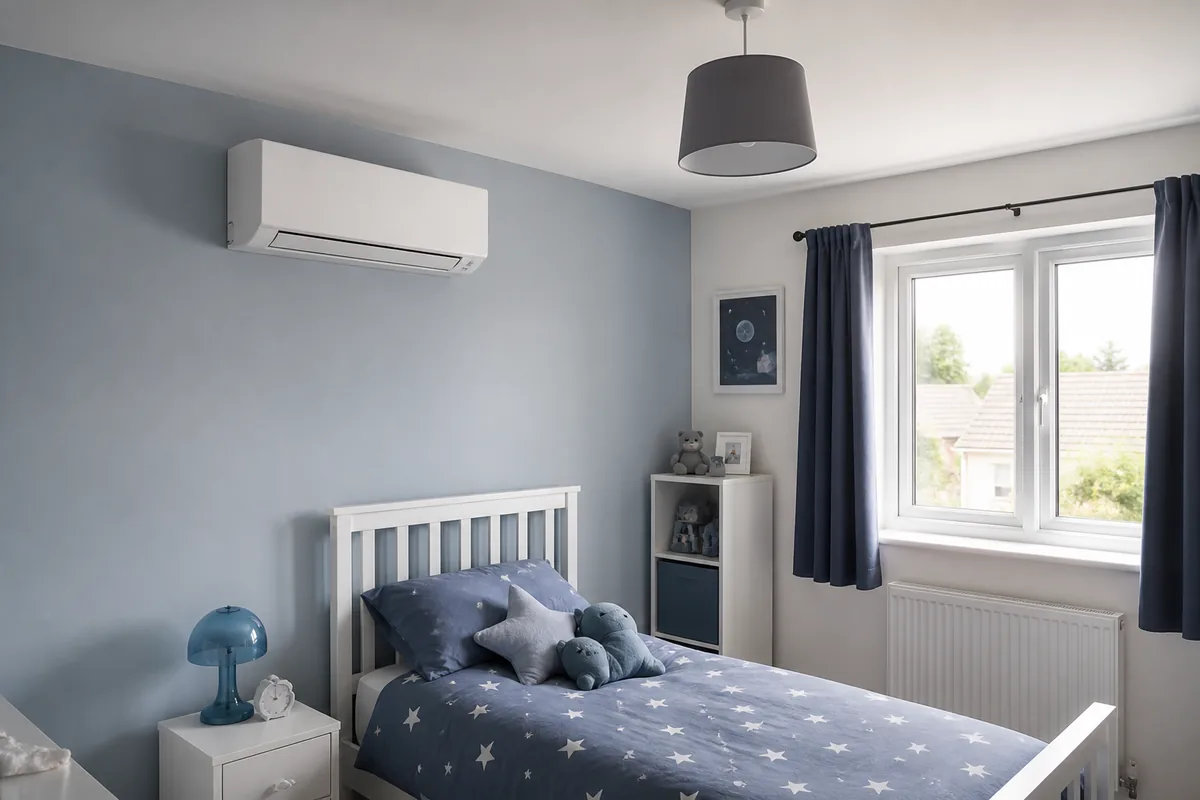
UKHSA hot-weather guidance treats air conditioning as a useful cooling option where it exists, used with windows closed so cool air stays indoors. That is operational advice for heat episodes, not a regulatory mandate to install plant in every dwelling.
When installation is justified, keep the health goal narrow and verifiable: lower occupied-room temperatures during alerts, maintain filter and drain hygiene, and avoid outdoor plant that creates neighbour noise problems. A surveyed single-room or two-room solution is often more proportionate than a whole-flat catalogue package.
Frequently asked questions
Does Approved Document O ban air conditioning?
No. It allows mechanical cooling where excess heat cannot be removed sufficiently by practicable passive means. Passive measures are expected first.
Does Part O apply to every existing London flat?
Part O is written for new residential buildings and relevant residences under the Building Regulations pathway. Existing homes should still use the same risk sequence even when the formal compliance route differs.
Is air conditioning always the health answer to overheating?
Not always. Reducing solar gain, creating a cooler room and safer ventilation come first. Cooling becomes relevant when those options cannot keep occupied rooms tolerable, especially for vulnerable people.
Core buying guides
Start with these high-intent guides, then dig into the rest of the library.
Related guides
Sources and further reading
How this guide was prepared
This guide was written by the Local AC Installers Editorial Team. We compare official guidance, legislation and established consumer information, separate general information from project-specific advice, and show publication dates and sources. We do not accept installer accreditation claims at face value.