
Prefer the external wall when it gives you a short pipe, a gravity drain and a place to throw air into the room. Use an internal wall only when that outside wall is glass, a chimney, or blows straight at the bed, and when a surveyed route can still reach a lawful outdoor unit. The longer run has manufacturer limits. Condensate on an internal wall usually needs a pump. An F-gas certified company should see both walls before you choose.
A short drill through the outside wall
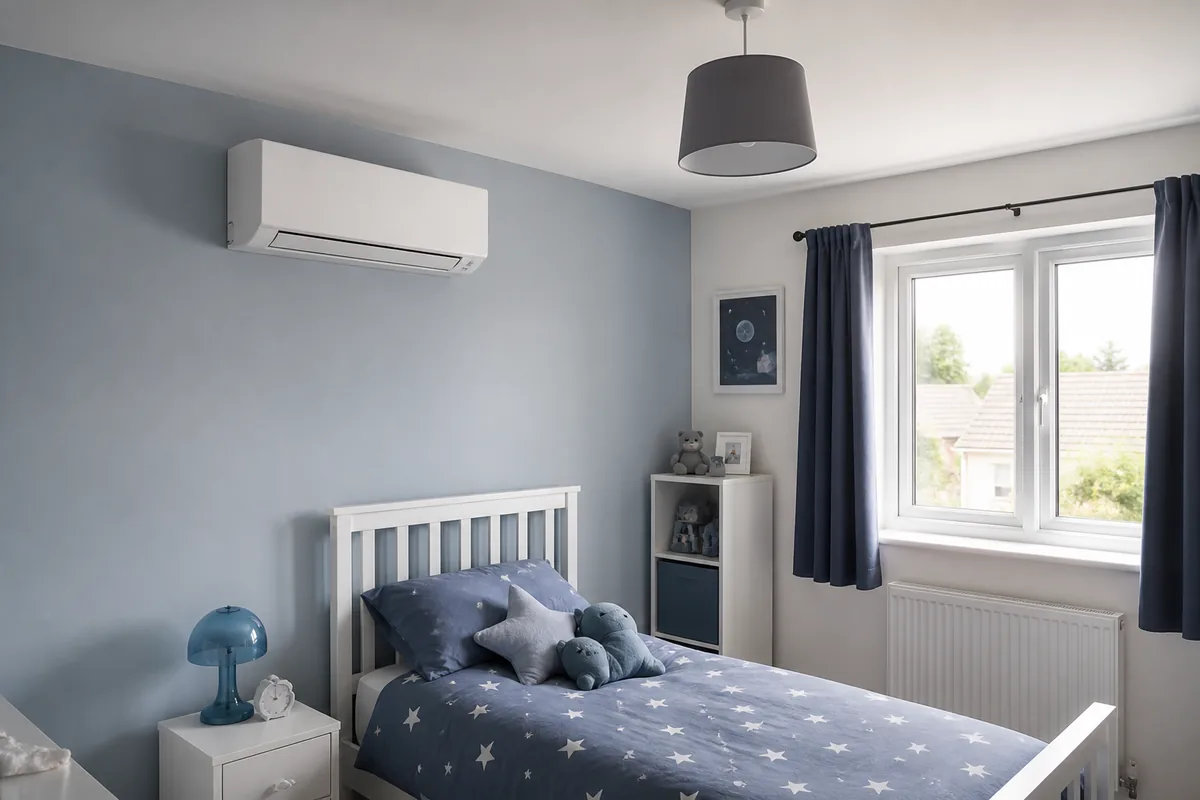
The indoor unit on the external wall drills straight through to the bracket or a short drop to a ground stand. Pipe length stays small, insulation is easy to see, and condensate can often fall to a gully on that elevation. Service access is the same hole you can point at from the garden. That wall still has to be free of the bed, the sofa and the neighbour's window on the other side. A short pipe to a condenser under a bedroom window can be the wrong comfort even when it is the right drill. The survey weighs noise and Planning Portal conditions in England against the neatness of the hole. Do not drill a chimney because it is the nearest solid surface.
Name both candidate walls. A wide photo of each, plus the outdoor elevation the pipes would reach, shows whether the external wall is the one you sleep against or whether it is all glass. Ask for pipe length, drain method and making good on the external wall, and the same three on the internal wall. Pick the one whose length stays inside the manufacturer's limit and whose drain is written down, not the one that only looks tidier in the photo.
An internal wall, a pump and the length limit
Bay windows, patio doors and a wall of kitchen glass leave no external place for a high unit. An internal wall at the end of the room can throw air along the ceiling and keep the coil off the glazing. That is a good reason to accept trunking or a short chase through to the outside. The route has to exist. Crossing a hall, a wardrobe and a bathroom to reach a rear yard can exceed the pipe limit or wreck more decoration than the external wall would have done. Height difference still counts if the indoor unit is upstairs and the condenser is on a lower yard. If the numbers fail, the internal wall is not available, however perfect the sofa layout looks.
An internal wall does not face the weather, and the condensate still has to go somewhere. Gravity back to an outside gully only works if the pipe can fall all the way. Otherwise a pump lifts it, and the pump needs power, a non-return route and a place you can hear it. Pumps are reliable when they are specified, and they are a callback when they are improvised. Stud walls need a noggin or a pattress. A party wall may need the neighbour considered for noise and for where the pipe then travels. Making good is part of the quote: a chased plaster wall costs more than surface trunking, and in an older house the finish may be lime, not a tub of filler.
Frequently asked questions
Is an internal wall always quieter indoors?
The indoor fan is similar wherever you hang it. What changes is whether the outdoor unit is on the other side of your headboard. That is the noise an external wall can put in the room.
Can condensate run inside a stud wall with no pump?
Only if the pipe can fall continuously to a drain. A level route through joists will not do it. The survey should call for a pump when the fall is not there.
Will a longer internal run cool less?
It can, once you approach the manufacturer's pipe limit. Ask for the measured length beside the limit for that outdoor model before you abandon the external wall.
Core buying guides
Start with these high-intent guides, then dig into the rest of the library.
Related guides
Sources and further reading
How this guide was prepared
This guide was written by the Local AC Installers Editorial Team. We compare official guidance, legislation and established consumer information, separate general information from project-specific advice, and show publication dates and sources. We do not accept installer accreditation claims at face value.